Download this episode as a PDF.
Transcript

Welcome to Easy Stories in English, the podcast that will take your English from OK to Good, and from Good to Great.
I am Ariel Goodbody, your host for this show. Today’s story is for intermediate learners. The name of the story is How the Narwhal Got Its Tusk. You can find a transcript of the episode at EasyStoriesInEnglish.com/Tusk. That’s EasyStoriesInEnglish.com/Tusk. There, you can also download the episode as a PDF.
I apologise for the bad audio quality in today’s episode. I am recording it as I sit on my mattress on the floor of my new apartment. I have just moved in and I don’t have most of my furniture yet. So the recording situation is pretty basic.
I’m just going to start today by reading out some reviews from listeners.
MingInWorld from Hong Kong says: Good Structure and funny story. Like it!
Thanks, Ming! We love a short and sweet review.
Sabolauyy from Colombia says: I can believe the quality of this podcast. The host is a real professional person and I could say that is the best,
Wow, thank you so much, Sabolauyy! That is the highest of praise.
And Hsieh Sunny from Taiwan says: The digital fugitive. Love it really! Thanks!
The Digital Fugitive was an episode that came out last year, so thank you for the feedback. Hsieh! God, I thought it was this year. Time passes so quickly!
Anyway, today’s story is a Christmas story! Sort of… You see, I sometimes do a Christmas-themed story at the end of the year for Easy Stories in English. For example, last year I did Sir Gawain and the Green Knight. But to be honest, I don’t love Christmas as a holiday, and I usually find Christmas stories too cheesy – not very good and too emotional.
But I know people like having Christmassy things around Christmastime, so… here’s a story with lots of ice and snow! Of course, not everyone celebrates Christmas, and in some parts of the world Christmas happens in the middle of summer. So this isn’t perfect, either. But hopefully, wherever you are and however you celebrate this time of year, this story will be the right mood for you.
I found this story in a book called The Girl Who Dreamed Only Geese, and other tales of the Far North, which is a collection of folk tales from Inuit, Greenlandic and Siberian peoples. This covers a huge geographic area, but these indigenous groups are linked in their cultural and hunting traditions. I thought this story in particular was beautiful, and I wanted to share it with you all, so I decided to adapt it for the podcast.
Anyway, don’t worry, this won’t be the last episode of the year! I’m going to release a new year’s story as well. So enjoy your holidays and keep warm… if it’s cold where you are. If it’s nice and sunny there, just know that I’m very jealous!
OK, I’ll just explain some words that are in today’s story.

A narwhal is a small whale with a long horn. This is actually a tusk, which is a type of long tooth that comes out of an animal’s mouth. Although it looks like a horn, narwhals’ tusks are actually one of their teeth. Imagine if one of your teeth was so long you could hunt with it! Narwhals live in the sea around Greenland, Canada and Russia. Narwhals’ tusks can grow as long as eight feet, or over two metres!
If you have a keen ear, it means you can hear very well. A keen ear might be able to hear a certain kind of bird when hundreds of different birds are singing, for example. Generally, ‘keen’ means ‘sharp’, and we also talk about keen intelligence, someone who is very clever.
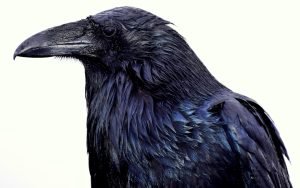
A raven is a black bird with a big black beak, a big black nose. Ravens are very intelligent. For example, they can tell each other about where to find food, and can learn to talk. Ravens are very important in myths and legends from northern Europe. People often think ravens are linked to death. Ravens open their beaks to make a loud sound, [caws], which we call a caw. The caw of a raven is usually a sign of death or danger in a film, for example.
Grumble means to complain in a low voice. For example, if I grumbled about the weather, it might sound like this: [grumbling]. Usually, you grumble when you want to complain but you don’t actually want other people to hear what you’re saying.
When someone is exiled, they are forced to live away from their home. People are usually exiled for political reasons. Exiles are not allowed to return home, or they will be killed or put in prison. For example, Napoleon Bonaparte was exiled on the island of Saint Helena in 1815, and Imelda Marcos, the wife of the president of the Phillipines, was exiled in 1986 when the revolution started.
Yank means to pull something hard and quickly. For example, some people get very stressed and yank their hair out. Or you might yank your child out of the road if they’re about to be hit by a car.
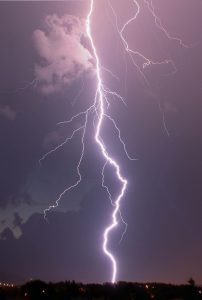
A bolt of lightning is a long, thin piece of lightning that flies from the sky when lightning strikes. It is usually accompanied by thunder. A bolt is a kind of arrow, and generally, we can talk about a bolt of fear, a bolt of excitement and so on. If you get struck by a bolt of lightning, you will probably die. So if there is a lightning storm, make sure to stay away from high places!
Migrate means to move from one country to another, but we also use it to talk about illnesses. For example, a fever might migrate from one part of the body to another, or an infection or parasite might migrate through the body.
Rot means for food to go bad. If food rots, you should not eat it, because you will get sick. Rotten food should be thrown away. However, fermentation is really just letting something rot a bit, but doing it in a way where it’s safe to eat. In Iceland, for example, they eat fermented shark, shark meat that has rotten in the ground for several months. Delicious!
Flesh is the parts of our body under our skin. Usually, flesh includes muscle and fat. We also use flesh to talk about kinds of animal muscle and fat that we eat. For example, pork is pig flesh, beef is cow flesh and mutton is sheep flesh. Though I’ve recently gone vegan, so the only ‘flesh’ I’m eating is tofu flesh!

Whittling is when you use a small knife to cut pieces of wood off a large piece of wood. By whittling a piece of wood, you can shape it into different objects: a toy, a cane, a sculpture and so on. Whittling is not a very popular practice these days.
A harpoon is a weapon that is used to hunt fish. Harpoons are spears that have ropes attached. You throw a harpoon and it goes through an animal’s flesh. Then you can pull on the rope to bring the animal towards you.

An igloo is a house made of snow or ice. Igloos are built by certain indigenous groups in Canada and Greenland. Igloos work because snow traps air in small pockets which insulates the inside of the house.
OK, so listen and enjoy!
How the Narwhal Got Its Tusk
Once upon a time in Greenland, there lived a little boy with his parents and his aunt. He was blind from birth, but he had an extraordinary ear, and standing on the beach by his house he could hear a whale singing deep in the ocean or a seagull crying hundreds of miles away. The boy’s parents adored him, and his keen ear saved their lives many times, but the boy’s aunt – his mother’s sister – was a strange old woman, who shouted at ravens and grumbled at dinnertime.
‘It’s alright for some,’ the aunt muttered at her sister. ‘You have a fine husband and a decent son, while I have nothing.’
‘What was that, Sister?’
‘Nothing!’
This grumbling went on night after night, until one day the boy’s mother had had enough.
‘Sister, I can’t deal with your jealousy anymore! Get out! Find some rock to sleep under. Surely it will be more comfortable than the bed you’re always complaining about.’
So the aunt left, grumbling and kicking rocks along the beach. She walked for days, following the edge of the sea, shouting at any ravens she saw and spreading her miserable words along the coast. Finally, she returned to her sister’s house, and for a while they had peace, but it wasn’t long before the aunt’s constant grumbling became too much and she was exiled again.
The boy tried to talk to his aunt, but while he heard her words as keenly as knives, he could never follow their meaning. Her sentences, like her feet, wandered without purpose, and the more the boy tried to understand her, the angrier she got.
One day in late summer, during one of the aunt’s periods of exile, the boy and his parents sat near the mouth of the river. The father had seen that the whales had come in to eat in the distant sea.
‘There’s five of them, I think…’ said the father, trying to see as best as he could.
The boy sat down and listened with his keen ear and counted exactly six whales shooting their water into the air.
‘Are you sure?’ said the father.
‘Very sure,’ said the boy.
‘You’ve never been wrong before,’ said the mother, and she kissed her son on the head.
Meanwhile, the aunt sat behind a rock and watched them. How easily she could’ve come and sat with them! They would have been happy for her to join them. But instead she stared, and grew so angry that she yanked at her hair, picked up rocks and chewed on them.
‘What’s that noise?’ said the boy.
‘It’s probably just a raven,’ said the mother.
‘No, it sounds like someone chewing.’
They followed the boy, and saw the aunt running away, yanking at her hair, as pebbles fell from her mouth.
That night, there was a great storm. The aunt was still wandering the coast, and the storm came in so quickly that she had no time to find shelter.
The boy lay in bed, woken up by the thunder. His hearing was so keen that he could hear each individual bolt of lightning, as well as the sound they made upon hitting the ground.
BZZT – whap!
BZZT – whap!
BZZT – BAM!
The boy shook. That last bolt of lightning hadn’t hit the ground. It had struck something small and weak.
‘Oh!’ he cried. ‘My aunt has been struck by lightning! My aunt is lying alone on the beach!’
His parents woke up and listened to his words. When he had announced such things in the past, he had always been right. And sure enough, when they came to the beach the next morning, they saw a horrible sight.
Along the rocks lay a dead seal. No, not a dead seal – it was the aunt, wrapped in a sealskin coat! Her skin was covered in black marks and she moaned in pain. They ran to her, picked her up and carried her home.
‘Son,’ said the father. ‘You must look after your aunt all day and night. Here is a bowl of water. If any part of her coat or her skin catches fire, put it out.’
‘Yes, Father.’
The boy stayed by his aunt’s side without moving. When she grumbled and moaned, he sang her songs. When she tried to get up, he gently held her down. He brushed her hair, which was stiff and burnt like raven’s feathers. When he touched her forehead, it burned with a fever, so he put a damp cloth on it. Later, he brushed past her arm, and felt a strong heat coming from her elbow. He checked her forehead, and the fever was gone. It had migrated to her elbow! So he moved the damp cloth to the old woman’s elbow and called out to his parents: ‘Mother, Father – my aunt’s fever is migrating!’
‘Yes, Son, that happens sometimes,’ said his mother. ‘Sometimes, a lightning-struck person has a migrating fever. Sometimes, a lightning-struck person also gets very thirsty. There is no thirst as deep. In fact, if you’re not careful, my sister may try to drink seawater.’
The mother and father went back to sleep, and the boy fed his aunt some water. Then he touched the elbow, and found that the fever was gone – it had migrated to her feet. So he tore the cloth in half and wrapped his aunt’s feet in the pieces of damp cloth.
All throughout the night, the fever migrated, and by the morning, the boy had bathed his aunt’s entire body. The boy, tired from caring for her, fell asleep, and the aunt woke up to the morning light.
‘Ah, it’s good to smell a cooking fire first thing!’ she said.
‘That’s not a cooking fire,’ said the boy, slowly waking up. ‘That’s your coat – you’ve been struck by lightning.’
The boy put out the aunt’s coat, but the woman reacted with rage.
‘Struck by lightning?! I don’t believe it! I could never be struck by lightning!’
She jumped out of bed, tore her coat apart, dipped the pieces in fish oil and threw them to the ravens. Then she ran away, screaming into the cold morning air.
‘Aunt! Come back!’ cried the boy. But the old woman did not listen.
The boy woke his parents and explained what had happened, and they searched along the coast for the aunt. They searched all day but could not find her. In the night, they heard a windstorm blowing. Finally, the next morning, as they stood by the mouth of the river, the boy heard something.
‘I hear someone walking along a rocky beach!’ he cried. ‘It is my aunt. Let’s go!’
They ran towards the beach, but when they came near, the boy’s parents held him back.
‘What’s happening?!’ he cried.
‘Oh, Son,’ said the father. ‘The beach is covered with animals that the storm pulled in from the sea last night. There are rotting seals, rotting fish and a huge rotting whale.’
‘Something is eating them,’ said the boy. ‘The ravens? Only ravens would eat such disgusting food.’
‘No,’ said the mother. ‘It is my sister.’
For a long time, they stood in silence, and the only sound was the aunt eating the rotten flesh in the distance.
‘Leave her,’ said the mother, and turned to walk away.
‘But it is your sister!’ said the father.
‘Let her be exiled forever. We cannot live with a monster that eats rotten flesh.’
‘But she is my aunt!’ cried the boy.
The mother hesitated, then nodded. ‘Then you two capture her. I know she will not come easily.’
And so it was. The boy and his father walked slowly up to the aunt and they tied ropes around her and dragged her home.
‘Let me go! Let me go!’ she cried. But they did not listen.
By the time they got her inside, the aunt had fallen asleep, exhausted from her wanderings. She stank of rotten flesh. She slept all afternoon and into the evening. Over supper, the boy asked what they could do.
His father sighed. ‘Lightning-struck people are unpredictable.’
‘All we can do is feed her soup and put her out if she catches fire again,’ said the mother.
‘But I smell winter in the air,’ said the boy.
‘Yes,’ said the father, ‘the edges of the river are beginning to freeze, and soon the sea will, too.’
The boy, the father and the mother eventually fell asleep, but in the middle of the night, the aunt woke up. She muttered and grumbled to herself, chewed her shirt, and finally got up to go outside.
The boy heard her chewing and woke up. He saw his aunt leave, and got up to go follow her. Whether or not this strange behaviour was due to the bolt of lightning that had struck her, or simply the coming of winter, the boy could not leave his aunt to wander alone in the night. Before he left, he grabbed a stick he had been whittling for days. He was whittling it to make a harpoon, but for now, it would make a good walking stick.
He followed his aunt towards the mouth of the river, and it began to snow. The old woman stayed close to the water, and the boy followed her with his walking stick, keeping as quiet as he could. Not that it mattered; only the boy could hear anything over the wind and the snow.
They walked until morning, to the mouth of the river, then along the beach, back to the river, and then south along the riverbank. Finally, the aunt sat down to rest, and the boy sat down not too far from her. The snow grew thicker and thicker, until the boy could no longer be sure if his aunt was there.
‘Aunt! Aunt!’ he cried. ‘Are you there?’
The aunt was shocked to hear her nephew, and pushed about in the snow until she found him. She was equal parts glad and furious.
‘Why did you follow me?’ she cried. ‘You could have died!’
‘I came to take you home, where a warm bed and soup waits for you. Why did you leave?’
‘Nephew, don’t you understand? I’ve been kissed by a bolt of lightning. Now my mind turns like a snowstorm and I eat rotten flesh. This is terrible for me, and even worse for all of you. And my thirst – oh, the thirst! I have had my mouth open this whole time to eat the snow, but it is not enough. I am going to walk to the thickest ice, cut open a hole and drink the water inside. Only that water will cure my thirst.’
‘But it is winter. How will you survive?’
‘I do not know,’ said the aunt. ‘And now I must take care of you, too. For we have gone far further from the village than you might think. There is no way you or I could find the way back in this thick snow. Come, your aunt will protect you, though she can barely protect herself. I have a seal-oil lamp, and I will build an igloo, and we will wait until the ice breaks up and you can find your way home.’
The boy was shocked. He hadn’t realised how far they had gone, how much danger they were in. And still, his aunt insisted on saying things like ‘you will find your way home’, as if she wasn’t going to come back with him.
The aunt took the boy’s hand and walked onto the river ice. She used the boy’s harpoon, and, although it wasn’t finished, she was able to cut out some pieces of ice to make an igloo. They sat together in the igloo, staying close for warmth, and lit the seal-oil lamp above them.
Day after day the snow fell. There was little food, only what the boy had in his pockets and a rotten fish that the aunt had hidden in her coat. Fortunately, the boy had his knife with him, so he spent his time whittling away at the harpoon. He was so bored that he whittled the faces of seals, birds and whales into the harpoon, and even whittled in the faces of his mother, father and himself.
‘I see you did not whittle my face in,’ said the aunt. ‘You know I do not belong.’
‘I did not whittle your face in because I am going to give you this harpoon. You will be able to see the faces of your family wherever you go.’
‘Hmm!’ said the aunt, and said no more.
For the rest of the winter, they caught and ate fish, although the aunt let her piece rot before she ate it, and finally, one day, the boy heard the sound of the ice breaking up.
‘It’s finally spring!’ he cried. ‘Let us walk to the edge of the sea.’
And so they did, and sat and listened to the ice breaking up, as loud and as clear as thunder. Tears filled the boy’s eyes, because he knew his time with his aunt was coming to an end. As much as he loved her, it was clear that she did not belong with them.
‘Oh!’ cried the aunt, jumping to her feet. ‘I can’t wait, I can’t wait! Goodbye, Nephew!’
She jumped into the sea! The boy moved quickly, tying a rope to his harpoon. He listened carefully to his aunt swimming about, then he threw the harpoon into the water. He hoped that it would strike his aunt’s coat, that he could pull her to safety, but instead it went straight through her lip! The aunt cried with pain and shouted, ‘Nephew, Nephew! Why have you done this?’
The boy panicked and cried, ‘Aunt! Where are you?’
Then, suddenly, a wave rolled in and the boy felt a pair of old hands around his ankles. His aunt pulled him into the water!
Down they went, swimming deep below the surface, and the boy was sure that he would drown. But just then, his aunt swung upward and headed towards the air.
Something happened in the water. The boy could not see it, of course, but he felt it, stronger than any bolt of lightning. A power ran through his aunt and made his skin shake. The harpoon shook as well, growing longer, changing, until –
They burst out of the water! The cold air hit the boy’s face and he gasped. He grabbed for the harpoon, and instead held onto something hard and rocky. It was a tusk! Where the harpoon had struck his aunt’s lip, there was now a long, beautiful tusk.
The boy felt the beach was near and let go, dragging himself towards the sound of the ravens. When he had caught his breath, he heard a strange noise. It was like a knife kissing rock.
‘What is that sound?’
‘It is I!’ cried the aunt, although her voice sounded different. ‘I am rubbing my tusk against the rocks to make it sharp. Oh, how wonderful this tusk feels! Come, Nephew, and feel what I have become.’
Slowly the boy crawled towards the water and reached out to his aunt. Where he expected old, hard skin, he felt the smooth skin of a whale!
‘Yes, I am no longer human!’ said the aunt. ‘I have become a narwhal, and I am the first of my kind: a narwhal with a tusk. Just as the lightning struck my body, this magic will strike my species. From now on, all my kind will have tusks!’
‘But, Aunt,’ said the boy, feeling the shapes whittled into her tusk, ‘will they all be so beautiful?’
‘No,’ said the aunt softly. ‘Only I will have a tusk bearing the faces of my family. And that is how you will know me. When you see me swimming through the waters, look for this tusk, and you will know that I am home.’
‘But, Aunt,’ said the boy. ‘I am blind. I cannot see.’
The aunt laughed. ‘Nothing is impossible, Nephew. Listen.’
The aunt rubbed her tusk against a rock, slowly and gently, and the faces of the family made a wonderful sound. It was almost music, a song of their history. Just as it was filled with joy, it also rang with pain and sadness. It was no real tune, and yet the boy had never music so sweet.
‘Goodbye, Nephew,’ said the aunt, disappearing into the water. ‘The spring lightning storms will be coming soon, and I do not wish to feel its kiss again. I must go and find my people.’
‘Goodbye, Aunt!’ the boy cried into the sea. ‘And may you always swim quickly!’
The boy listened to his aunt swim away until he only heard the cry of the ravens. Then he ran home and told his parents all about the beautiful creature his aunt had become.
THE END
If you enjoyed today’s episode and want to be able to read my stories in a physical format, then good news! I have a book of ten short stories called Easy Stories in English. Get it on Amazon, Apple Books or Google Books, or go to EasyStoriesInEnglish.com/Book to find out all the places it’s available. Hey, it could be a fantastic Christmas present, or just a gift to yourself! Thank you for listening, and see you soon!


Leave a Reply