Hello my Lovely Learners, and welcome to Easy Stories in English, the podcast that will take your English from OK to Good, and from Good to Great. I am Ariel Goodbody, your host for this show. Today’s advanced story is called The Juniper Tree. As always, the transcript and PDF are available at EasyStoriesInEnglish.com, and you can find the link in the description.

So today’s story is a bit of a challenge for me. I have had this story sitting around for years not knowing what to do with it. In fact, I kind of forgot how old it was. I checked before recording and I originally wrote this almost three years ago. So why have I been sitting on it for so long?
Well, it’s an adaptation of a Grimm Brothers fairy tale, and it’s a very dark adaptation, I have to say. It’s both challenging in terms of content but also language level. And finally, it’s just a long story, so I wasn’t sure of the best way to present it. Should I split it into parts? Should I give vocabulary descriptions? Should I significantly change the story to be easier to understand?

I tried so many different things. I spent so much time avoiding recording it because I didn’t want to have a really long recording session. And in the end I just decided I need to get this out. Progress, not perfection. By which I mean, if I don’t release this now, I will never release it. So, it’s not perfect. I’m not going to do vocabulary descriptions, so it’s going to be probably quite challenging compared to other episodes.
You may be able to hear that my voice is not in the best place. I think I’m struggling with all the air conditioning here. Well, I’m struggling with the air conditioning at night, but I’m also struggling with using my voice a lot to shout loudly when teaching at work. The thing is, I tried sleeping without the air conditioning on because the air conditioning dries out my mouth, but when I slept without air conditioning, I woke up a lot in the night and I was really tired. I didn’t sleep well. So I’m kind of still figuring out that compromise. The air conditioning controls here are very complicated and I do not understand how they work.
And actually the room I’m recording in right now has a huge window and it gets quite humid in this room, I guess, and there are some problems with the paint peeling because of humidity. So I need to figure out the optimum aircon setting to prevent that.
So, God, I know it’s annoying when people are like, oh, this is gonna be rubbish. Oh, this is not my best. Oh, like blah, blah, blah, blah, blah. Look, it is what it is. Okay? I hope you enjoy today’s episode. I hope you find it interesting. And I’m just gonna do my best because I am genuinely proud of this story. I think part of the reason I’ve been sitting on it for so long is because I was very happy with the work I did. The original Grimm Brothers story is an interesting one. It’s quite a bit longer than a lot of the Grimm Brothers fairy tales, but I really added in a lot of layers of darkness and mystery and religiosity as well.
So if you haven’t guessed already, this episode is not suitable for children, certainly not with the kind of violence that’s in it.
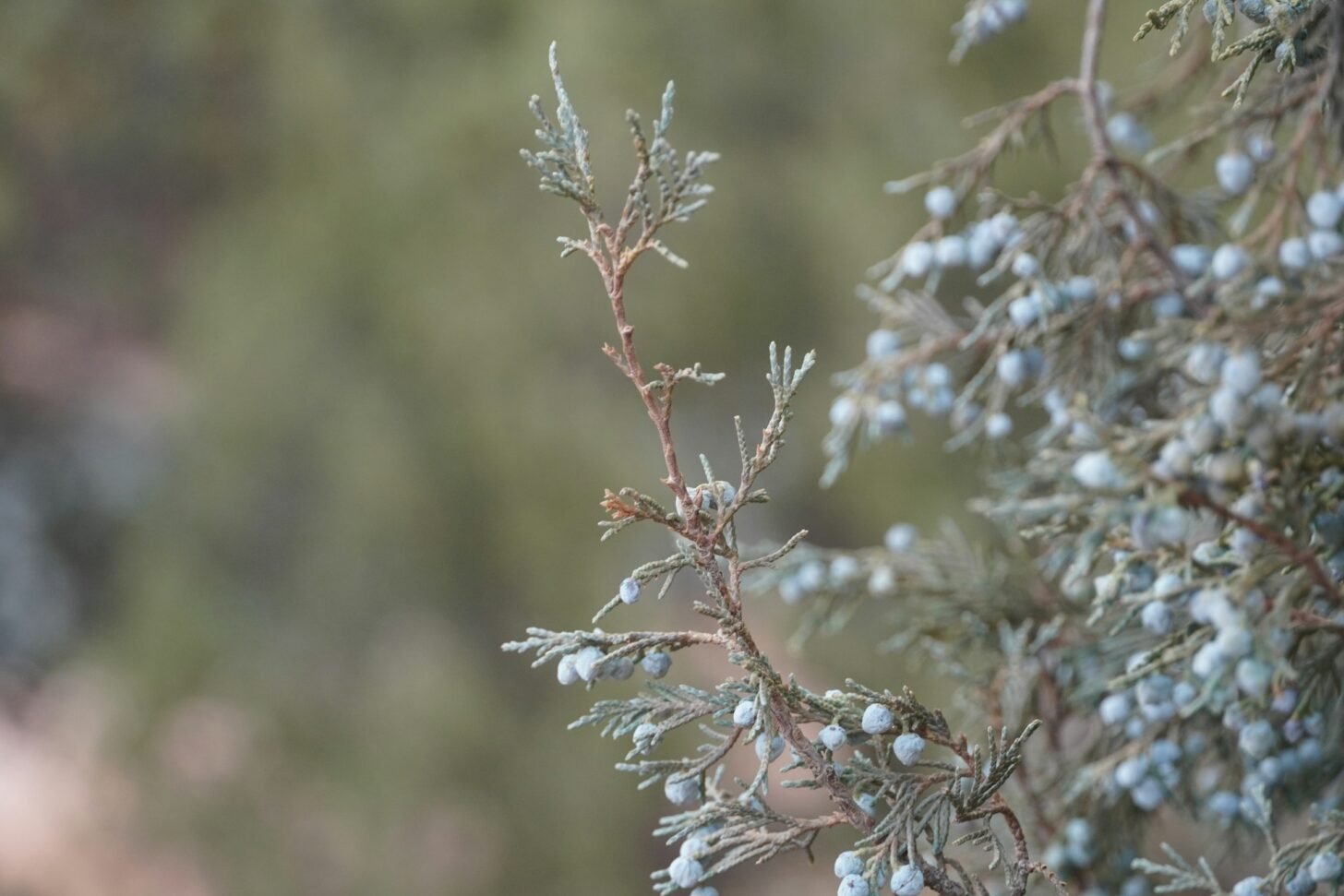
So a juniper tree is a kind of tree that produces berries that are poisonous, so you cannot eat them or you should not eat them because they will make you sick.
There are some Bible quotes in this story. I’ve taken them from the King James translation of the Bible. The King James translation is one of the earlier translations into English, and it has language that many people consider poetic and beautiful. So I thought it was quite fitting for this story, especially because at the time of the Grimm Brothers’ writing, they probably would’ve been using this translation or a similar translation of the Bible.
Now these quotes do have ’thee’s and ’thou’s in them. So ‘thou’ is an archaic pronoun. It’s more or less equivalent to ‘you’ in modern English, but just like French distinguishes between tu and vous and German distinguishes between Du and Sie, Old English and Middle English distinguish between ‘you’ and ‘thou’.
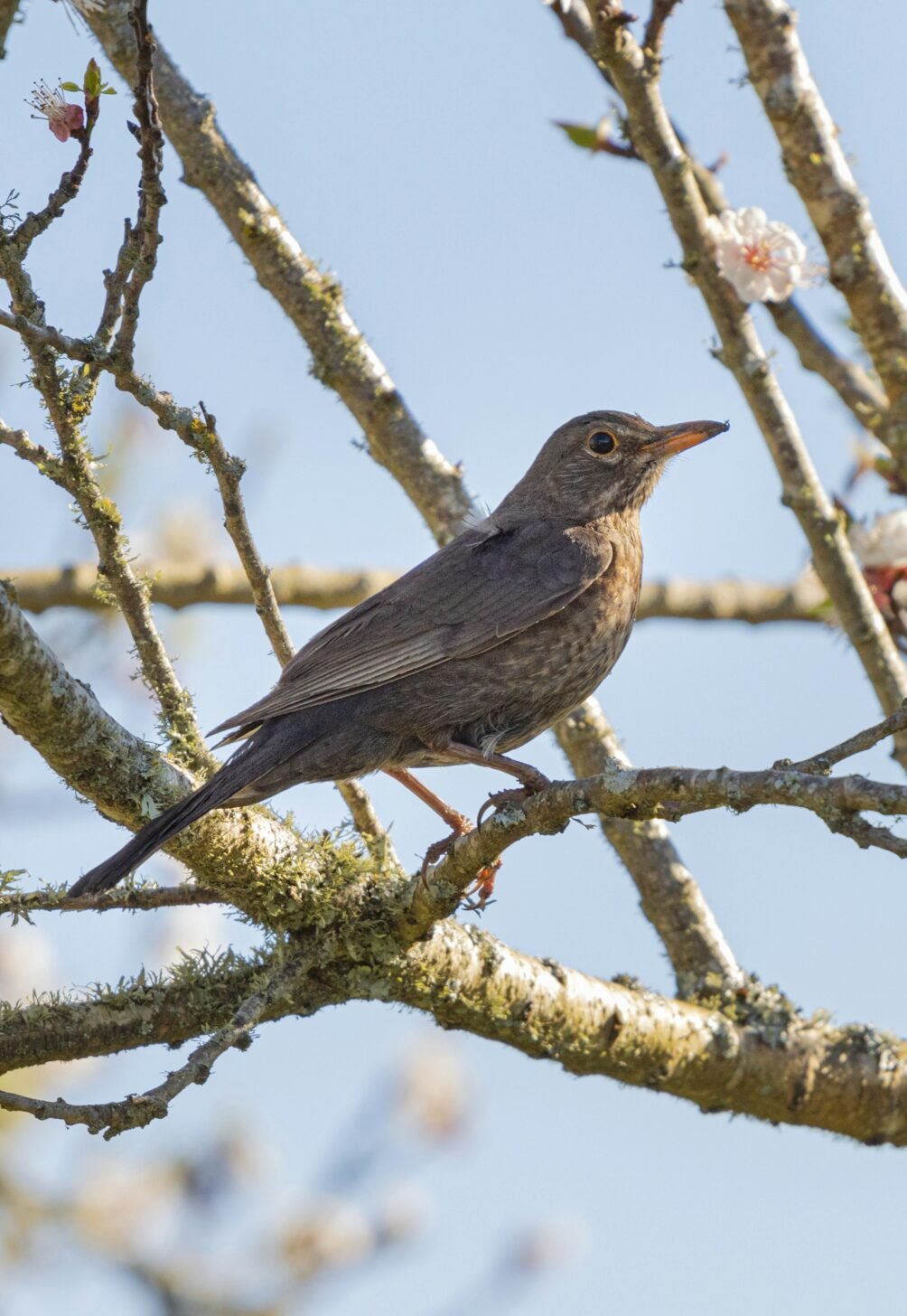
There’s also a kind of bird that’s mentioned in this story called a thrush. Now, I hesitate to mention this, but look, you are probably going to be looking up the meanings of some words as you listen to this or after you read this. Just be really careful when you look up the word thrush. Look it up in a dictionary. Don’t go on Google Images because, as well as a bird, thrush is a kind of illness that affects a very sensitive part of the body, and I may have made the mistake of looking up a picture of a thrush in a class once and then accidentally showing my students some really disgusting pictures of this skin disease. So be very careful when you look up the definition of thrush.
Okay, I’m just going to get straight into it. So, listen and enjoy!
OK, so listen and enjoy!
The Juniper Tree
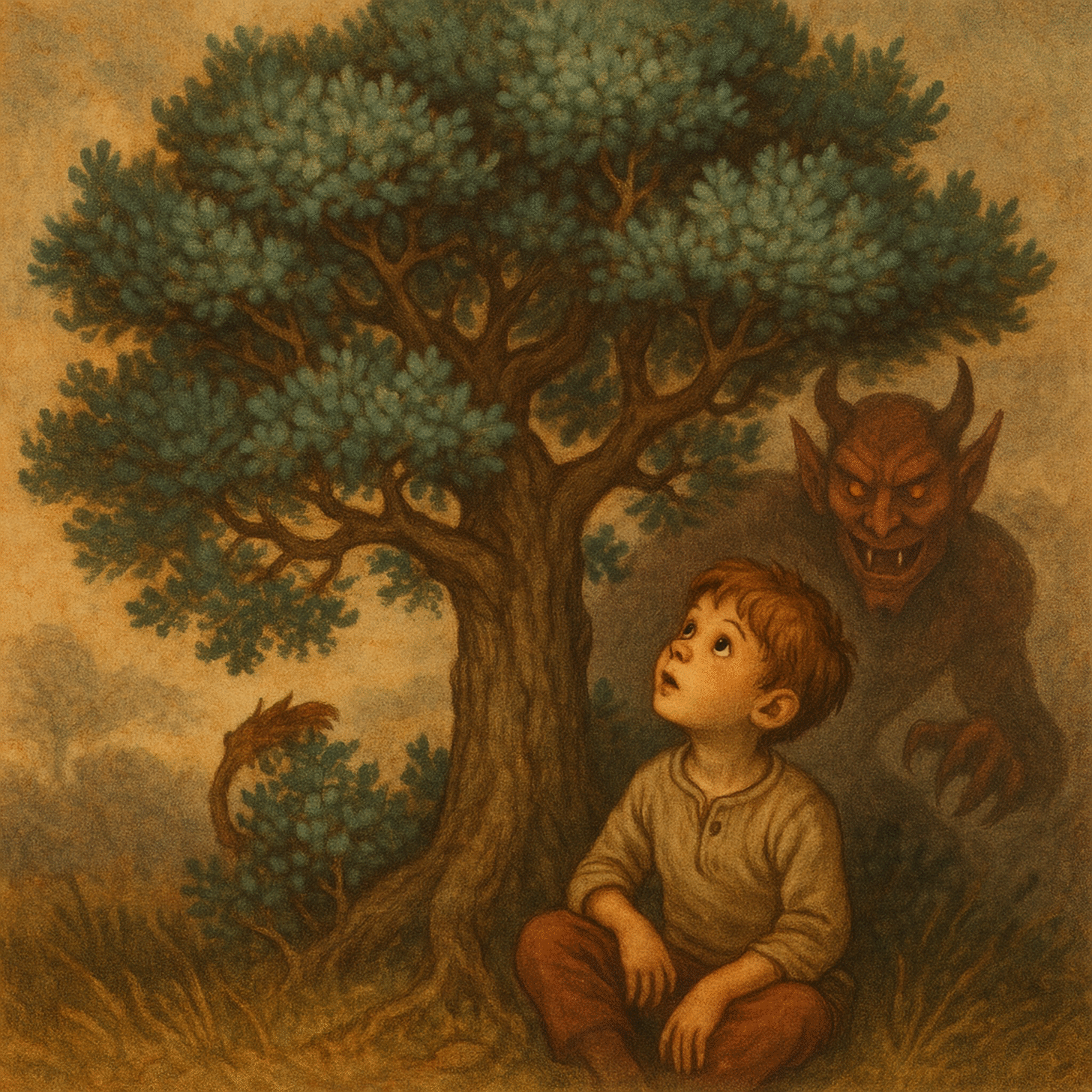
Nobody could say I had a happy childhood. It was something you felt: a tightness in the air, a hunger in the stomach, a late-arriving birthmark.
Like all boys, I longed for my mother’s love. My earliest memories are looking up at her from the floor, crying for attention. She scowled and fed me, always stopping before I was full.
Or maybe the hunger was a later memory. The food was never good: hard potatoes, stale meat, sour milk. The fruit trees in our garden did not help. The apple tree bent like an old man afraid of causing a fuss, incontinently dropping bitter brown apples, and the huge, healthy juniper tree laughed at us with its poisoned fruit.
A fact I learned only too late. My mother spent a whole afternoon watching me play beneath it, feasting on the fallen berries. They tasted horrible, but at that time I didn’t understand that food could taste good. When Father came home and saw me chewing on one, he exploded at Mother, and I burst into tears.
She didn’t cry, of course. I’m not sure she had enough wetness in her to do so. She just stared at him and said, ‘He’ll learn from his mistakes.’
‘Not if you won’t tell him about them. You know what happened to Maria—’
‘I know all about her.’
At that point, my father gave up the argument and made me go and throw up. He did not hold or console me. I’m not sure it even occurred to him.
By then, I knew life to be full of sharpness. Mother polished the kitchen table until it shone like a knife edge. She polished the knives until they were diamonds. Father pressed his eyebrows so hard together they might turn into diamonds. But the juniper’s soft needles had hidden their sharpness, and so I tasted first betrayal.
Because I was hated by the other boys, I spent most of my childhood with my sister, Marlene, who was a few years younger than me. I tried to act like the other boys towards her, strong and cruel, but when she let out so much as a whimper, I melted into a soup of consoling apology. I held her close and brushed her tears so much she probably thought I was her mother.
Why was I hated? Good little boys and girls only need half a reason to torment someone who doesn’t fit in, and with me, they had two big, fat, juicy ones: my pale skin and my red eyes.
‘You’re beautiful,’ my father used to say, as he brushed my coal-dust hair. ‘You have skin as white as snow and eyes as red as blood.’
And perhaps this would have consoled me, if Mother had not seen our little ritual.
‘Demons have red eyes,’ she barked, her own eyes reflecting the flames in the fireplace. ‘It’s nothing to celebrate.’
I knew what demons were, from a picture our schoolmaster had shown us: foul red creatures with curled horns and wiry hair. But never had I made the link with myself.
‘ “Thou believest that there is one God”,’ said Mother. ‘ “Thou doest well.” ’ Her gaze sliced me lengthways. ‘ “The devils also believe, and tremble.” ’
She swept out of the room. I buried my face into Father’s lap, wept. Normally, he would tell me off for this. But this time, he whispered.
‘Remember, little Nicholas. Jesus loved all men. Cripples, prostitutes and even tax collectors.’ He hesitated just a moment too long. ‘I’m sure he loves you, too.’
On my eighth birthday, I sought out my father in the field and asked him where my pale skin and red eyes came from. I reasoned, with the growing intelligence of a child that is still rooted in fantasy, that if I could find the demon who had infected me at birth, I could kill it and become normal. No other solution occurred to me; violence was my mother tongue.
‘From your mother,’ he said, not ceasing the rhythm of his shovel.
‘Mother? But her skin is darker than mine, and her eyes are green.’
‘Oh, yes.’ He went back to digging and pressing diamonds. ‘Go and play.’
I almost did. But a question burned.
‘Father, who is Maria?’
He buried his shovel in the earth so sharply I jumped. Then he stared out at the land. I felt a prickling flame in my belly, an excitement for something I could not imagine.
He spoke in a tone he’d never used before. Like a dog trying to meow.
‘Maria is the woman who gave birth to you.’
That day, I learned that the word ‘mother’ had two meanings.
‘She was peeling an apple in the garden, and she cut her finger. A single drop of blood fell onto the snow, and she said, “I am going to have a child with skin as pale as snow and eyes as red as blood.” I thought she was joking.’
He wrapped his hand around his mouth, like his words were pencil drawings he wanted to erase. He did that in the evening sometimes, after Mother had beaten us particularly hard.
His voice descended to its usual level, a flat desert, where the sand rustled softly.
‘But then she got pregnant. I didn’t believe it. We hadn’t lain together for… Before she gave birth to you, she went mad. She ate every single berry from that juniper tree and became so sick she couldn’t move. She had you early, and then died.’
The story was over. He breathed in, erasing the heat of his words with the cold, cruel air.
‘Then I met your mother. But you’re not a demon.’
I wasn’t sure who he was talking to.
Mother’s bedroom – the mother who beat me, not the mother who birthed me – was a secret castle. It was the only room in the house with colour, pretty smells and soft things, so naturally she did her best to keep me and Marlene out of it.
To Marlene and I, the rows of perfume bottles, the drawers full of dresses, the paintings of places we’d never go and people we’d never see were a door to another world. Mother shared the bedroom with Father, but as with his presence in our lives, his things were pushed neatly into a corner. So it was always ‘Mother’s bedroom’, and she used those precise words when she forbade us to enter it.
Looking back, she must’ve known we did, but it was one of the rare things she didn’t punish us for. She came from a family of wealth and status, and it was through a series of humiliating events that she’d had to settle for our father and his demon child. So she held her past in the glass ball of her room, and when Marlene and I crept through, it reminded her of her superiority.
There was one object in Mother’s room that could not be forgotten, even before the dark role that it played in my life. It was a metal chest, almost comically large, with thick leather straps. It was the sharpest and the shiniest of all deadly objects and people in our house. Its neck was decorated by a padlock so heavy it had a gravitational pull, drawing me endlessly towards it, to wonder at what it might protect.
Once – I don’t remember why – I saw Mother opening the chest, and the contents were a terrible disappointment: a bottle of port, chocolate wrapped in brown paper, sugared almonds. The occasional luxury to remind her of what was lost. The padlock itself held the true magic. I was sure that, when she inserted the key, it cast a magic spell, revealing different contents every time. Surely, when I wasn’t there, she opened it to find golden swords and glittering jewels.
As I hit puberty, my mother’s hatred for me grew. Perhaps my thickening arms, the grass growing over my lip, the heavy smell that poured from my body reminded her how weak she really was. If I joined up with Father, she would have to give in to the pressure of two strong men. That would never happen, of course, but it’s always the angry dog who fears being bitten the most.
To get rid of me, she demanded I go to school. Up until that point, I had been performing all kinds of manual labour around town. The idea of my education never came up, even though Mother taught Marlene to read. I often heard Marlene crying through the walls, as Mother threatened to throw her in the oven for misspelling a word. I was happy to avoid such treatment, and I liked working with the older boys and adults, who for the most part ignored me.
So it was a shock when I was thrown into the schoolroom, surrounded by boys several years younger than me who could already read and write. The teacher did not respect that I could carry a log as easily as a full-grown man, or that I could split them just as fast. He only seemed to hate me more for it. I didn’t learn how to read or write there, nor how to do maths, but I did learn a bitter lesson: after years of being tormented at home, there were still new ways that adults could make me suffer. Stupidity lay sourer than any juniper berry on my tongue, because it came from within, another flaw the demon had planted.
One day, I came home from school exhausted. When I failed to recite a Latin verb tense correctly, the teacher beat me with a stick. I longed to run into the woods and scream, to let out my anger, but at the same time I knew I would be punished more if I did not go home and give Mother a report of the day’s failings.
When I came in, there was a deathly silence in the house. It was a sound that always came before pain, and I had learned to hide quietly in my room at these times, but today I didn’t have the energy. I went to find Marlene and ran into my mother in the corridor.
‘So, you’ve finally decided to come home. Little Marlene wouldn’t stop talking about you.’
‘I’m sorry for being late, Mother.’
Recently I’d discovered a way of holding the vowels in her name, a simple change that nonetheless infuriated her.
‘Little Marlene –’ she always called her this now, as if to emphasise my disgusting size, my boyness – ‘wouldn’t stop asking about you. You’ve put all kinds of ideas into her head, haven’t you?’
I tried to move past her, but she grabbed my arms. Despite my strength, I always froze at her touch.
‘And when I turned around for a minute, what happened? She went into Mother’s bedroom, just like you taught her, and stole an apple from my chest. My apple, given to me by Mrs Walterham.’
I didn’t know what to say. This was the first time she’d openly acknowledged I and Marlene’s trips into her room.
‘But I have two apples, it turns out, and since your sister has had one, I don’t see any reason why you shouldn’t, too. Clearly, you need the food more than me.’
She tried to squeeze the fat on my stomach, but found only muscle, and let out a little chuckle.
‘Such a strong boy. Come and get your food.’
She let go of me and walked into her bedroom. I wasn’t sure how to understand her behaviour. I could ignore her, but from Marlene’s bedroom I heard muffled sobs. If I did not do as Mother said, then she would punish Marlene instead of me. The stronger I got, the more her own strength was used on the girl. Already I had noticed thick bruises where before she left only light marks.
So I followed her into the room, and to my death.
She pointed at the unlocked chest. I saw the apple, bright as my eyes, sitting at the bottom. It seemed impossibly far away.
Then, all is a mixture of memory and magic. I cannot tell you what happens to your senses after you die, because I cannot explain it myself. All I can tell you is that what I felt afterwards, I felt in my bones, and while all the details I speak may not have really happened, they are, undeniably, the truth.
‘Go on, boy. Go and eat.’
I resisted. This was surely a trick. But just then the demon, my most loyal of companions throughout my life, sensed what was about to happen and made his escape. For there was a demon inside of me. I felt a lurch in my stomach, like the sea ripped from under a ship, and I fell to my knees.
And the demon flew into my mother.
The mother who beat me, beat me, beat me, not the mother who birthed me. Never the mother who birthed me.
He entered her. He strengthened her. He gave her courage.
I tried to get up, but my legs were weak, and I ended up leaning over the chest. My neck stretched like a row of pearls, a path of pure white snow. From a not-so-faraway tree branch, a thrush sang a sad song. My mother – she beat me, she beat me – held the lid of the chest. Hard, shiny, sharp. Her eyes. The chest.
She swung.
The lid kissed my neck with the love of a woman who hated.
My head landed in the chest. Beside the apple. My blood mixed with the fruit, the snow of my skin. In death, my birth.
Mother didn’t intend to kill me. I can feel that much. How she reacted to my death, I’m not sure. I can only sense it, as I told you. The heart stops, the brain goes quiet, but the bones still feel.
What I know is this. This woman, who now had a demon living comfortably within her, could not stop. She had slipped on the path and the snow had melted and frozen around her feet, chaining her to her sad fate. I’m amazed I can feel sorry for her, but there’s not much need for bitterness when you’re dead.
She cleaned up the blood, pulled my head out of the chest. She put it back on my body – the cut must have been absolutely perfect, the only perfection she’d ever created. She put my head back on my body and tied it with a rope, covered it with a scarf.
It was absurd, but had she not spent her whole life rehearsing how to be a witch?
She sat me in a chair. I do not know where she got the strength. Then she placed the apple in my hand.
In all of this, I have to imagine she panted and raved, that she saw the madness of her actions. Or that the demon boasted, told her what to do. But truthfully, I do not feel this in my bones.
Mother went to Little Marlene and said, Your brother is home. But he won’t eat the apple I gave him. He’s being a stupid boy. Go and tell him to eat, and if he doesn’t listen, then hit him on the head.
Marlene and I used to play fight, back when I was much smaller. Of course, I never used my full strength on her. By this age, I more or less lay back and let her hit me. So Mother’s command made sense, in a sick way.
Marlene came in. She saw the apple. She saw me. She spoke. I did not. She climbed on the bed and hit my head. My head fell off.
I am glad I could not see what happened next, but the sadness still sank deep into my bones. They shook with her tears. Mother blamed her, and Marlene still held enough fantasy to believe it.
‘There is only one solution,’ Mother said. ‘Before your father gets home from work, we are going to make a stew.’
I suppose I don’t need to tell you what the main ingredient in the stew was. In some ways, I’m amazed she was able to do it. It shows a dedication and calmness that I or my father never possessed.
She cut me up, made me into stew, and fed me to my father. It was the best meal our family had had in years.
This is My body which is given for you; do this in remembrance of Me.
‘Where is Nicholas?’ said Father, between spoonfuls.
‘That ungrateful boy has run away. He left a letter, saying he was going to his uncle’s house. I burnt it, of course. He’ll crawl back within a few days.’
Father sharpened his eyebrows and said, ‘He is ungrateful. Why didn’t he wait to say goodbye? If he wanted to stay with his uncle, he only needed to ask. Oh, Marlene, stop crying and eat your food.’
As delicious as I was, Mother had failed to remove the bones. Or perhaps she left them in. I can’t know. Either way, as Father ate me, he pulled my bones out of his mouth and threw them on the floor. When the meal was over, Marlene dried her eyes, wrapped up the bones in a scarf and ran into the garden.
There, the thrush was still singing its mournful song. Marlene poured my bones out at the foot of the juniper tree and said a prayer for me. It may have been the only prayer ever spoken for me, aside from my mother’s. The mother who birthed me, not the mother who beat me.
In the night, a heavy rain fell, and my bones sank into the ground. There, they met with the bones of another. The mother who birthed me, birthed me. She was buried there, and I had never known.
I sank deeper, until I pressed against the roots of the juniper tree.
Years passed. It is not like in the Bible, where angels descend in a flood of light and deliver divine revelations. Nature works more slowly.
My bones mixed with my mother’s, and we spoke in the language of the dead. I felt her love for me, a love which had fed the juniper tree for so long. Those bitter, poisonous berries I had eaten as a child held a secret sweetness that had drawn me to them, though I never could have known it.
I felt my mother’s ancient desperation, the need to have a child. I felt the years of hope and failure, the cold distance that grew between her and my father like a rose bush with no flowers, only thorns. I felt no hatred, no anger, towards the woman who raised me, who I would never call mother again. The dead have no time for revenge.
But that did not mean she would do nothing. Trees cannot hold swords and fight, but they battle in their own ways.
The woman who raised me – the witch, the witch – grew more evil as the years passed. The demon nestled deep inside its new host. Fat on my innocence, it now spat poison in her ears and fed on her wickedness. Marlene was the sole victim now, and it was almost unbearable to see.
Father, who had always stood in her shadow, shrank even deeper into the corners of the house. He feared the witch as much as Marlene did, and she used threats of lies to force him to obey her: I’ll tell the whole town you did evil things to me, things that put men like you in prison.
My absence became too suspicious, but Father could not write to my uncle to ask about me, so he paid the schoolmaster to write for him. But the witch found out and intercepted the reply, and lied to Father about the contents.
‘The stupid boy’s gone and got himself killed,’ she said, tossing the letter into the fire. ‘He fell off a horse.’
Father’s lip shook as he watched the flames eat the letter, but he said nothing.
One wet autumn, the juniper tree made its fruits, and we knew it was time to act. A dove landed on its branches, and from deep within the tree, it felt a call.
Eat, eat. The berries are for you.
So the dove began to eat. But it was not poison that passed into its blood, that knitted with feather and flesh, but us.
When the dove flapped its wings, so did Mother and I. We launched into the sky and left the sad little house behind.
We flew over the town, and I experienced the joy of seeing the world from above, watching the people down below as if I was God Himself. But we did not waste time. We landed by the window of a goldsmith, who was hard at work. We knocked on the window with our beak, and the man was surprised, and opened the window to us.
‘Why, what a beautiful bird.’
And then we sang.
My mother killed me
My father ate me
My sister saved me
She wrapped me up as bones in a scarf
she took me down the garden path
she let me rest upon the grass
beneath the tree of juniper.
‘My word!’ cried the man. ‘A singing bird. This must be a sign from above. But how shall I thank this dove? Ah!’
The man turned around and took a gold chain which he had recently smithed.
‘Here, take this.’
He placed the gold chain in our right claw, and we tweeted in appreciation.
Then we took flight again. Several streets away, we found a house where a shoemaker was working, and we flew in and landed on his table.
‘Why!’ said the shoemaker. ‘A dove has flown right in.’
And then we sang.
My mother killed me
My father ate me
My sister saved me
She wrapped me up as bones in a scarf
she took me down the garden path
she let me rest upon the grass
beneath the tree of juniper.
‘My word!’ cried the man. ‘A singing bird. This must be a sign from above. But how shall I thank this dove? Ah!’
He ran to the shelf at the side of the room and pulled off a pair of beautiful red shoes.
‘Here, these will do.’
He placed the red shoes in our left claw, and we tweeted in appreciation.
Then we flew away, the gold chain in our right claw, the shoes in our left. We came to a mill, which made a sound like happy dancing feet, clickety-clack, clickety-clack, clickety-clack. In the mill twenty men were hard at work cutting a millstone, chip-chop, chip-chop, chip-chop.
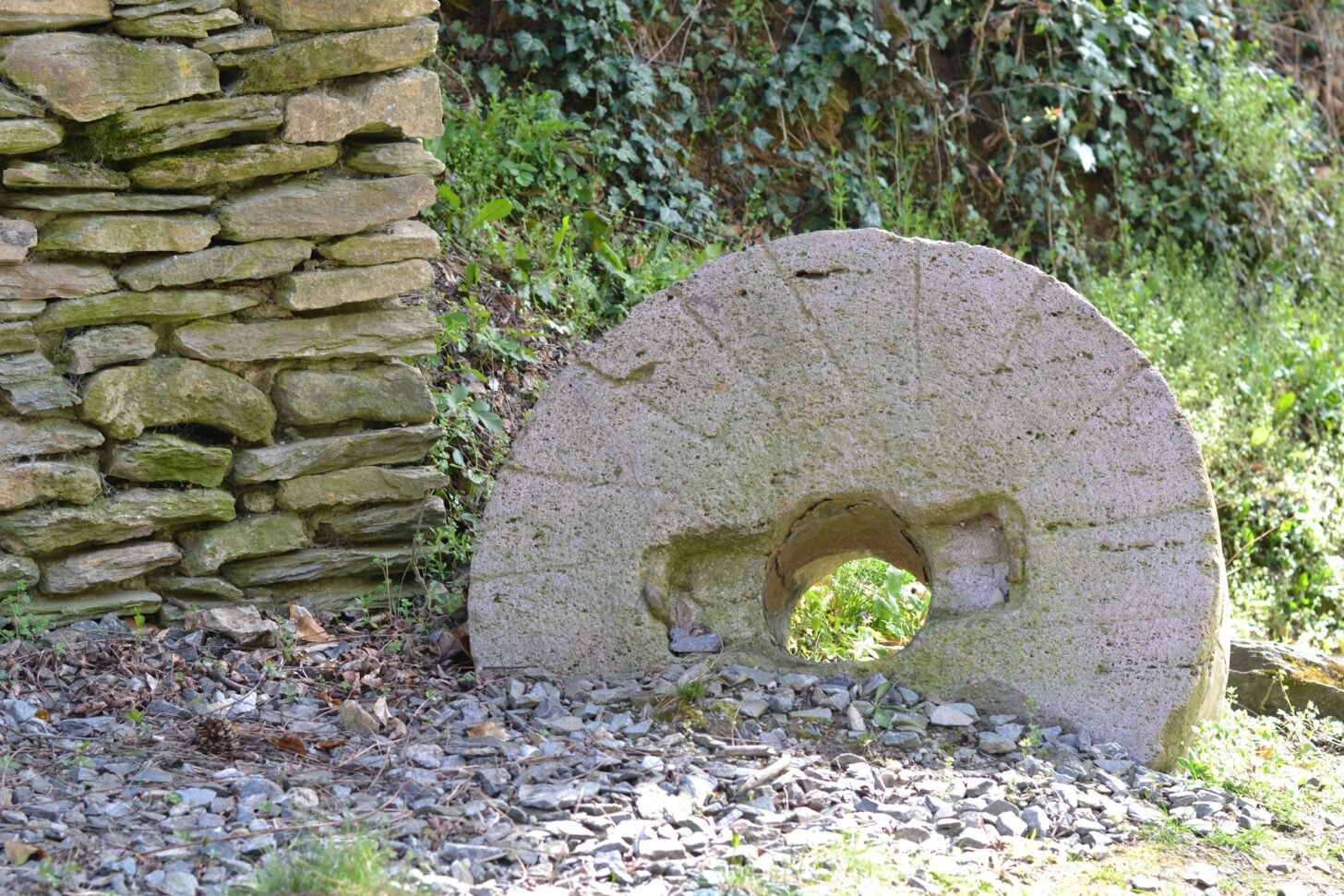
We sat on a tree outside the mill. And then we sang.
My mother killed me
One of the men stopped working.
My father ate me
Two more stopped and listened.
My sister saved me
Then four.
She wrapped me up as bones in a scarf
Now only eight cut the stone.
she took me down the garden path
Now only five.
she let me rest upon the grass
Now just one.
beneath the tree of juniper.
The last man stopped working and listened to the words.
‘My word!’ cried the man. ‘A singing bird. This must be a sign from above. But how shall we thank this dove? Ah!’
Without even discussing it, the men took the finished millstone, carried it between them, and placed it around our neck. The strength of God was with us, and the millstone hung as light as a feather.
And we flew away, for the final time, to head towards the home where I had grown.
There, we landed upon the roof, and through the chimney, heard the conversation coming from the kitchen.
‘Oh, I feel a heat crawling up my arms!’ cried the witch. ‘Marlene, go and open the window!’
So Marlene opened the window. But the witch was no cooler.
‘Oh, I feel a fire burning in my veins! Fan me, you useless man!’
So Father fanned her. But the witch was no cooler.
‘Oh, I feel like I might burst into flames at any moment! Both of you, pour water on me!’
Marlene and Father went to fetch a bucket of water from the garden. We flew down to the juniper tree, landed on a branch, and began to sing.
‘Ah!’ shrieked the witch. ‘What is this feeling?’
My mother killed me
‘Oh,’ said Father, as if waking up from a dream. ‘What a beautiful dove. I have never heard a song like that in my life.’
My father ate me
Marlene began to cry, but she slowly approached the tree.
My sister saved me
‘Don’t go, don’t go!’ cried the witch. ‘The house is on fire, it must be, it is so hot!’
She wrapped me up as bones in a scarf
she took me down the garden path
she let me rest upon the grass
where the witch will die.
We flapped our wings and rose into the air. We opened our right claw and dropped the golden chain around Father’s neck, and it fit like a glove.
‘Praise the Lord!’ cried Father, falling to his knees.
The witch fell to the floor inside the house. She lost control of the body as the fire jerked her like a puppet – the demon wanted out.
We flapped our wings again, and dropped the pair of red shoes onto the ground before Marlene. She stepped into them, and they fit perfectly.
‘They feel as warm and soft as a mother’s hug…’
‘Enough, enough!’ screamed the witch. ‘I will run to the river and jump inside!’
She ran out into the garden, waving her arms wildly, and just as she passed the juniper tree, we dropped the millstone.
‘AAAAHHH!’ screamed the witch.
The monster’s bones cracked open and the fire was released. Father and Marlene screamed, as it danced towards them.
We flew down, entered hell. There, hidden in the sea of red and white, was a demon, a fat, hunched creature thirsting for a host.
A little bird? Not good enough!
The demon swung its claw, thinking it could bat us aside, but we were too fast for it. We shot into its eyes, our beak sharp. The demon shrieked, and blood escaped in fountains of steam.
The monster fled, blinded, and the fire quickly died down. But it was too late for us.
Marlene found the burnt little creature. She knew who it was. One does not receive a message from God like that and fail to understand it.
All that was left of the witch was a pile of foul-smelling black bones, and when Marlene and Father tried to move them, they found they were as heavy as the chest which killed me. So they dug a hole beneath the juniper tree and pushed them inside.
A year later, Marlene left home, with nothing but a bag of fruit and a pair of red shoes. As much as she loved Father, there was nothing left for her in this house. The old man did not try to stop her, and from above, her brother wished her a safe journey.
Around that time, the juniper tree died. It had borne fruits of poison and love for the last time. It was no longer needed. The bones remained beneath – mother, son and monster, two there to make sure the one did not escape.
As for my father, I’m not sure he ever found happiness. But at the very least, I think he found peace. He wore that gold chain around his neck every day, and he never hurt another creature as long as he lived.
THE END
Woo! You know what? I take back everything I said about doubting myself. I take back everything I said about, I’m not sure if this story is good. I don’t know if you’ll like it. I know you just loved it even if you didn’t understand a word! I performed it with panache. I performed it with va va voom, energy, rawr, monsters! Drama! Oh, tears, crying! Oh, happiness, joy! La, la, la, la, la, la. I have all the emotions within me!
And, you know what, I even sang a bit. You know, I’ve got into the habit of just singing randomly. Like the other day, my students were not doing their vocab quiz. They had a vocab quiz, and they were not doing the vocab quiz. So I said, it’s the vocab quiz song! Do your vocab quiz! Et cetera, et cetera. And as I’m sure you can imagine, they got right to doing the vocab quiz and they did not complain once. They were just like, huh, Ariel’s singing! It’s a normal Friday.
You know, recently one of my friends described a phenomenon known as Ariel Audacity, as in my audacity, the way I am so bold and brave to just say, I’m amazing, I can do anything. And at first I was like, that’s a bit rude. I’m not like that. I’m not that, you know, bold and boastful. I do have some humility, but then I do things like what I just said about, I’m so amazing. I killed that story! I ate it! That story was amazing! And I’m like, okay, maybe there is a point to Ariel Audacity.
Maybe I am a tiny bit audacious, and dare I say, a tiny bit boastful. Maybe I am a bit too proud. Maybe God will strike me down. Maybe he’ll send a little dove to drop a millstone on my neck and I’ll go and die. Hopefully not! And if it does happen, hopefully it will, at the very least, be in the middle of recording an episode of Easy Stories in English so you can all hear my death rattle.
Ooh. That’s quite a dark image. Well, this story had cannibalism in it, so you’ve had enough of the darkness already. Let’s turn to something lighter: gratitude!
I want to say a big fat thank-you to all of you who have supported me on Kofi. Many of you have recently donated a few dollars. You’ve bought me a virtual cup of coffee. In the past, I thanked each person individually, but I’ll be honest, I’m not great at like messaging and checking things, so I figured I would just say a big thank-you here. Thank you to all of you who have donated money. I really appreciate it. $3 goes a lot further in China than in the UK. Let’s talk about that. So, you know what? I can get a nice, big, fat coffee with the money you’ve given me. Probably, uh, I haven’t done the calculations, but you know, it’s the thought that counts.
And on that note, thank you to everyone else who’s supported by listening, buying my books, telling their friends about the podcast. It really means a lot to me, and especially in this new phase of my life.
I’m, I’m gonna be honest guys, I’m struggling a bit with loneliness! I’m like, I’m here in China, in Ningbo. I don’t have any community. I don’t even have many other British people around me, like I’m the only British person in my department. I don’t have that many close friends yet. I don’t know the country really well at all. I barely know the city I live in. There’s all of these new things going on. I need to get a new pair of glasses. I need to get my hair cut, and all of that is going to be quite difficult to manoeuvre and navigate in a different language. So as you can probably imagine, it’s been quite an emotional time and knowing that you support me and you listen to the podcast really warms the cockles of my heart.
You know, recently I’ve been reflecting a lot on, I’ve been doing this podcast for almost seven years, and when you look at how much the internet has changed in that time: the landscape for podcasting, YouTube, and all kinds of online media from 2019 to now is like completely different, and it’s a much harder market now. It’s much harder for me to reach people in the way I used to. Much more work is expected of you as a content creator. It’s a lot of hard work.
So there are moments where I’m like, oh my God, is it worth it? Like, but then I remember all of the amazing comments I get from people saying how much this podcast has helped them. So that’s what I’m doing it for. That’s what I’m doing it for. Yes, yes, yes.
Okay. Sorry, I’ve probably been talking at quite a difficult level, but you know what, as I’ve said before, it’s good to have a challenge sometimes. I know some of you are at that upper-intermediate/advanced level and really appreciate this kind of content, so ah, you’re welcome!
Anyway, thank you for listening. I’ll see you soon and don’t meet any demons. I hope you don’t meet any demons. That would not be good. Okay, bye!


Leave a Reply