Hello and welcome to Easy Stories in English!

We’re gonna learn some English. We’re gonna learn together. You’re gonna learn some English by listening to me. My name is Ariel Goodbody, and as always you can find the transcript at the link in the description.
It’s on the website, Easy Stories in English dot com. Read all the transcripts, read all the transcripts. Listen to Easy Stories in Eng-
Woah, yeah, yeah, yeah. Easy Stories in English!
Okay, I’ll stop. Stop. I’ll stop. I promise.
By the way, today’s recording is possibly going to be interrupted by a very special delivery to my front door. Yes, that’s right, I’ve ordered a cheese and sea salt latte from a coffee shop, and they’re bringing it to my front door.
But first let me introduce the theme, the atmosphere for today’s episode, and that is: how slow can I go?
Now, I recorded a whole episode a few months ago when I was really tired. I was so tired that I just spoke really slowly and I didn’t do my usual crazy thing of going up and down. Or, you know, going [monster noises]. I’m a little monster. I didn’t do any of that because I wanted to save my energy.
So imagine my surprise and disgust when I realised afterwards that I had not actually hit record and I didn’t record any of that episode. But the idea of an episode where I just try to talk really slowly appealed to me. I thought there was something there.
It’s a bit strange, right? Because I’m not aiming to make this like a completely beginner level episode. So this speed of speech may even be too slow for you if you’re listening at an intermediate or advanced level.
But there’s where the magic of modern technology comes in. You can just play it at 1.5 times speed, or if you are feeling really daring, 2 times speed. Why not? Make me talk like a chipmunk on steroids.
So I decided to do this episode because I think it’s an interesting creative restriction. I can get carried away when I do the conversational episodes and talk too fast and use too difficult language. So this is kind of a way of grounding myself, holding myself accountable, making sure I’m really delivering a thoughtful, careful monologue. And creative restrictions are interesting. They always create a new result.
Hmm. There’s a better way of phrasing this. I think restrictions unlock new forms of creativity and, ironically, restrictions actually give you more creativity. As an artist, they help you expand what you can do and stumble upon new ideas. I would have never written so many short stories if I hadn’t started this podcast and I had to write short stories in a specific format for learners. Writing stories at a variety of levels for English learners has really improved my skills as a writer and has led me to create some kinds of work that I never would’ve been interested in before or perhaps wouldn’t have been able to do.
But enough about the thematics and schematics of this episode because you are probably dying to know more about that cheese and sea salt latte.
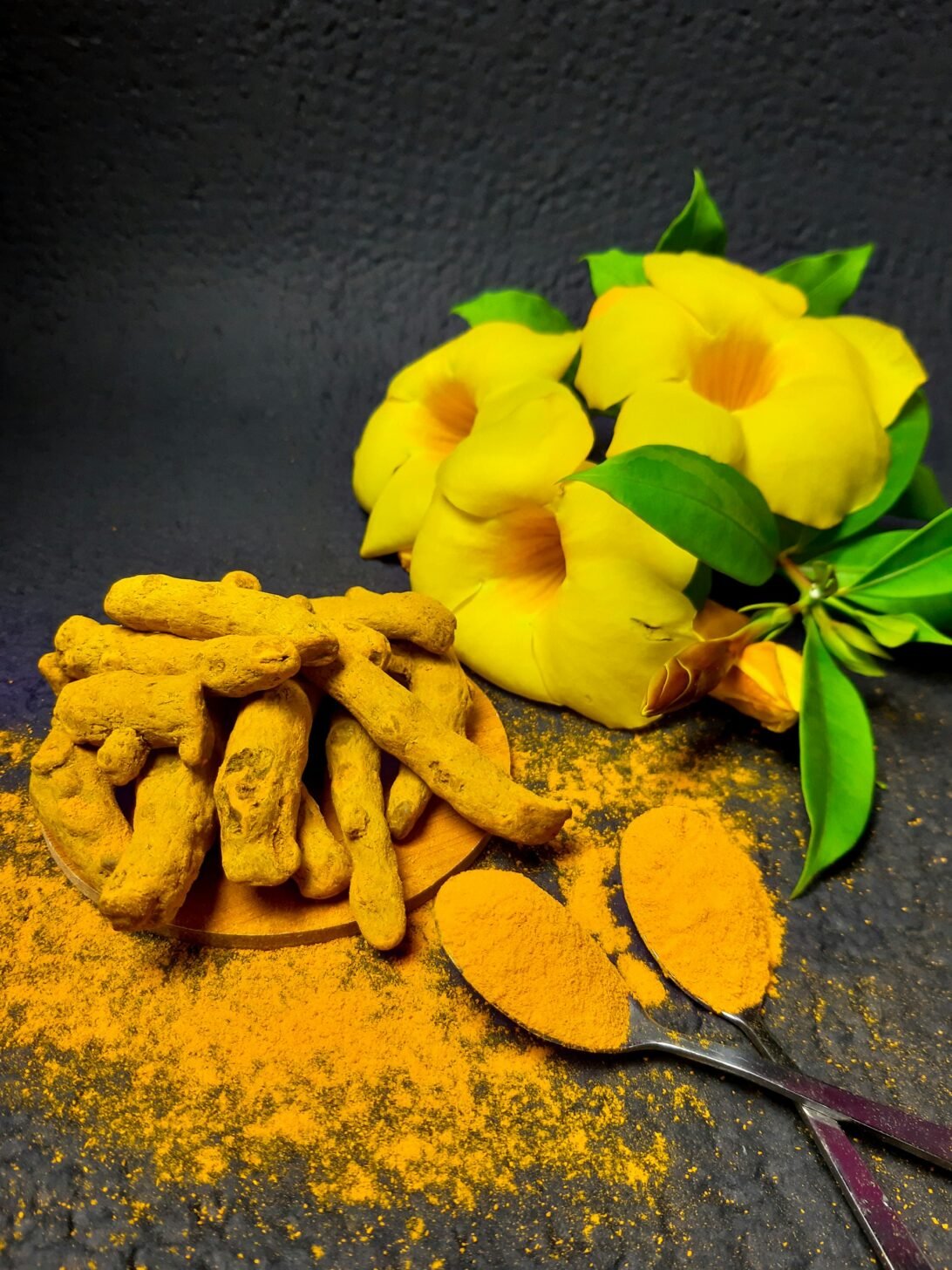
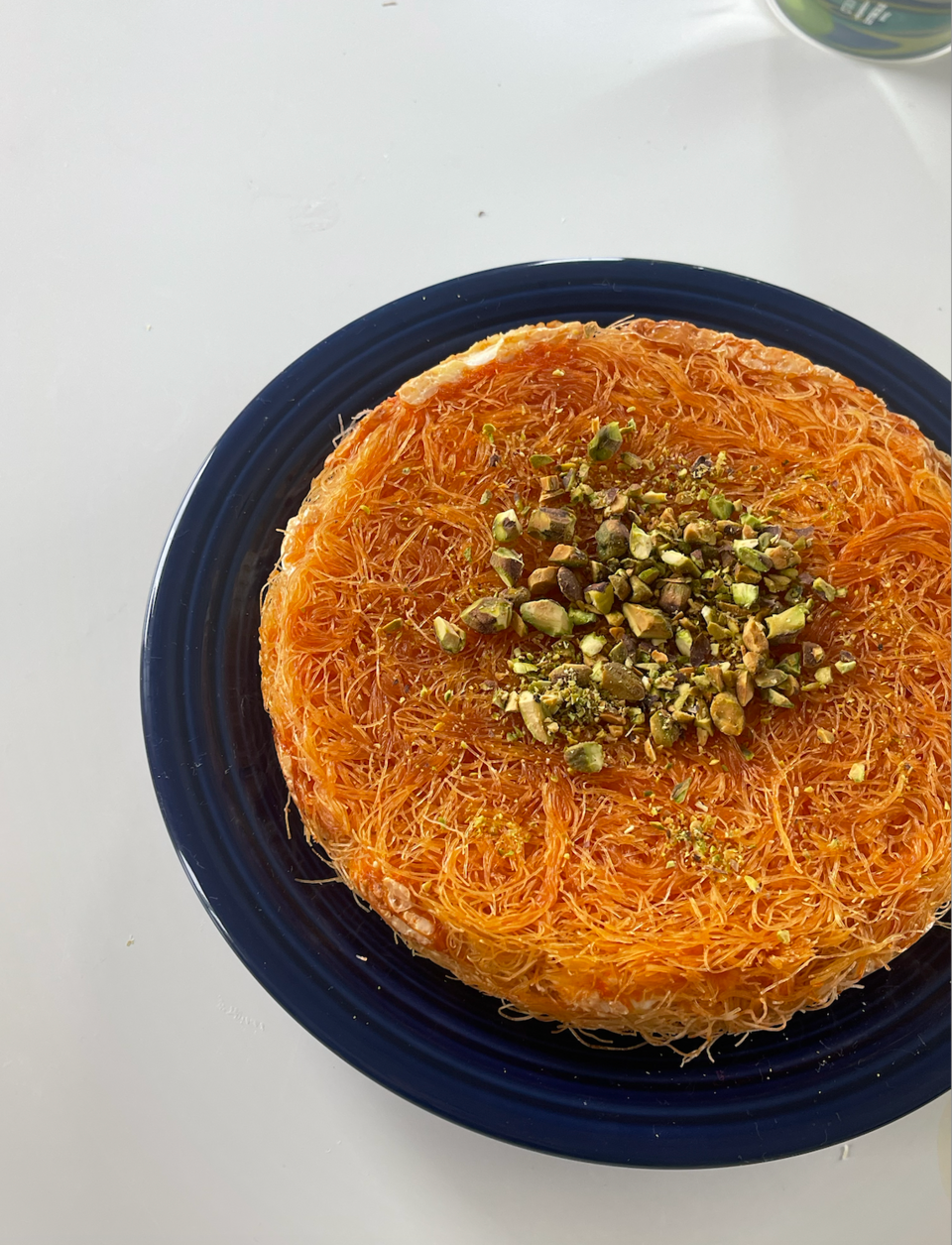
Now, I thought there were some strange drink combinations in London. London is no stranger to a turmeric latte or a beetroot latte. Beetroot is that really red vegetable that if you eat it, your pee becomes red as well. And a beetroot latte is actually surprisingly delicious. Of course, we also have pistachio lattes and anything pistachio flavoured has become meteorically successful in the wake of Dubai chocolate, one of the stupidest culinary phenomena to affect our world in the last few years. Yes, I have tried Dubai chocolate and it’s fine. It’s too sweet. You can just go to a Turkish shop and buy kunefe. It’s basically the same thing and it’s usually a lot cheaper.
So when I came to China, I wasn’t expecting to be surprised by some of the out there drinks options, but here they really take it to a whole new level. The other day I had an aloe vera iced coffee, and as you can probably tell from my tone of voice, I wasn’t a big fan of aloe vera and americano mixed together. Didn’t like that.
So why did I go for the cheese and sea salt latte? Well, I’m more hopeful about this combination. I have had savoury cheese in drinks before and I’ve liked it. I think hot latte with cheese and salt could work. I’m willing to give it a go. Now, the other day I did order some sushi that I think had cheese powder on it. It had some kind of powder on it, and I did not approve of that. So we’ll see.
To be honest, I wasn’t even planning on ordering coffee, but I’ve become quite addicted to some of these Chinese apps. Now, in the West we complain about TikTok and Instagram, but in China it’s a whole other ball game. Like every Chinese app, whether it be a banking app, a shopping app, a food delivery app, has a million options, and they’re all trying to do what the other apps are doing.
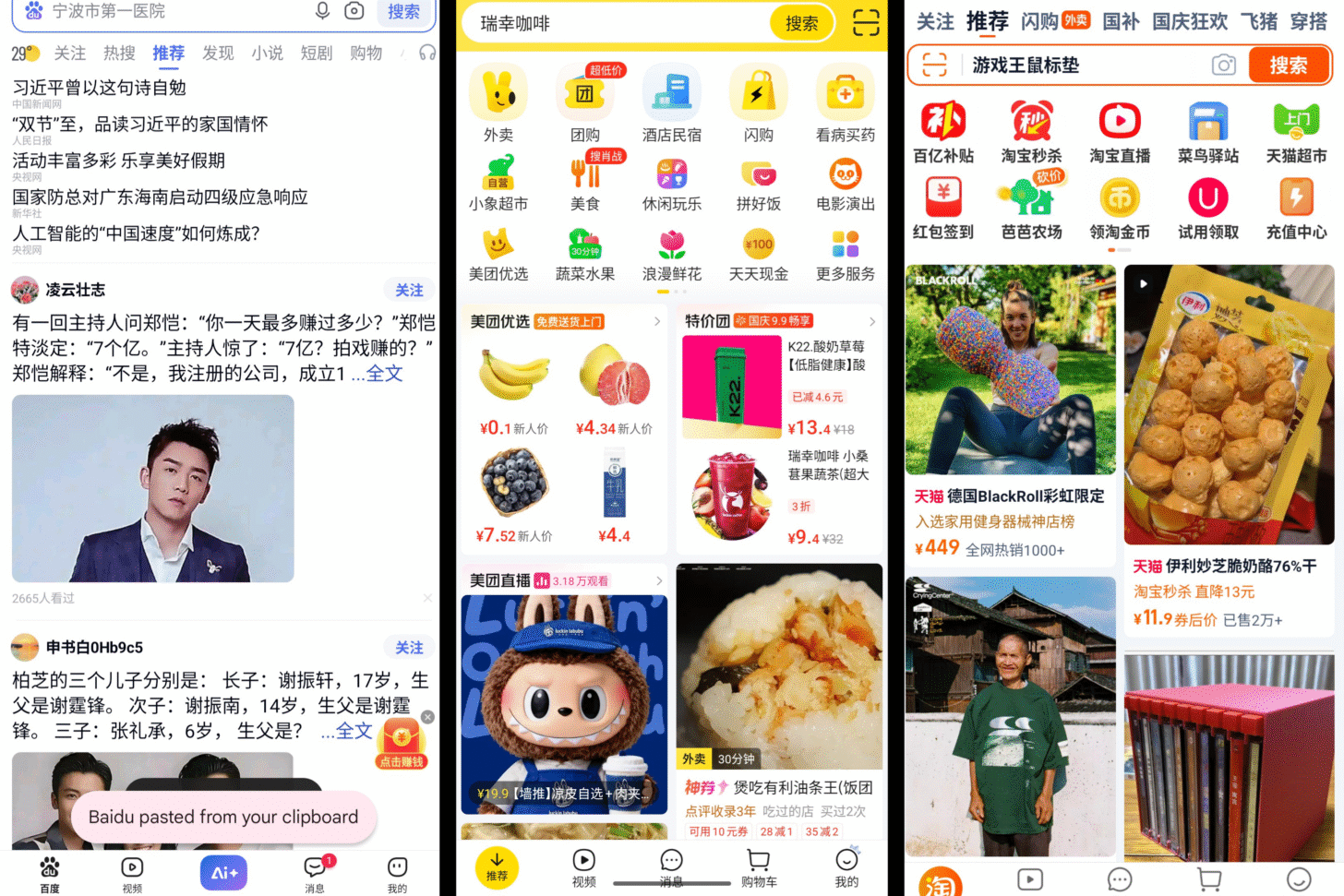
So every app has a video feed like TikTok. Every app allows you to collect coins, which you can either convert into real money or use for discounts in the shop. Every app allows you to get these red envelopes, which are basically just vouchers, and often they’re time limited or they can only be used on specific products. Every app has these little games where you can like raise chickens on a farm or grow trees or clean up the ocean or create green energy in a power plant. And you earn points in these games by like feeding the tree or going for walks or whatever. And in some cases, like the tree game, you can actually plant trees in the real world. And in the chicken game you get love eggs, which you can then donate to charities, and then the company will actually give money to the charities.
So it’s not like it’s all bad, but it’s terribly confusing. I’m never quite sure if I’m saving money by using these things or if I’m just being pulled deeper into a consumerist hellhole. Like just now, I spent maybe 10 or 20 minutes watching really stupid short videos on Meituan, which is probably the biggest Chinese delivery app. It’s not just food. They also deliver batteries, tech, flowers, basically anything you want at short notice. That’s where I ordered my latte from because after watching a bunch of videos, I had accrued a large pile of gold coins, which I have converted into real money, which is about eight yuan so it’s 80p, so it probably wasn’t worth all that effort. I’m certainly making less than minimum wage watching videos on Meituan.
But in addition to that, they also gave me a red envelope to use on food, ordering food, and it was quite a generous red envelope of 16 yuan. So I thought, well, maybe I’ll just order a coffee. And I did, and I got the coffee for like 17 yuan, which is £1.70 in GBP, and that’s a pretty good deal. But also I’m like, if I hadn’t been scrolling through this app in the first place and I hadn’t got offered this thing, I probably wouldn’t have bought this coffee in the first place. So at the end of the day, the company wins.
I do have to say though, it’s quite refreshing because the Western apps like Instagram and TikTok, all you get from scrolling them for hours is depression, anxiety, and a bad back, whereas on the Chinese apps, you get actual money just for watching stupid videos or playing silly games. So there is like an actual incentive to it. Some of the apps even have built in e-readers and you get rewards for reading books. Now, I don’t think these books are exactly world class literature, but the fact that it’s encouraging reading in any form is commendable, I guess?
However, I have to say, some of the things I’ve seen in Chinese short form videos… Ooh. Um, on Meituan, let’s just say a lot of these videos are not family friendly, and the Chinese government does have very strong restrictions on certain kinds of content, but some of the stuff I just saw today, I think would be banned on American TikTok. It was incredibly sexual and obviously it only goes up to at certain points, but at the same time I was like, whoa, this is really too much.
On the other hand, when I’ve dipped my toe into the short video feed on Weixin or WeChat, it suggested certain content creators to me whose videos entice me, baffle me, and terrify me.
There’s this one guy who takes animals like frogs, giant salamanders and crocodiles, puts an egg in their mouth, and then wraps them in tinfoil and mud and bakes them and then eats them. There’s something about the way he does it and it has all this fun, peppy music and sound effects, like boing, huh, and then the way that he just takes this massive baked crocodile at the end and takes a bite out of it. It’s all quite overwhelming.
There’s also, you know, this trend that’s also popular in the West of people giving spas to their dogs. Like they clip their dog’s nails, they give their dog a massage, they put some skincare products on the dog. But I did get suggested on WeChat several times, this person who will give the massage and the treatment to like a duck or a chicken or a frog, and then halfway through the video, suddenly she’s cooking the duck or cooking the chicken or cooking the frog, and it’s like, oh, okay. I wasn’t expecting that.
Now I’ve kind of just accepted that the approach to animals is very different here. I actually think in many ways it’s much more sensical than the Western approach. In the West, we love dogs and cats and cute animals, and we love eating meat, but we don’t like to think about the production of meat. We don’t want to see meat being produced. Many people will happily eat meat someone else has prepared, but they can’t prepare meat with their own hands. There are slightly arbitrary distinctions about what animals are considered acceptable to eat and which are unacceptable to eat and so on.
Whereas in China, they’re animals: we’re gonna eat them. Seems to be the attitude. Obviously it varies a lot by region, social class, individual. But for example, I was in this fast food restaurant that’s kind of like the Chinese equivalent of KFC, and they had a video showing chickens being prepared in like an abattoir, like in a factory, like the bodies being taken apart to make the parts of meat that will go into your burger. And in a Western fast food place, they would never show that because they don’t want you to make the association between the violence of actual meat production with the pretty delicious burger that’s in front of you.
In other news, I went to a Pilates class yesterday. The other day, I walked past a mall and I saw that they had a yoga and Pilates studio. So I decided to go in and talk to them, and yesterday I finally tried out one of the classes.
Now, I’d never done Pilates before, but having done a lot of yoga, it’s not that different. But doing an exercise class in a non-native language, doing an exercise class in your second language, is a whole different experience. It was so intense. First of all, the class was just generally intense and I was sweating from head to toe by the end. Also, it was a very small class and the people in the class were small, as in everyone was much shorter than me, and so some of the exercise equipment was not quite positioned at the right level for my height. So I had to make a lot of adjustments, but the teacher was very complimentary.
And obviously in an exercise class you can kind of look at other people and figure out what they’re doing, but you do learn a lot of language very directly through the commands and the corresponding physical activity. So for example, I now know the word for knee is xigai. I think it’s xigai. I might have got that wrong, but it came up a lot in the class. Also, huxi is breathe because there was a lot of breathing in the class.
So, yeah, that was an intense experience, but it was also so gratifying. Every time I do something like that here, I feel like I’ve completed a quest in an RPG, I’ve like unlocked a new thing. Like the first time I go to the dentist or get my hair cut or get new glasses, which are all things I need to do, by the way, I will feel such a sense of accomplishment because I’m having to learn how to do it in a new language and in a new culture. But it feels really great.
And it really makes you realise how much of an advantage you have when you’re not an immigrant, like when you live in your home country and you know how all the systems work, you know the language and you know how much it’s going to cost, and even small things like the payment structure, whether you expect there to be a changing room at an exercise studio, and so on.
So I had been feeling pretty miserable and lonely the last few days, but that Pilates class gave me a huge boost to my self-esteem, and I think it’s going to be fantastic for my Chinese also, because I was chatting to the owner a lot and I had to, you know, negotiate the package of classes I wanted to buy in Chinese, so that was definitely useful practice.
The weather has actually started to cool down a bit here. It’s been much cloudier and it got as low as 23 degrees the other day, which, okay, as a British person, I can still go out in a T-shirt in 23 degrees, but it is quite a marked change from 30 plus degrees, which is what I got used to. And to be honest, I would rather have the blistering heat and sunshine than cloudy, wet weather because when it’s cloudy all day, it just reminds me of being in the UK. And I want sunshine. I like sunshine. My arms are actually pretty tan here, I have to say, even though they’re often covered up with my shirt at work, so there you go.
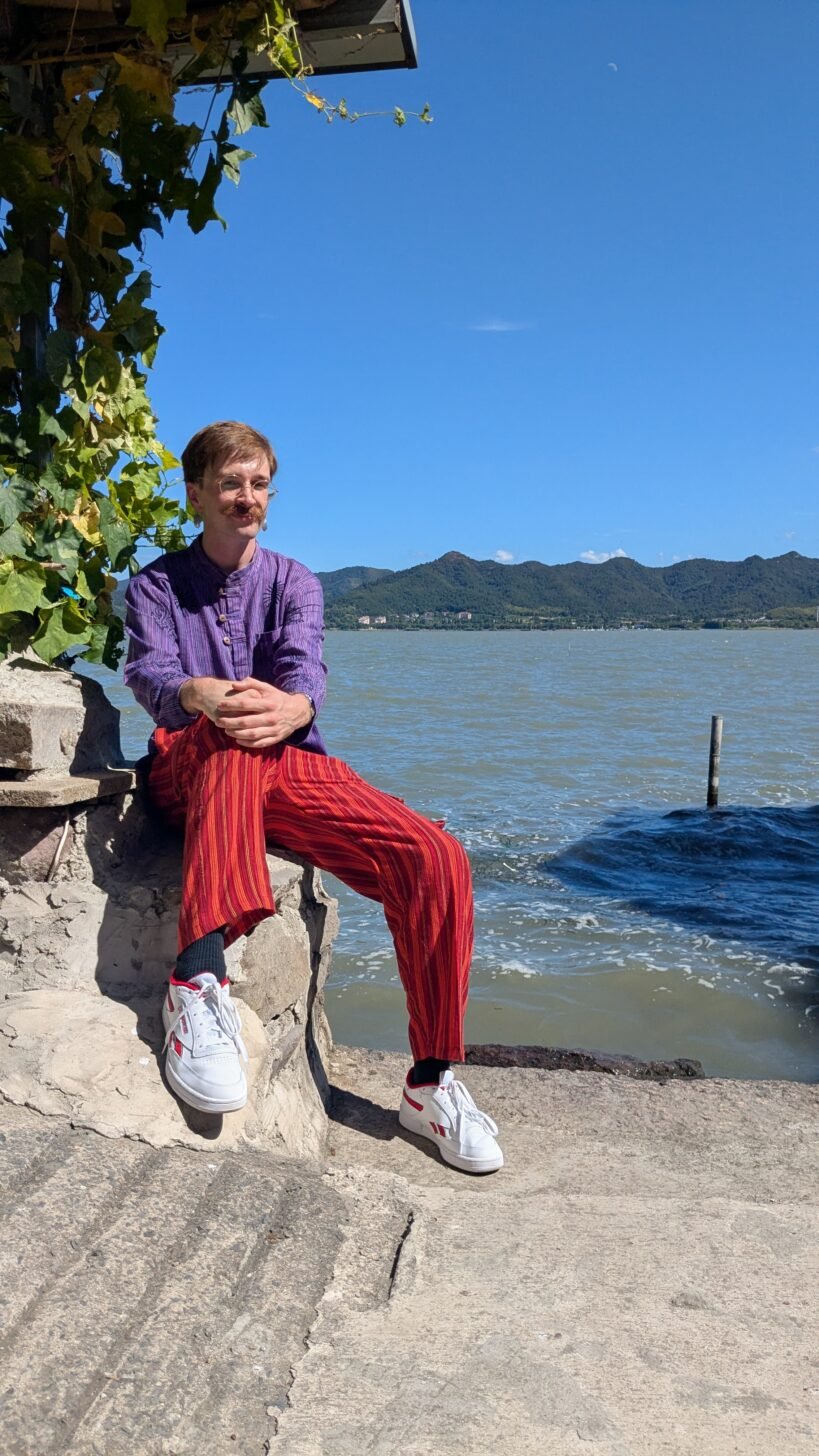
By the way, if you want to see more visual descriptions of my time in China, definitely follow me on Instagram @ArielGoodbody. I have been posting just little collections of pictures every week or so showing interesting things I’ve spotted in China. For example, the other day when there was a rainstorm, I saw a frog on the ground hopping about that was very cute. There are some lovely pictures of me posing next to Dongqian Lake, which is a beautiful lake in the south of Ningbo.
And if you want even deeper cuts like you want to know about weird food items I found here, and believe me, I’ve found a lot of weird food items here, then you should join the email newsletter at EasyStoriesInEnglish.com/Email. The easiest way to get it is just to go to the transcript for this episode and scroll down to the bottom. You’ll find a little form there to join the email newsletter. If you don’t know, I send out an update with every new episode, and recently I’ve been writing little like diary entries in the emails.
I’ve just kind of been talking about what’s on my mind, sharing some pictures. Basically, it’s stuff that’s maybe too philosophical or too visual to go on the podcast, but also not aesthetically gorgeous enough to go on Instagram. So it’s like a very specific kind of vibe. If you feel like you want to pick my brains and really hear my deep thoughts on something, slightly more intimate thoughts, slightly more ponderous thoughts, or if you just want to see funny pictures of weird combinations of Chinese and Western food, you should definitely join the email newsletter.
As I’m recording this, it’s the 21st of September, so I’m recording this quite a bit in advance, but from the 29th of September, there is a one week holiday in China. It’s the Mid-Autumn Festival. So we get a week off work and I am going to be going to Hangzhou, which is a big, beautiful historic city between Ningbo and Shanghai. I decided to go right at the start of the holiday, on Saturday the 27th, and I’m staying for three days? 1, 2, 3. Yeah, three days technically, maybe four depending on how you count it. I’m leaving on the morning of the 30th.
And Hangzhou has another beautiful lake called West Lake. It has some tea pavilions, it has some cool clubs and bars. I’m going to do a day trip to a historic village north of the city. I think it’s going to be a great time, and most importantly, I’ll have some time off work. That is very welcome. So I may even do a whole episode about Hangzhou, ’cause some of you commented that you really liked my episode about Hamburg, so maybe I should do something similar about Hangzhou. We’ll see.
But I’m just really excited to have a holiday, like, believe me, it’s needed. We will only have been teaching four weeks, but those four weeks, well, the three weeks we have done so far have been incredibly intense. I don’t quite feel like a fish out of water still, but I do feel tired and it’s been pretty relentless. Like, kids are challenging and especially when you’re teaching them a language that they don’t know so well and they have like nine classes a day and they’re full of energy, but they’re also tired and frustrated and they, you know, you know what it’s like. You went to school. You get the gist.
Actually, if any of my students are listening to this, hello! And do your homework. And if any parents of students are listening to this, hello! Make your child do their homework, please. I like to think my homework activities are quite fun, personally. Oh dear.
And hmm, why not end this episode with a little experiment? I’ve been talking really slowly this episode, but generally on the podcast I talk pretty clearly, so you probably haven’t heard me talking like I talk in my everyday life to native speakers and people I’m close to. So maybe for the last bit of the podcast, I’ll just kind of improvise and let my hair down, I guess. Like talk fast and relaxed. I don’t know. It’s a bit weird doing it deliberately. Think of this as an advanced practice session. How good is your English listening really?
Oh, but don’t get stressed about it. Don’t stress out, you know, because people get so stressed about language exams. People get so stressed about talking a language, and especially with listening, the more like anxious you are, the more stressed you are, the worse you’re going to do. Like in this exercise class yesterday, I could not stop and process the language individually because I was also staring into a mirror, looking at my body, moving my body. I just had to give into the flow. I just had to like allow myself to be carried away by the flow of the class.
And I think that’s the way to think about it is like, when you’re present, when you’re speaking to someone in a foreign language, like when you’re fully, and actually just generally, I think, when you’re talking to someone, if you’re fully present, you’re not focussing on their every word. You’re taking in their entire being. You’re taking in their facial expressions, their body language. You’re taking in the deeper message of what they’re saying. You’re kind of… What’s the way to think about it? You’re almost this like pillar of energy and you’re allowing the other person’s energy to flow over you and then bounce back. Ooh, that sounds incredibly woo woo, but I hope you understand what I mean, right?
When you’re having a conversation in your everyday life, it’s not an exam, you’re not getting marked on it. And if you don’t understand something, it probably, well, it isn’t necessarily that important. Like I think you can often get a vibe of like, is this something important they’re saying or it’s not something important and if it is something really important, they’ll probably say it twice or like, make sure you understand and if it is something where you think, I need to understand this, you can ask, right? Like, people don’t get mad. And actually you can have a lot of fun with this. Like when I was talking with the manager of the yoga studio yesterday, there was a bit where she said something, I was like, uh, what does that mean? And she was like, uh, I don’t know how to say it in English. And I was like, hmm. And you know, you find other ways to communicate like pantomime or analogies or whatever, you know, it, it, it all shakes out in the end.
It actually kind of makes you realise how much of human communication isn’t that important. Like we read a lot of someone’s mood and like their inferences from their body language and their tone of voice. So if you don’t understand all of the individual words, it usually doesn’t matter that much in terms of like, what further impact is this going to have on my life. Obviously it can prevent you from getting close to someone, but you can also get incredibly close to someone and not have any shared language at all.
Alright, I think I’ve tapped out my capacity for fast talking. Wah! That didn’t even feel particularly natural to me. It, it’s a bit weird when I’m recording a podcast because it’s like not scripted. When I’m doing a conversational episode, it’s not scripted. I maybe have bullet points, although with today’s episode, like I really had like a rough idea in my mind of what I was gonna talk about, but once I stand in front of a microphone, fundamentally, the way I talk is going to change. And actually I don’t think that’s that strange given that like if I send a voice message to a friend, it’s a much different style of communication than talking on the phone or talking in person because you’re just giving a monologue and we don’t tend to monologue in everyday lives. In our everyday lives.
So I do wanna say that because a lot of people say to me, oh my God, I can understand your podcast so well, I can understand you perfectly. But then when I go and have a conversation, like I can’t understand the person. And it’s like, well, yeah, they’re a different person. They don’t have my voice, they don’t have my way of speaking. You don’t have that familiarity with them. You can understand me perfectly well because you’ve heard me monologuing for hours and hours, unless you’re new to the podcast, in which case, hello! Please stick around. But yeah, you build that familiarity with individual people. And also, yeah, there’s gonna be like a conversion cost. It’s gonna be a bit hard to understand the person at the beginning. But the longer you know them and the more you put yourself in those situations of talking to strangers, having conversations in English where you don’t understand everything, the easier it’s going to get.
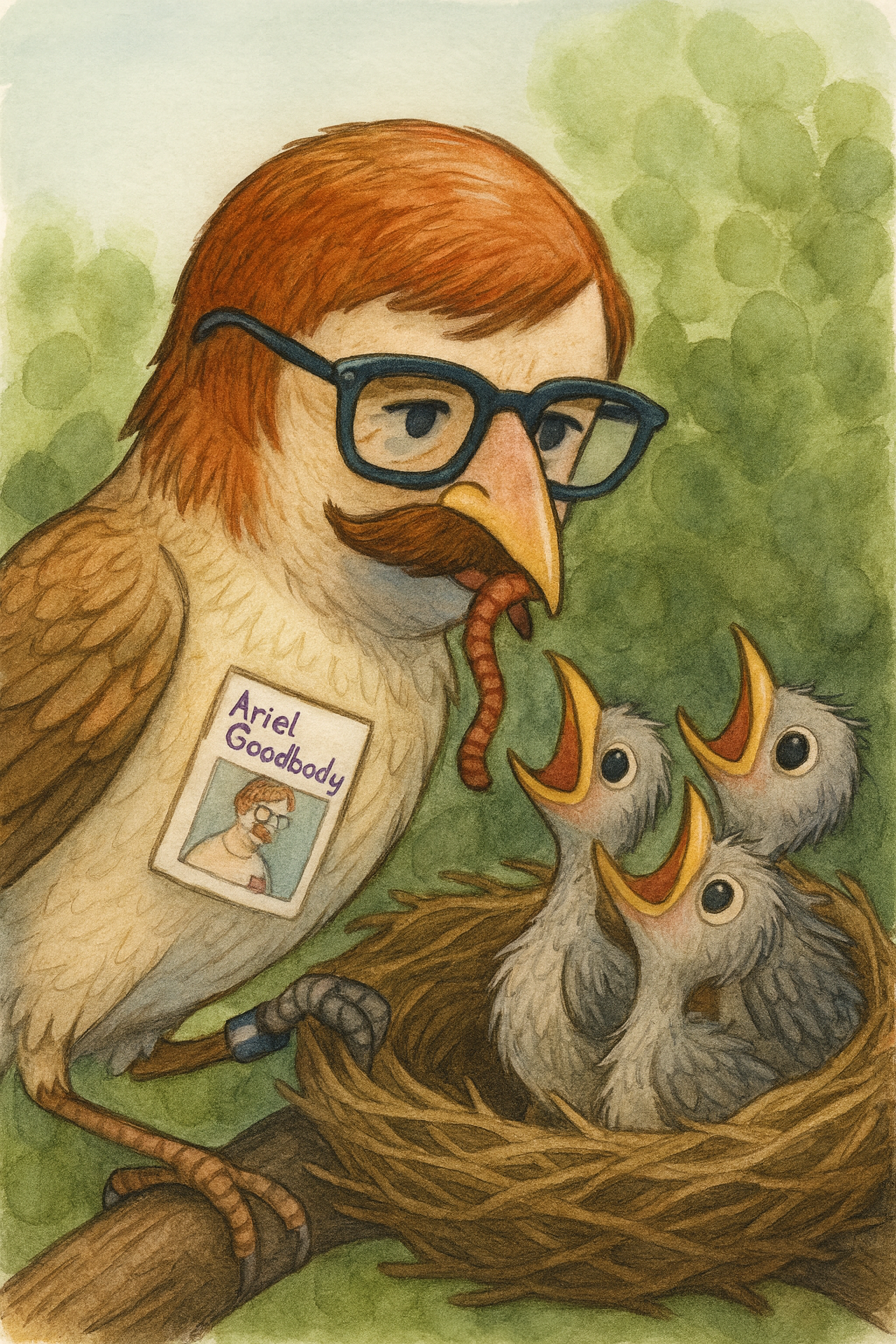
This is a really weird analogy, but I think you can think of me as like the mother bird. Like we’re in the nest on the tree, and I’m like the the loving mother bird, and I’m like feeding you worms and like regurgitating food into your little beaks. And then when you’re ready to fly, I’m not gonna push you out of the nest because first of all, I don’t get paid enough for that. But, um, when you’re ready to fly, you will leave the nest and you will fly by yourself. And it will be scary and it will be difficult. But I’ll be there waiting back at the nest. If you wanna pop into the nest and listen to the podcast again and have that comforting worm food, I’m here.
Okay, this, this, this analogy has gone on way too far. Please. ’Cause I don’t want you to think that if I meet you in person, you can expect me to feed you worms. To be perfectly honest, you need to find your own worms and eat your own damn worms. I’m not giving you any worms. I can barely find enough worms for myself.
Okay, on that note, I think it’s time to leave. Thank you for listening. Thank you for being a chirpy, tweety little bird in my wonderful nest. I like to think my nest is very gorgeous, decorated with the finest twigs and leaves, and I’ll see you next week.
Goodbye!


Leave a Reply