Hello, my Lovely Learners and welcome to Easy Stories in English! Uhhuh Uhhuh. Uhhuh uhhuh. Uhhuh uhhuh. Uhhuh uhhuh. Uhhuh uhhuh. Let’s learn some English with Mr Goodbody! Let’s learn some English with Mr Goodbody! Yeah, yeah, yeah, yeah. We’re gonna learn some English. Yeah. We’re learning English. English! Uh, uh, uh, uh, uh. Yeah.
Okay. Before I hit record, I never know what’s going to happen. Sometimes I come out like this. Sometimes I come out dramatic and moody. It’s a different show every time, and I’m the performer, yet I never really know how it’s going to happen.

So in case you hadn’t already guessed, today’s episode is an improvisational episode. I am batching these episodes. I’m recording lots of episodes and editing them and scheduling them early because from the end of January I will have a friend visiting me from London for a few weeks, and then I am going to Cambodia with my parents. So I will not have time to work on Easy Stories in English, or rather, I will not want to be editing podcasts when I could be soaking up Shanghai with my friend and enjoying lovely, delicious tarantula in Cambodia.
Because that’s right, they do eat tarantula in Cambodia, and I do want to try it while I’m there. We’re also going to see Angkor Wat and, you know, some other cool things. To be honest, I don’t really know that much of what’s happening on this holiday. I’m just there for the ride.
I have a bit of a sore throat today. Sorry about that. Basically, I’ve been a very busy bee, bzz bzz, lately. So as you probably know, I started doing stand-up comedy in 2024 in London. I did maybe about 12, 12 to 15 slots, comedy shows in London before I came to China. I wasn’t really able to do the stand-up for the last few months before I left because I was very busy getting ready to move to China.
But basically since getting here, I have wanted to do some kind of performance because I like performing. It brings me a lot of joy. And I did discover there was a comedy club in Ningbo called Songguo, which means pine cone, Pine Cone Comedy! But the English name is actually Soogle. But again, it’s one of these Chinese things where if you look up Soogle Comedy on a map, or even most Chinese social media, you will not find the venue, so you really just have to look up the Chinese name.
But anyway, I decided to just go and watch this comedy because I thought it would be fun to watch. It would be good practice for my Chinese. And little did I know that the show I was actually going to see was an open mic, so a show where anyone can come and perform. So it was interesting to see that.
And after the show I thought, you know what? I would like to do comedy in Chinese. Let me just go and talk to the people after the show. And I did! And they seemed very interested, actually, very interested, because two days later I went for coffee with the guy who owns the chain of comedy clubs. They have comedy clubs in Shanghai, Hangzhou, Ningbo, I think some other cities as well. Some that I’ve never even been to like Yiwu, I think? Yiwu! Yiwu! Yiwu sounds very cute when you say it in English.
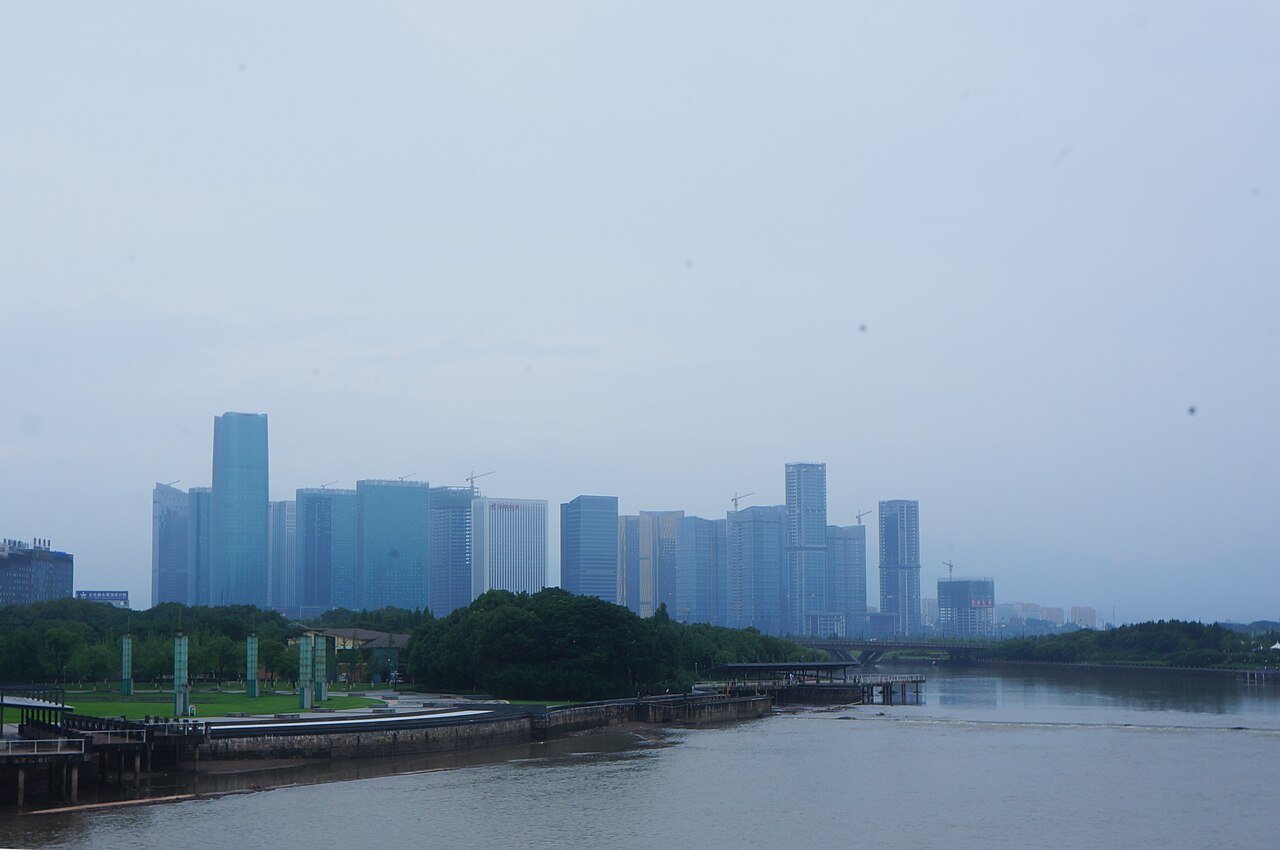
There’s a lot of place names in China that I hear of and I can never remember the tones, so I’m not sure if it’s [says Yiwu with different tones]. If you don’t speak Chinese, be glad. Be happy that that is not the case.
Okay. Let me, ooh! Let me just take a diversion from the comedy to talk about something else, but I will come back to the comedy, but I just want to complain for a bit about the Chinese language. Look, I love languages, love Chinese. Generally, pronunciation is the one thing that I’m really good at in every language. And with Chinese there is just something about the tones that is not sticking, like I have never struggled this much with pronunciation before.
And it’s not that I can’t pronounce them, it’s that when I learn a new word, I remember the sounds, but I often don’t remember the tones. And then often I’m saying a word and I think I’m saying it with the right tones, but I’m actually saying it with the wrong tones. And sometimes the differences can be so subtle.
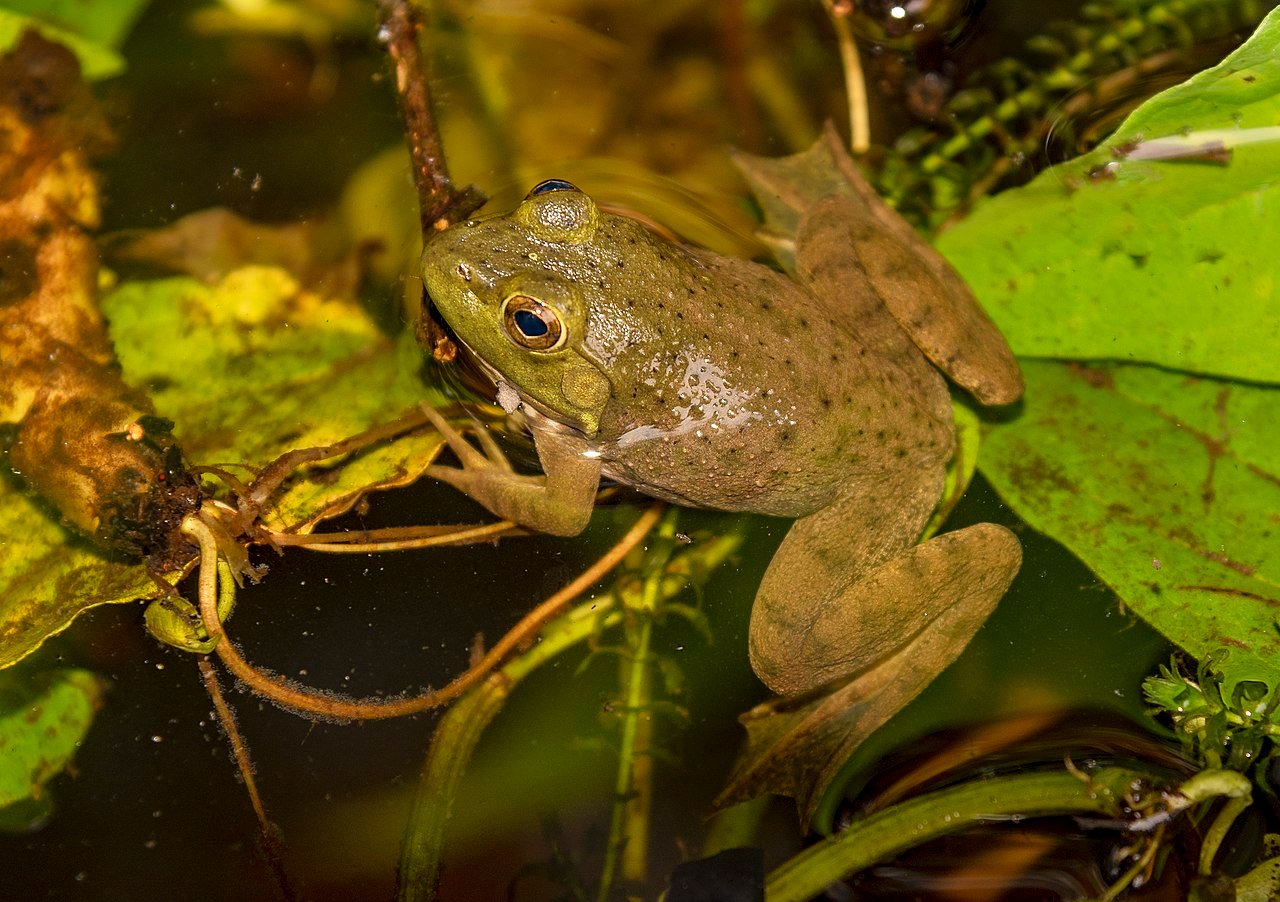
For example, I’ve talked about how I ate this dish on my second day in China called paojiao niuwa. Spicy bullfrog, right? So it’s paojiao niuwa. And if you say the word really slowly like that, yeah, sure, it’s easy to get the tones right, but when people say it fast, it’s like paojiao niuwa. And when it’s that quick, it’s very easy, for example, instead of saying paojiao to say paojiao, so like two falling tones instead of a falling and then a high tone.
So if I say it quickly, [paojiao niuwa with different tones], can you hear the difference between paojiao niuwa and paojiao niuwa? It’s so small, right? When it’s that fast, it’s such a small difference. Or you have the difference between jingzi and jingzi. And I’m not going to tell you what those words mean because one of them is potentially rude. You’re welcome to look it up.
But yeah, it’s like, oh my God. These tiny, small differences. And you would think that they wouldn’t matter that much, but so often I say a word in Chinese and people are like, huh? Oh, you mean this! And they correct my tones and I’m like, ah, why?! So I’m, I’m like, maybe I should start playing a musical instrument again. Maybe that will help. I don’t know. It’s, I wonder if I had learned Chinese when I was younger, this would be easier because they do say that like learning a musical instrument is something you really have to do when you are young and that your memorisation skills are better when you are young.
Having said that, I refuse to give up. I will master Chinese tones even if it kills me. Um, and that would be shasi: first tone, third tone. Okay. Not shasi, but shasi. Kill. Yes.
So anyway, I inquired about doing comedy at the comedy club and they said, yes, come to the open mic. You can perform. Great. Now, someone told me, oh, you know, Ningbo, it’s a bit like Shanghai. It’s a bit more international. Many people will have studied abroad. I think you can do like a mixture of Chinese and English in your act. So I prepared my eight minute set.
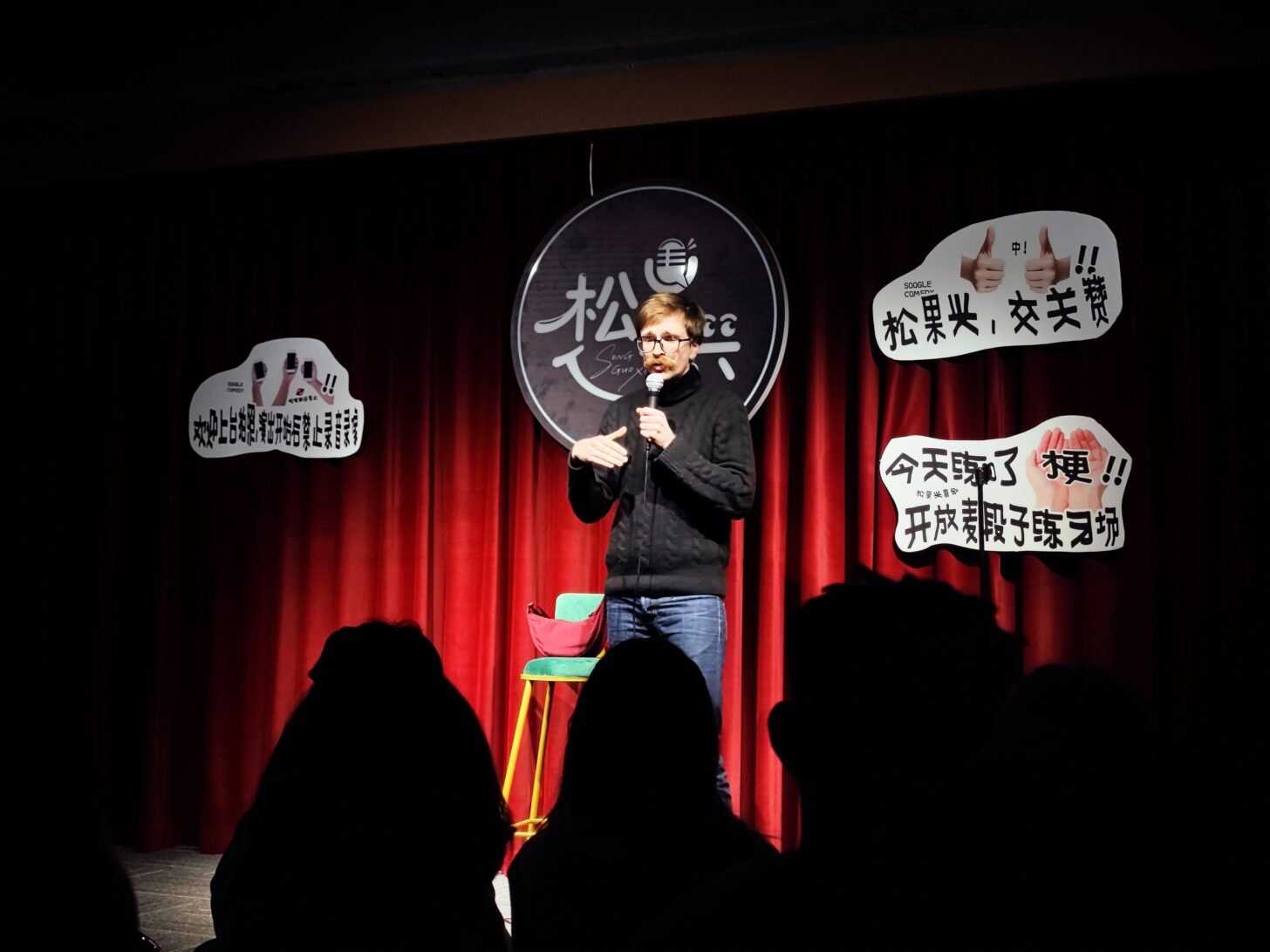
First of all, eight minutes. I’ve never got to perform for eight minutes before. It’s so long. I’m used to five minute sets from London, right? So I prepared lots of jokes, but a lot of them required some knowledge of English to understand. And then when I got on stage, I asked the audience like, oh, on a scale of one to 10, how would you rate your English? And I got like two, 0.5, one! So I was like, okay, so we aren’t going to be telling any jokes in English then, because the audience will not understand them.
And indeed, even when I was doing like impressions of my students, and my students don’t speak very good English, um, they couldn’t understand the impressions. So I was like, okay, I have to do this whole thing in Chinese now, so that was quite stressful. I hadn’t like memorised a script. That seems to be what everyone does here. Everyone kind of writes a whole script and just memorises it. I had kind of just written some jokes and planned to kind of improvise between them, and in a way it’s probably better I did that because if I had learned a whole script in English and then I couldn’t use it, that would’ve been uh, frustrating.
So anyway, all that is to say I did stand-up comedy in Chinese just five months after moving to China. Huh! Huh! Comedy genius, performer extraordinaire, and master of the Chinese language. Kind of. I mean, a lot of the humour came from the fact that my Chinese wasn’t that good.
Also, I cannot really understand other performers very well. So far when I’ve been to the stand-up and I’ve been three times now, there’s only one performer who I like understood a lot of the jokes. But it does make very good practice for my Chinese. I feel like I’m bathing my brain in a bath of very high level Chinese, and eventually some of the, the liquid, some of the Chinese liquid. Yeti, which means liquid in Chinese. Some of it will sink into my skin, penetrate the bone marrow, and I will speak perfect fluent Chinese. Maybe. We will see. We will see. We will see.
But anyway! As I’m recording this, next week, I’m going to host the show. That’s right. I have more of like a host energy than, uh, comedian, stand-up comedian energy, which kind of makes sense. Um, hello. I host this show! And the host, you know, they interact with the audience, they ask questions, they kind of build the atmosphere and make it so that everyone else can get good laughs and kind of feel comfortable performing. And I think I’m actually really good at that. But being the host means I have to talk for longer.
So I have prepared a script in Chinese and someone else is going to check over it and work on it with me. And, you know, they said you can speak really, really simple Chinese, um, you just gotta interact with the audience and kind of, you know, have fun basically. So I feel really, really positive about that.
Now, because I’m batching all these episodes in advance, um, you will hear this about two months after I recorded it, so as you hear this, I hopefully will have hosted multiple times, probably like four times already, or as you listen to this, maybe I have given up my career in Chinese comedy, or maybe I have been dramatically banished from the comedy scene for crimes against comedy and the Chinese language. We will see!
So anyway, after the first show that I performed, it was very interesting. We went outside, like the performers and we kind of stood in a circle and it was like we went through everyone’s performance and we were giving like feedback and discussion like, oh, that joke worked really well, but I think that joke didn’t work so well. And like, what did the host do well? What could be better?
So it’s so, so different to stand-up comedy in London. In London, everyone wants to be a stand-up comedian, and generally the kind of show business media arts in London is very competitive. A lot of people want to break into this industry, so you have to fight to get your spot. You only get five minute slots doing an open mic. You have to bring an audience member with you. Although people, in my experience, were very sociable, friendly, supportive. Like people were helping each other. It did still feel very individualist like you are trying to make your own individual comedy career.
Whereas in China, it really felt like, um, like a, a team sport. Yeah? Like we’re all helping each other be the best comedians and the comedy club is trying to like mentor and nurture young comedians. Well, I’m not that young. Um, so that was so interesting. And then we hung out for a bit afterwards.
I feel like I learned so much about like how Chinese people socialise through that. Someone asked me, oh, are you involved in any other quanzi. So ‘quanzi’ literally means a circle, but it’s used to mean like a social circle. And essentially this is like, um, usually based around a hobby or an interest. So you might have like your badminton circle or like your Marvel circle, right? But it’s like the group you socialise with.
And I was like, oh, okay, so this is how you make friends in China. And I kind of was involved already in my like yoga studio circle, but they weren’t nearly as active as these people were. These people are younger, they’re more like artsy. Um, so I feel like this is going to be a very good area for me to be involved with.
But yeah, in general, I feel like I’ve kind of finally arrived in China. As I’m recording this, it’s been just over five months since I moved here, and I’m constantly taken aback by how long it takes to really get settled in a place. Obviously there’s the social aspect, there’s also the work aspect. I finally feel relaxed at work, like I really was very stressed about work for a long time. I think that’s normal when starting any new job, but especially because this was my first proper full-time teaching job.
And also like there’s a lot of cultural barriers between me and my students. I really underestimated how big the cultural divide would be. And I think because in the past when I’ve taught Chinese students, they’re students who are studying abroad, so they already have more experience of different cultures, and then they were adults, so they just had a more expanded mind, right?
But teaching children from another culture, they really only know that culture and they don’t even necessarily know their own culture that well. So it’s, yeah, it’s very different. It’s very challenging.
I’ve also really fallen in love with Chinese food. I eat a lot of spicy food now. As I mentioned, I think before, when I went to Japan, I was like, oh, this food, where’s the spice? You know, I really like eating spicy food here. And I’ve even taken on this Chinese characteristic of sometimes if I have a meal and there’s no rice, I’m like, something is missing. Where’s the rice? Like I need the rice to tie it all together. So I feel like when I do eventually go back to the UK in the summer, I’m going to have some reverse culture shock, particularly around food.
Um, I’m really looking forward to going to Cambodia actually, because I hear the food is really good quality there. Lots of fresh fruits, so that should be really nice. To be honest, I know very little about Cambodia. I need to do more research before I go, but I’m mainly looking forward to seeing my parents having a relaxing time.
In some ways, it would be nice to spend Chinese New Year in China, but everyone says it’s so stressful to be in China during Chinese New Year, and then also it’s incredibly difficult to travel around that time. That’s where it’s a bit complicated because I am actually flying to Cambodia on the day of Chinese New Year, but fortunately, I’m like flying to Kunming the day before and then flying from Kunming to Siem Reap. So I’m hoping, because my hotel is like in the airport, it shouldn’t be too bad and I can just get there like three hours early for my flight just to make sure everything is okay. I’m sure it will be fine.
I also think people slightly overemphasise the crowds here, maybe because I have been a commuter in London before, I’ve kind of adapted a bit. I know the crowds in China can be a lot worse. Um, but also like it’s just people, at the end of the day. You probably won’t die, and if you do die, you won’t be around to complain.
What else is going on in my life? I saw Wicked 2. And I had a suspicion that it might have been slightly edited, slightly censored here in China, because that’s very common. When films are released in China, they often remove some parts of it. And indeed, I was just reading reviews and they mentioned a scene, well, I, I think I can spoil this because it’s part of The Wizard of Oz, which is a very old film and book. The scene where the Wicked Witch of the East is crushed under the house apparently is very comical. They didn’t show it in the Chinese version. I guess they thought it was too violent. But, uh, yeah, that was interesting. Or maybe I missed it ’cause I did have to go to the toilet in the middle, but I’m pretty sure they just edited it out.
Uh, I thought the film was okay, to be honest. I love Wicked. I love the novel. I love the musical, and I do like the films. I can also acknowledge that all three of them are very flawed pieces of art. They all have a lot of problems. They’re not perfect. Ultimately, they probably should have just kept it as one film. It didn’t need to be two films. The first film was so much better than the second film, but it’s like that in the play as well, like the first act of the play is so much better than the second act. And visually it was just kind of boring. Lots of people have talked about this. It was washed out. It wasn’t very colorful, it didn’t have pizazz, you know?
But, uh, it was good. I enjoyed it and I was worried it wasn’t even going to come out in China because the first film didn’t do very well in China, so I read online someone saying like, oh, it might not even come out. And I was planning to go to Japan in March to see it, but fortunately it did come out and there was about five people in the cinema.
There was one person, uh, in front of me, every time Cynthia Erivo or Ariana Grande came on screen, they just picked up their phone and were just taking pictures the whole time. And, uh, yeah, apparently a lot of people use their phones in the cinema here. Apparently people even have phone conversations in the cinema here. I luckily did not have that in my case, but yes.
Also it was annoying ’cause I was a tiny bit late to the screening, but I was like, it’s fine. There’s always 20 minutes of adverts before a film starts. And then I was like, wait, will this be the one area in China where there are no adverts? And I was correct. There were no adverts before the film started, so I missed the first minute of the film. But it’s like in China, we have adverts in escalators, on the street, basically everywhere. But not at the cinema, so that was a bit annoying.
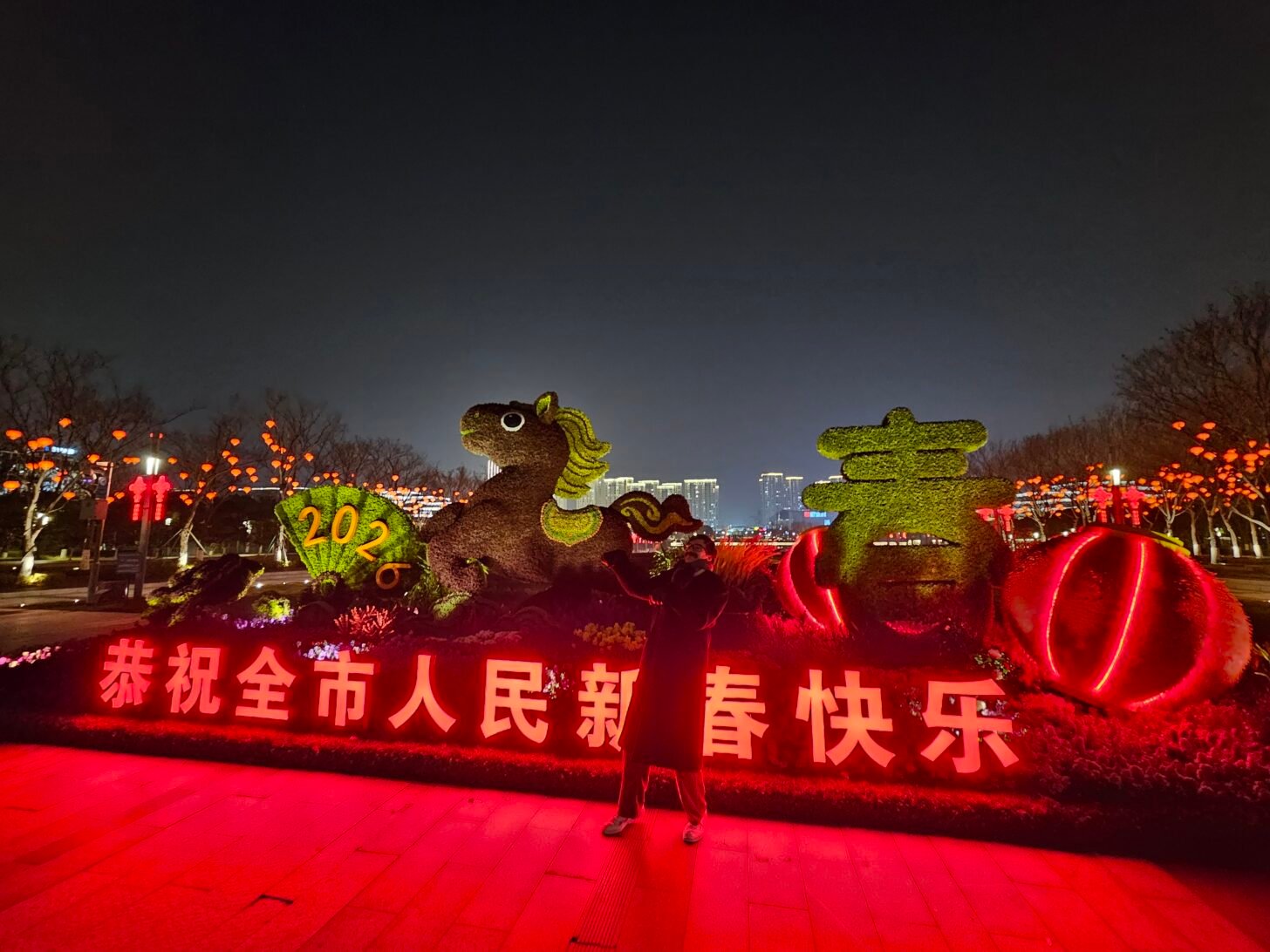
Anyway, as you listen to this, we will already be well into the Year of the Horse. Neigh! Because that’s right, this year in the Chinese Zodiac, it is the Year of the Horse. So I hope you are galloping swiftly into this new lunar year, and I don’t really know anything about the Year of the Horse. But I’m sure it’s good fun. I like horses. I’m a bit scared of horses. They’re very big. They’re very strong. My mother is allergic to horses, so I never really spent much time around horses. And whenever I’m near a horse I’m like, oh my God, you’re massive!
So anyway, thank you for listening to today’s episode. Have a wonderful Year of the Horse. And I look forward to seeing you in a few weeks. Bye! Ooh, you can really hear how sore my throat is.
Bye! That’s better.


Leave a Reply