Two children are left in the forest by their parents, and end up finding a witch’s house made of sweets. You know the story. But what if the witch was Chinese? That would change everything. Keep listening to learn English!
[intro music]
Hello my Lovely Learners, and welcome to Easy Stories in English, the podcast that will take your English from OK to Good, and from Good to Great. I am Ariel Goodbody, your host for this show. Today’s pre-intermediate story is called Hansel and Gretel. As always, the transcript and PDF are available at EasyStoriesInEnglish.com, and you can find the link in the description.

So Hansel and Gretel is a really classic fairytale, at least in Europe. It is one of the first stories that your parents tell you when you are a child. It doesn’t seem to be so popular over here. So this version of the story is actually based on some homework I made for my students here in China. The version I gave them was much simpler and broken into multiple parts.
But essentially I wanted to give them the classic story of Hansel and Gretel with a little Chinese twist. However, I discovered upon asking them that many of them were not familiar with the original story, so there you go. I guess it’s probably because there hasn’t been a Disney version of it.
So in the classic version of the story, these two children have very poor parents and their parents decide to abandon them in the woods three times, it happens. The first time they get back by following a trail of rocks or string or, you know, they drop something on the ground to lead them home. The second time they do the same thing, but the third time they use breadcrumbs, uh, which I’ll talk about later. Or, you know what, let me talk about it now, so you know what I’m talking about. That would be useful, huh?
So a crumb is a small piece of bread, cake or biscuit. When you eat bread, little bits of the bread break off and fall on your plate. These are crumbs. Breadcrumbs are often used in cooking. For example, you might dip a piece of meat in egg, then coat it in breadcrumbs, and then deep fry it. Mm, delicious!
So anyway, the third time, Hansel and Gretel’s parents try to leave them in the forest. They use breadcrumbs to get back, but it doesn’t work because birds eat all the breadcrumbs. Oh no! And then they go and find a house that’s made of sweets, like cake, chocolate, candy. If you’re American, candy. And they are like, oh my God, a house made of sweets! We are children, we love sweets. And they go omnomnom and they eat the sweets. And then the witch says, oh, come inside children. But then she puts Hansel in a cage. She traps him and keeps giving him food so he gets fatter and fatter and she plans on eating Hansel, but then when she opens the oven to put Hansel inside, Gretel pushes her in the oven and she dies.
That’s the classic version of the fairytale, but as always, my version has a little twist, and it does have quite a horrible ending. Now, the original story dies with a witch being burned alive in her own oven. That’s pretty gruesome. That’s pretty violent. But my version has an even more horrible ending. Um. So just maybe be careful about listening with young children. I think maybe any child from the age of 10 onwards will be okay, but I would say with younger children, maybe, maybe don’t listen to this episode or maybe listen yourself first and make sure it’s suitable for your child. Maybe you like telling your child really violent, gruesome stories. I certainly know if I was a parent, I would tell my children horrible stories all the time. I would give them so many nightmares. It’s probably a good thing I’m not a father!
OK, I’ll just explain some words that are in today’s story.

A woodcutter is a person whose job it is to cut down trees and cut up wood. These days, woodcutters use big machines to cut down trees, and we usually use machines to cut wood into pieces, but in the past, woodcutters would use axes to cut down trees, and cutting up wood was a normal job because people made fires in their homes.
If you have a sweet tooth, you love sweet food. If you’ve been listening to the podcast for a while, it will not surprise you to learn that I have a sweet tooth. Cake, sweets, chocolate – I love it all. One type of sweet that you might know is a bonbon. ‘Bonbon’ really just means any small, usually round, sweet or candy. I particularly liked soft, chewy apple bonbons when I was a child.
Now, in this story, I talk about two people having a sweet tooth, and I wasn’t sure what plural to use. Normally, we say ‘two teeth’ – ‘tooth’ has an irregular plural. But because ‘sweet tooth’ isn’t a literal tooth but a metaphor, maybe it can take a regular plural? I had to Google this and I found out that the correct form is in fact ‘sweet tooths’ because it is not referring to literal teeth, but people. So there you go! Even for me as a native speaker, I sometimes am not quite sure what the correct English is.
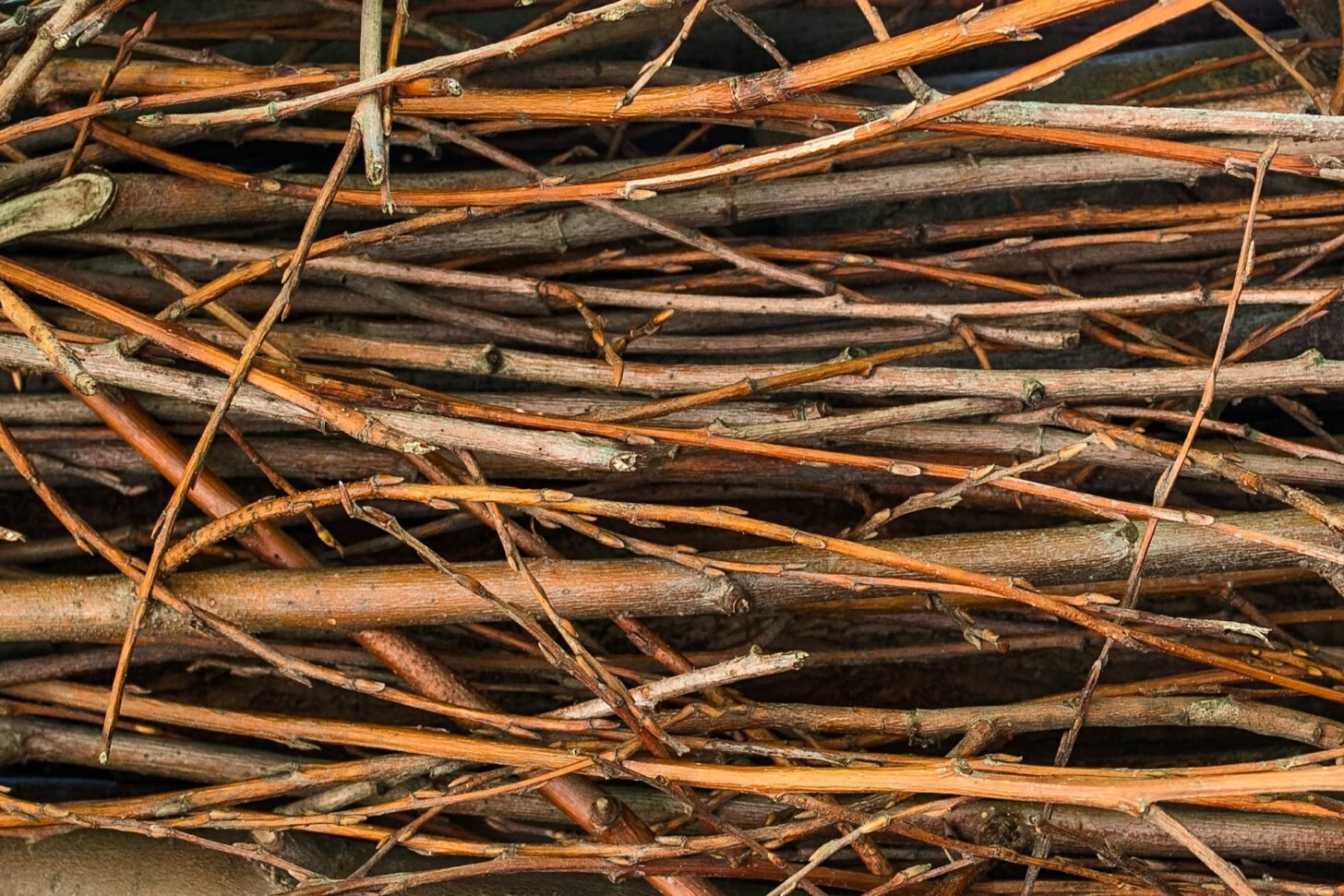
A twig is a small piece of wood. Trees have long branches, and when the end of a branch breaks, it becomes a twig. You can find twigs on the ground in the forest.
When you abandon something, you leave it somewhere forever. For example, if your car breaks down in the middle of nowhere, you might have to abandon it and walk until you can find help. Or, you might start a project, get bored and then abandon it. Sometimes, parents abandon their children, and the child is adopted by someone else.
A quitter is someone who quits, who gives up. Usually, we use this in the expression ‘Don’t be a quitter!’ or ‘My mother didn’t raise a quitter’, which you say to mean ‘I’m not going to give up! I’m going to keep trying!’ Of course, there are also things that are good to quit, like cigarettes or drugs.
When you trust someone, but they do something to hurt you, then they have betrayed you. For example, if you tell your friend a secret, and then they tell that secret to your enemy, they have betrayed you. If you are fighting in the army, and your friend shoots you in the back, he is betraying you.
The noun form is betrayal. We can talk about betrayal more generally. For example, when I saw a buy-one-get-one-free offer on bags of bonbons at the shop, I got two bags, but when I went to pay, they said the offer wasn’t on anymore. What a betrayal!
You probably know this one by now, but: a witch is an evil woman who does magic. Witches go [cackle]. They have black cats as pets, they wear big black hats and they fly on broomsticks.
Belly is an informal word for stomach. We use it a lot when talking about the outside of the body. For example, if someone drinks a lot of beer, they might get a beer belly, a big round belly. If you jump into a swimming pool with your arms stretched out, it’s called a belly flop, because your belly hits the water first – and it usually hurts a lot!

A bar is a long, thin piece of wood or metal. In prisons, prisoners go behind bars. They sit in cells where one of the walls is a series of metal bars – prison bars. In many famous films, people find ways to bend or break prison bars to get out.
OK, so listen and enjoy!
Hansel and Gretel
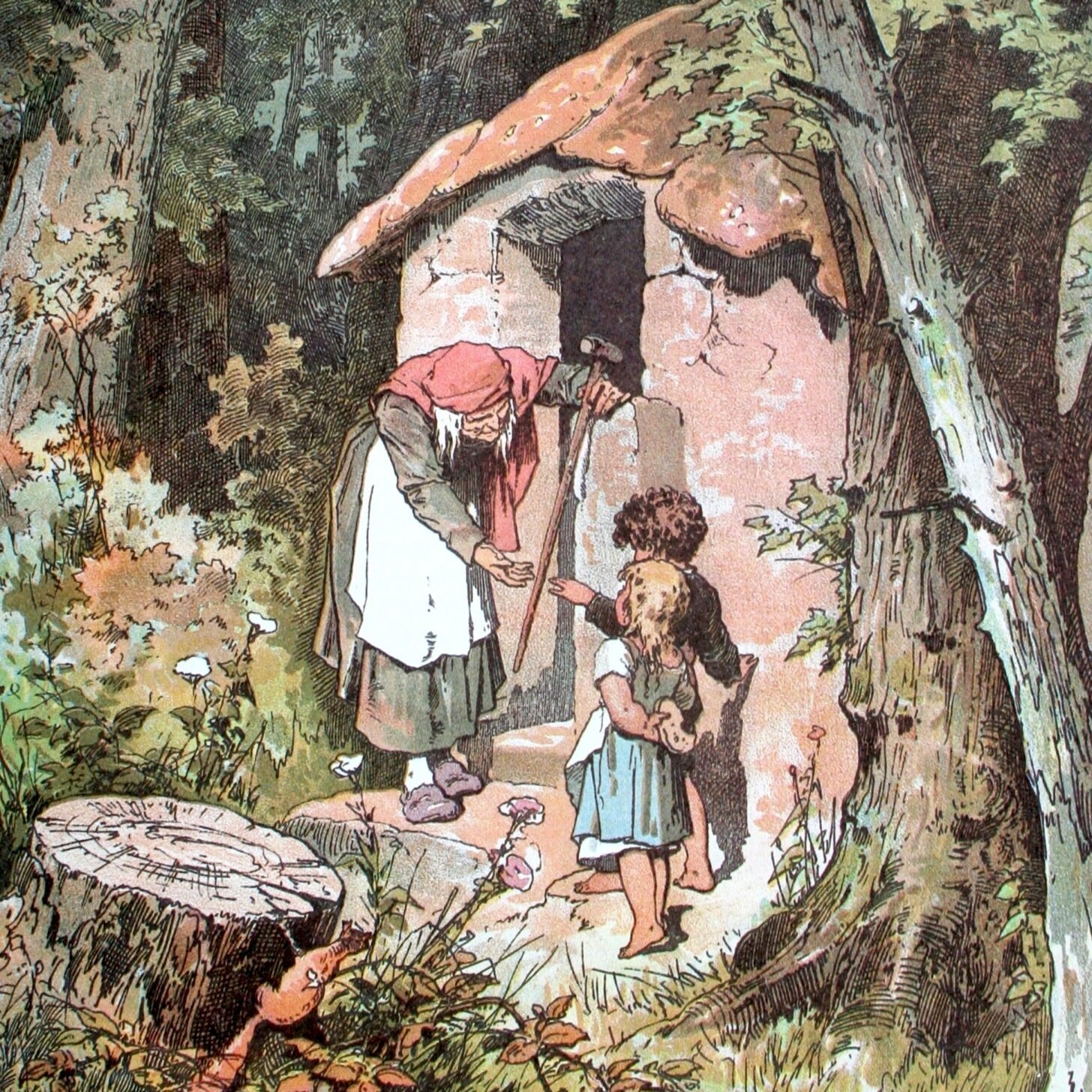
Once upon a time, there was a young boy called Hansel, and a young girl called Gretel. Hansel and Gretel lived in a small village by the woods with their parents. Their mother was a schoolteacher, and their father was a woodcutter. Everyone in the village loved them, but every year, the village got smaller. Many people moved away. They moved to towns and big cities. So Hansel and Gretel’s parents had less and less work, and less and less money. Eventually, there was only a handful of people left in the village, and things got truly miserable for the small family.
At dinner, they often had nothing but dry bread to eat. When this happened, Hansel and Gretel never cried or complained. They were good, clever children, and they always did what their parents told them. But there was one thing that could turn them into little monsters: sweets. They had sweet tooths bigger than their heads – or is it ‘sweet teeth’? – and if they had the choice between a three-course meal and a single bonbon, they would pick the bonbon every time.
Every Saturday, Hansel and Gretel would ask, ‘Mum, Dad, can we have some sweets today?’ In the past, when the family had had money, they went into town every Saturday and bought big, heavy bags of sweets. The children would spend hours eating the sweets, sitting under the tree in the garden. For a while, they didn’t have the money to go and buy sweets, but their mother could at least make cakes at home, or put bits of sugar on their bread. But now, they had no money for sweets or sugar, and the children spent every Saturday complaining, instead.
One night, Hansel was so hungry he couldn’t sleep. He got up in the night to look for food, and he heard his parents talking through their bedroom door.
‘I told you we should’ve left this village a long time ago,’ said his mother.
‘I won’t go and stay with your family. It’s embarrassing.’
‘It’s me or the children.’
‘But how can you say that?’ said Hansel’s father. ‘They’re our children!’
‘I never wanted them. You said we would have a good life in this village. Look at us now. I’ve heard of other people doing the same thing. If we’re lucky, they’ll be eaten by a witch and nobody will ask any questions.’
The next morning, Hansel and Gretel’s parents told them they were going into the woods to look for nuts and berries. But Hansel knew what their plan was. In the night, he had collected twigs, and as they went deeper and deeper into the forest, he dropped the twigs along the path.
Finally, their mother said, ‘We are just going to get some water, children. We will be right back.’
Their parents left them in the forest. Hansel and Gretel played and ate the nuts and berries they had found. Five minutes passed. Ten minutes passed. Then fifteen…
‘When are they coming back?’ said Gretel.
Hansel sighed. ‘I wanted to tell you about this last night, but you were sound asleep.’
Hansel explained their parents’ plan to abandon them in the forest, and how he had collected and dropped the twigs.
‘Come on!’ he said.
They followed the twigs, and after walking for a long time, they came home. Their father was outside cutting wood, and he looked very surprised to see them.
‘Oh, you’re back!’ he said. ‘How wonderful. We got lost, you see. We were going to go and look for you…’
Hansel and Gretel laughed and asked when lunch was. They thought that this was the end of things. Surely all parents try to abandon their children sometimes? After all, they had tried running away from home before, and that was just as unsuccessful.
But that night, when Gretel got up to go to the toilet, she overheard their parents talking.
‘We’ll try again,’ said their mother. ‘They just got out by good luck. We’ll go really deep into the forest this time.’
‘Yes, dear.’
So Gretel went and collected rocks, and filled her pockets with them. The next morning, their parents took them into the woods, and just like the day before, Gretel dropped rocks along the path. Hansel was worried that their parents might see her, so he asked his parents lots of questions, following each answer with, ‘Why? Why? Why?’
Again, their parents abandoned them, saying they were big children now and could look for nuts and berries by themselves. Hansel and Gretel waited for a while, and then followed the rocks back home. This time, they found the door locked, and they had to bang on it for a long time before their mother opened it.
‘You are such intelligent children,’ she said coldly.
Dinner was quiet that night. They only had dry bread to eat. Gretel didn’t eat hers – she was far too scared. She felt that something bad was going to happen. So she hid the bread in her pocket, saving it for the morning.
It was just as well, because their mother kept watch during the night to make sure they didn’t go outside, and the next morning, they found no twigs, rocks, or anything near the house. Their mother had got up before them and cleared everything away.
‘What are we going to do, Gretel?!’ said Hansel.
‘Don’t worry, Hansel,’ said Gretel. ‘I have my bread from last night. We can drop breadcrumbs instead of twigs and rocks. They’re smaller, but it will work.’
So as they walked along the path, Gretel pulled breadcrumbs out of her pocket and dropped them. Their mother was watching them carefully, but the breadcrumbs were too small for her to notice. This time they walked for hours, until the trees stood close together and it was hard to move. And still, they walked more. Finally, their father said, ‘Go and look over there, children,’ and abandoned them again.
Hansel and Gretel didn’t wait long – they didn’t want to be in this scary forest. But when they tried following the breadcrumbs, they found that the breadcrumbs were gone.
‘I’m sure I dropped one here…’ said Gretel.
They walked for a while, and then saw a bird eating some of the breadcrumbs.
‘Shoo, shoo!’ said Hansel. ‘Oh no, Gretel! That’s why we can’t find the breadcrumbs. The birds have eaten them all!’
So that was that. They had been abandoned by their parents, and they were truly lost in the woods.
But Hansel and Gretel were not quitters, and they were not weak. Perhaps having a mother who was a schoolteacher taught them not to be quitters – she always said to her students, ‘Don’t be a quitter!’ And having a father who was a woodcutter taught them to be strong, as they often helped him cut wood. So, although their parents had abandoned them, they had also taught them how to keep going.
Hansel and Gretel walked for a while in the woods, and then Hansel said, ‘Look, Gretel! There is smoke coming from over there!’
It was true – there was smoke coming from somewhere in the distance, and where there is smoke, there is fire. So the children followed the smoke.
As they walked, it felt like time went on forever. They could’ve been walking for years, although the sun stayed high in the sky. There was something strange about that forest, something magical. The air felt… different as they walked. Warmer, more humid. Finally, they found where the smoke was coming from: it was a small house.
This was no ordinary house, however. It was a house made of cake! It had soft brown cakey walls, and the smoke was coming from an oven inside. Maybe someone was baking more cake, or maybe someone was baking more house!
Either way, the children were so hungry that they didn’t think twice. They ran to the house and stuck their teeth into it. But, as they soon discovered, it wasn’t sweet at all!
‘This cake is strange!’ said Gretel. ‘It’s not sweet!’
‘I know!’ said Hansel. ‘Every bite, I hope it’ll be sweeter, but it’s not!’
Normally, they would not complain – after all, food is food when you’re starving. But for someone with a sweet tooth, to see something that looks sweet, but is in fact not, is a greater betrayal than being abandoned by your mother and father. Or at least, for Hansel and Gretel it was.
Gretel screamed. Hansel turned around and saw an old woman standing at the door of the house. She had old, worn clothes, and an ugly, dirty face.
‘It’s a witch!’ cried Gretel. Ugly old women who lived alone in the woods were always witches, after all.
‘别怕,孩子们啊。要不要进屋来,吃点真正的饭菜呢?’
‘Ah, she’s speaking some kind of witch language!’ said Hansel.
And the two children ran away.
‘等等,回来吧!’
But the children were already far away. It was a shame, too. The old woman was not a witch, but a lonely old woman who would have loved to have children. The ‘witch language’ she was speaking was, in fact, Chinese, and that was the same reason the cake house was not sweet enough. In good, traditional Chinese cooking, sweets should not be too sweet, and the old woman liked cooking the traditional way. If the children had come inside, she could have given them so much delicious food.
Hansel and Gretel ran until they reached the end of the forest. And, to their luck, they could see in the distance a city. And not just any city, but the city of Wuxi.
Something magical had happened in the forest, and somehow, the children had arrived in China. They saw the city of Wuxi, and thought of food and somewhere to sleep. On the road, they walked past people carrying things into the city to sell. In the humid air, they smelled sugar, but when they tried to talk to the people, they all spoke the same strange language as the old woman. If Hansel and Gretel had spoken Chinese, and asked about the city, perhaps someone would have said this:
‘Oh, the city of Wuxi! Our city is famous for sugar. Sugar on our lips, sugar on our tongues, sugar in our bellies. To a man from Wuxi, a pile of sugar is a pile of gems! We put sugar in our noodles, on our meat, on our fish. In the winter, it snows sugar, and in the autumn, it rains sugar. In Wuxi, when you clean the floor, you find not dust, but sugar on your cloth! Yes, this is the perfect city for any child with a sweet tooth…’
But the children didn’t have to wait long to find out themselves. When they reached the city, they simply followed the smell of sugar into a restaurant, and then used the universal language of pointing at things to order food.
Soon, a feast had arrived in front of the children! And if giving food that looks sweet but isn’t is a betrayal to someone with a sweet tooth, then giving them food that looks normal but is actually sweet is the most wonderful thing. When the children ate their noodles, fish and beef, and found that they were as sweet as cake, sweets and chocolate, they were thrilled!
‘Oh, I could eat this all day!’ said Gretel.
‘I don’t know where we are,’ said Hansel, ‘but I never want to leave!’
But when they finished their meal, and the waiter brought over the bill, they were not so happy.
‘Er, Gretel, how are we going to pay for this?’
‘Oh, we are just poor children!’ said Gretel. ‘We have no money!’
She opened her pockets and showed them that they were empty. The waiter did not look happy, but he left.
‘Great, now let’s run!’ said Hansel.
But they were so heavy from all the food that they could not run fast, and they were only a few metres down the street when two large hands grabbed them.
‘跟我走!’
And before they knew what was happening, a big man had picked them up and carried them away. He took them to the town prison and threw them inside, locking them behind bars.
‘Wait, you can’t put us in prison!’ said Gretel. ‘We’re just kids!’
But naturally, the Chinese policeman did not understand, and he certainly didn’t care.
That night, Hansel and Gretel hugged each other and cried. They were not cold – it was hot and humid in that city – but they felt sick from all the sugar, and their teeth hurt.
The next day, they woke up hungry, but fortunately, there was a kind old woman waiting on the other side of the prison bars. Unlike the ‘witch’ they’d met in the forest, this woman was beautiful. She had red silk clothes, a clean face, and long black hair. She smiled like their mother.
‘来,孩子们,吃这个吧。要把身子养壮一点啊。’
She passed some rice cakes through the prison bars, and the children didn’t think twice before eating them. How lucky they were!
Over the next few weeks, the children stayed in prison, but the kind old woman came three times a day to give them food. With no way of doing exercise, the children got fatter and fatter, but they were happy there. The food was good. Through the window of the prison, they could see smoke outside – smoke from an oven, perhaps, where the old woman was cooking?
‘We’ll escape tomorrow,’ they would say, but the next day the old woman’s food was so good that they quickly forgot about escaping. Their mother had raised them to not be quitters, but there was one thing they would never quit: sugar.
Well, you probably know how this story ends. It isn’t pretty. A witch is a witch, whether beautiful or ugly, European or Chinese.
On one particular day, the smoke outside the prison grew twice as big, and the prison finally became empty. On that day, the witch ate a delicious meal. And she didn’t even have to add sugar to her meat. It was already full of it.
THE END
Thank you for listening to this story. I hope you enjoyed it. I don’t know if Wuxi is really like that. I do know that Wuxi is well known for its sugary cuisine. They are probably not so dramatic about it. I also imagine Wuxi does not have beautiful witches who feed children sweets. But then again, I’ve never been there. Maybe it does. In China, anything is possible.
When I asked my students about Wuxi, many of them did not know where it was, so I don’t think it’s even like that famous within China. But the idea of a city where all the food is really sugary kind of amuses me. I think that’s just very funny. It’s a fun idea. It certainly works well in a fairytale.
Anyway, if you enjoyed this story and you want to support me and you want to get some bonus content, you should join Easy Stories in English Premium, the special magical No Witches version of the podcast where you also get no advertisements. Oh my God!
This episode is coming out just before New Year’s Eve, and I normally do a special episode for New Year’s Eve, but I was lacking inspiration for a New Year’s-themed story this month. However, I am going to do a bonus episode where I reflect on the whole year of 2025 and I go through my Spotify Wrapped.
So you know how Spotify makes this report called Wrapped that tells you about all of your listening for the year? Well, for us podcasters, we also get a Spotify Wrapped for our podcast telling us about how many people listened, where they’re listening from, what the most popular episode was and so on. So in this bonus episode, I am going to go through my Spotify Wrapped and talk about it with you because it’s interesting, but it’s maybe not super important to like everyone on the podcast.
It’s maybe a bit more technical, and as I said, I will reflect on the whole year of 2025 in this bonus episode because, oh my God, 2025 has been a crazy year! I moved to China for one thing. So there we go.
Thanks again for listening and if you want to join Easy Stories in English Premium and get ad-free episodes and this bonus content, just go to EasyStoriesInEnglish.com/Support, S-U-P-P-O-R-T. That’s EasyStoriesInEnglish.com/Support, S-U-P-P-O-R-T, or just find the link in the description below. That’s much easier.
Woo! I am recording this before work and I’m in such a crazy mood. I’m going to go to work and, mm, make all the kids cry or go ‘Ah!’. One of the two. One of the two. I will cause the children to have a strong emotional reaction. Maybe positive, maybe negative. We will see. Okay, bye!


Leave a Reply