I’ve been in China for 12 days and I have so much to tell you. Keep listening to find out about my new life halfway across the world.
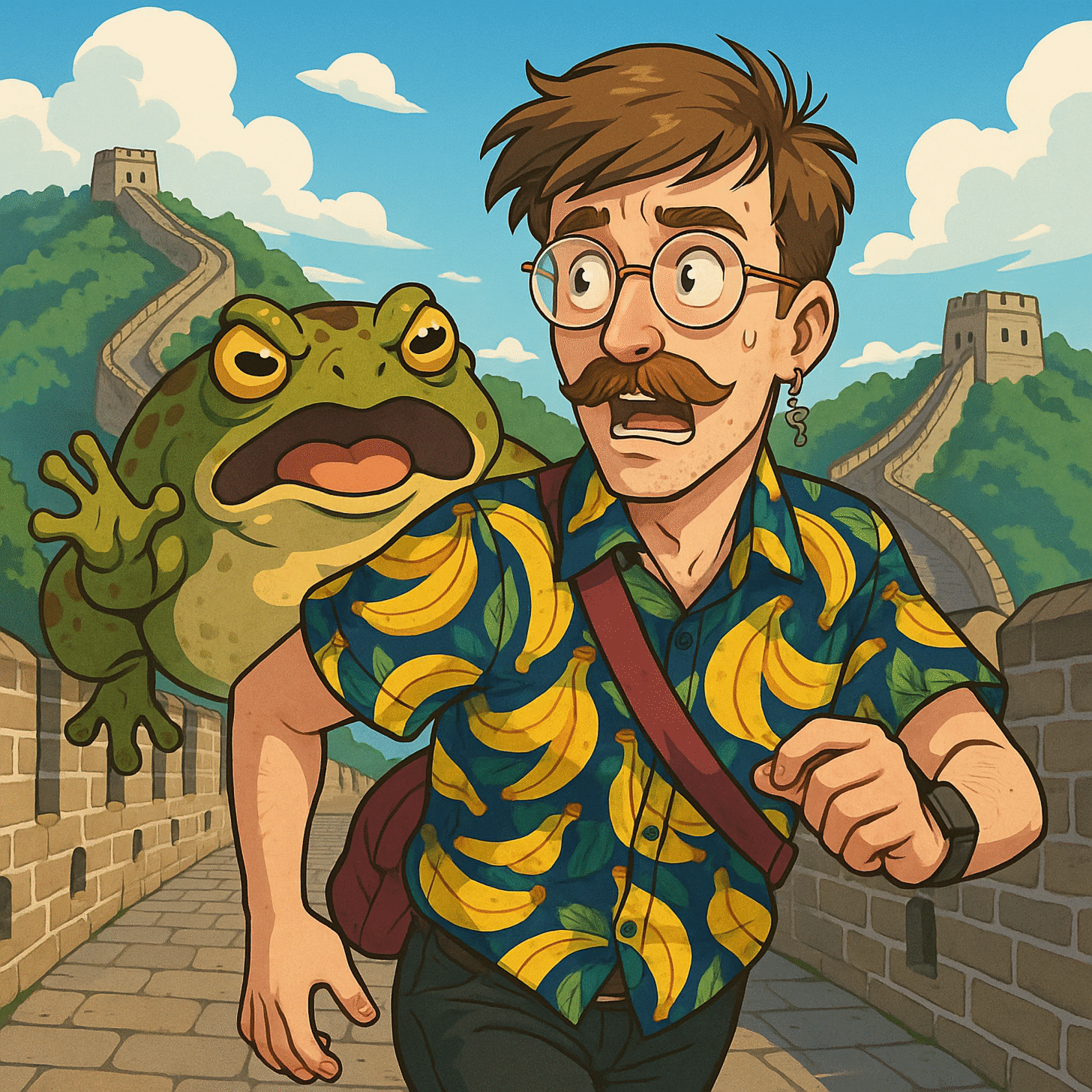
Hello, my Lovely Learners and welcome to Easy Stories in English, the podcast that will take your English from Okay to Good and from Good to Great! I am Ariel Goodbody, your host for this show. Today’s episode is a conversation about how things are going for me in China. As always, the transcript and PDF are available at EasyStoriesInEnglish.com and you can find the link in the description.
So I’ve been on a little journey! It feels like it’s been a very long time since I talked to you, although it really hasn’t, but it is certainly a long way away from where I was the last time I talked to you. In fact, I am 9,352 kilometers away from my last location of recording, to be precise, but who’s counting?

So obviously I have so much to tell you. I’ve just moved to Ningbo, China in Zhejiang Province. I’ve been here for 12 days, I’ve found somewhere to live, I’ve had lots of new experiences and I’ve more or less started my new job. So let’s get into it.
So to be honest, the last few weeks living in London, leading up to my move, I was just so stressed. I had been so busy, and all I kept telling myself was, I just need to make it until I can get on that plane. Once I’m on the aeroplane, God will handle the rest. Once I’m in the air, it’s out of my hands.
And indeed, it was very strange. This was the first time I flew long-haul in about 13 years, and it really did feel like going through a portal to another world. It was a very long flight, obviously: 11 hours and 45 minutes. Fortunately, I was sat next to a very friendly British couple who actually had a son who has lived in China for over seven years, and they were going to visit their son, so it felt like a kind of nice parallel there. They’re going to visit their son who lives in China and works there, and I’m going to go live and work in China.
So I flew from London Heathrow to Shanghai Pudong, which is an airport in the east of Shanghai. And then I got the train from Shanghai Hongqiao, which is a train station in the west of Shanghai, down to Ningbo. And when the plane landed in Shanghai, it was quite an amazing moment.
Now, before coming to China, I watched a lot of videos, a lot of YouTube clips about living in China, about Chinese culture. So in some ways I knew what to expect, and one of the things that I knew would be a big shock is the scale of everything. Everything is so much bigger here. It’s on a completely different level. It makes the UK feel very small.
And indeed, as we flew over Shanghai and just saw these endless rows of buildings and houses, these rivers that moved in such long straight lines, and they shone in the sun. They looked like motorways. They looked like roads. And all of the houses neatly lined up together reminded me of Legoland. It was a bit like standing over Legoland, but then it also reminded me of a motherboard, you know, a computer motherboard, which has all the electronic parts sticking out? A lot of the apartment buildings looked like that. And then you have these huge monoculture forests. So all of these forests with just one type of tree, which I guess are for harvesting and using, and that reminded me of some children’s play toys.
So really flying over Shanghai and seeing all of this incredible, massive uniform urban landscape, it really did feel like I was looking down on a little toy world or something.
Now after I landed in Shanghai, I got the Maglev train – that’s short for magnetic levitation – from the airport to the city centre, and I didn’t really need to do this. I could have got the subway directly from Pudong airport to Hongqiao railway station, but the Maglev train is the fastest train in the world. It can get up to 400 kilometers per hour, I believe. Although they cap the speed at 300, so it only goes up to 300 kilometers per hour, but it’s still an incredibly fast train journey, and it gets you from Pudong Airport to the city centre in about 10 minutes.
I’m not a massive train nerd, but I do like a good train and it was quite exciting, although at one point another train went past us and it was so fast that it made me jump because it was like BOOM! Like, felt like you were about to get hit by the train or something.
Now, by this point I was quite tired. I had been on a 12-hour plane journey without really sleeping. I watched The Devil Wears Prada on the aeroplane, by the way. They didn’t have a great selection of Chinese films, so I decided to watch The Devil Wears Prada because I’ve never seen it before. And I have to say Meryl Streep is very good in that film.
So, anyway, my plan was to wander around Longyang Road, which is where the Maglev gets into and find somewhere to have breakfast. That plan didn’t really work. I wandered around this shopping mall, which wasn’t really open yet, ’cause it was like half past eight in the morning, and it was all a bunch of non-breakfast restaurants. I was carrying two suitcases with me, both around 22 kilograms.
And at one point I got on an escalator and one of my suitcases I put in front of me and it fell down and landed on a policeman. It didn’t just land on the policeman, it slammed into the policeman, and because of the gravity and the motion of the escalator, it just kind of pushed him down and I was so embarrassed. I was like, oh my God, I’m so sorry. I’m so sorry. Obviously I said ‘duibuqi’ which is the Chinese. He acted like nothing had happened, thankfully, because I was really worried I was about to get deported on my first day in China, in my first few hours in China. But no, I did not get deported, I did not get sent back to the UK. So that was okay.
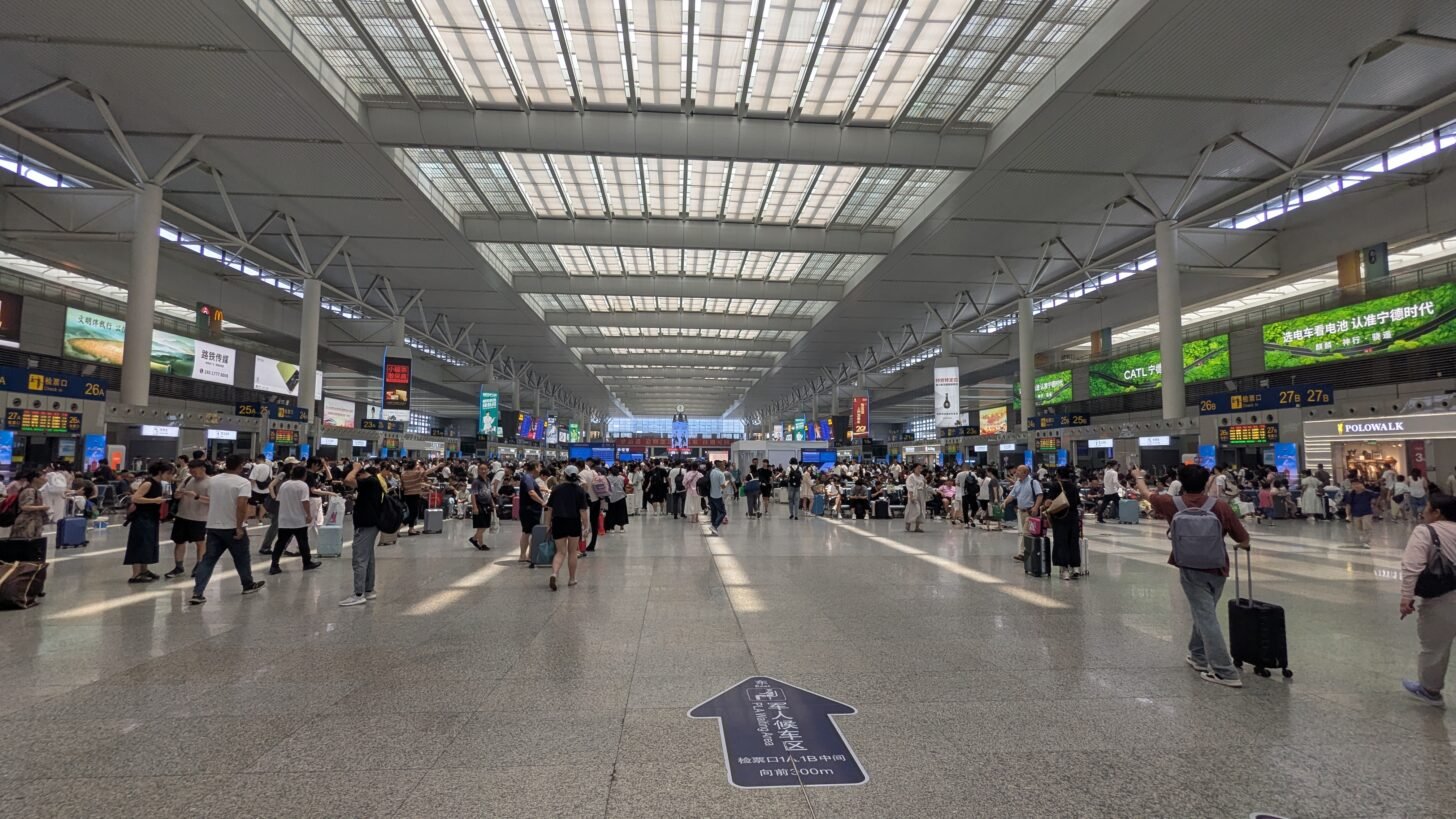
So in the end, after almost injuring an officer of the law, I decided maybe I should just go directly to the train station to avoid any further incidents. So I got on the metro to Hongqiao train station, and I had another moment of, oh my God, this is all so big! Because Hongqiao train station is practically an airport. It has over 30 gates, I think? You have to go through these massive security lines to get in, and I was really quite tired and overwhelmed at this point, but I got safely on the high-speed rail from Shanghai to Ningbo and I even made friends with some locals.
At one point, two young girls came and sat next to me when they got on the train. They were dressed in kind of alt fashion, alternative fashion, like a bit goth, a bit Lolita, and they were sitting on the train trying to record a TikTok video. They were like learning this TikTok dance. And I was watching them kind of bemused. I thought it was quite funny. I also thought this TikTok dance was very easy.
So at one point when they finally had learned the dance and were recording it, I said, oh, can I do it with you? In Chinese. And so we recorded the dance together and they were like, oh, can I send it to my friends on WeChat? And I was like, yeah, sure, that’s fine. Um, but then they kind of just stopped talking to me after that. Uh, I don’t know. They seemed a bit shy and socially awkward, but I was like, I’m here to learn Chinese, well, to improve my Chinese. I’m here to try and assimilate to the culture as much as possible. I’m here to have an adventure. I’m here to have a good time. I couldn’t just sit there and say nothing. I had to record this TikTok dance with them.
So I don’t know if they ever posted it on Douyin, which is the Chinese version of TikTok, but maybe it’s gone viral already. Who knows? It wouldn’t surprise me if I was already a celebrity in China.
Anyway, after arriving at the train station, I was picked up and taken to the hotel and thus began several days of bureaucracy.
If you don’t know what bureaucracy is. B-U-R-E-A-U-C-R-A-C-Y. Bureaucracy is basically dealing with government systems, systems of organizing in a system. That, that’s kind of obvious… Systems of organizing in a system? You know, ticking boxes, filling out forms, processing documents; all of that is bureaucracy. And believe me, there’s quite a lot of bureaucracy to handle, to do, when you move to China.
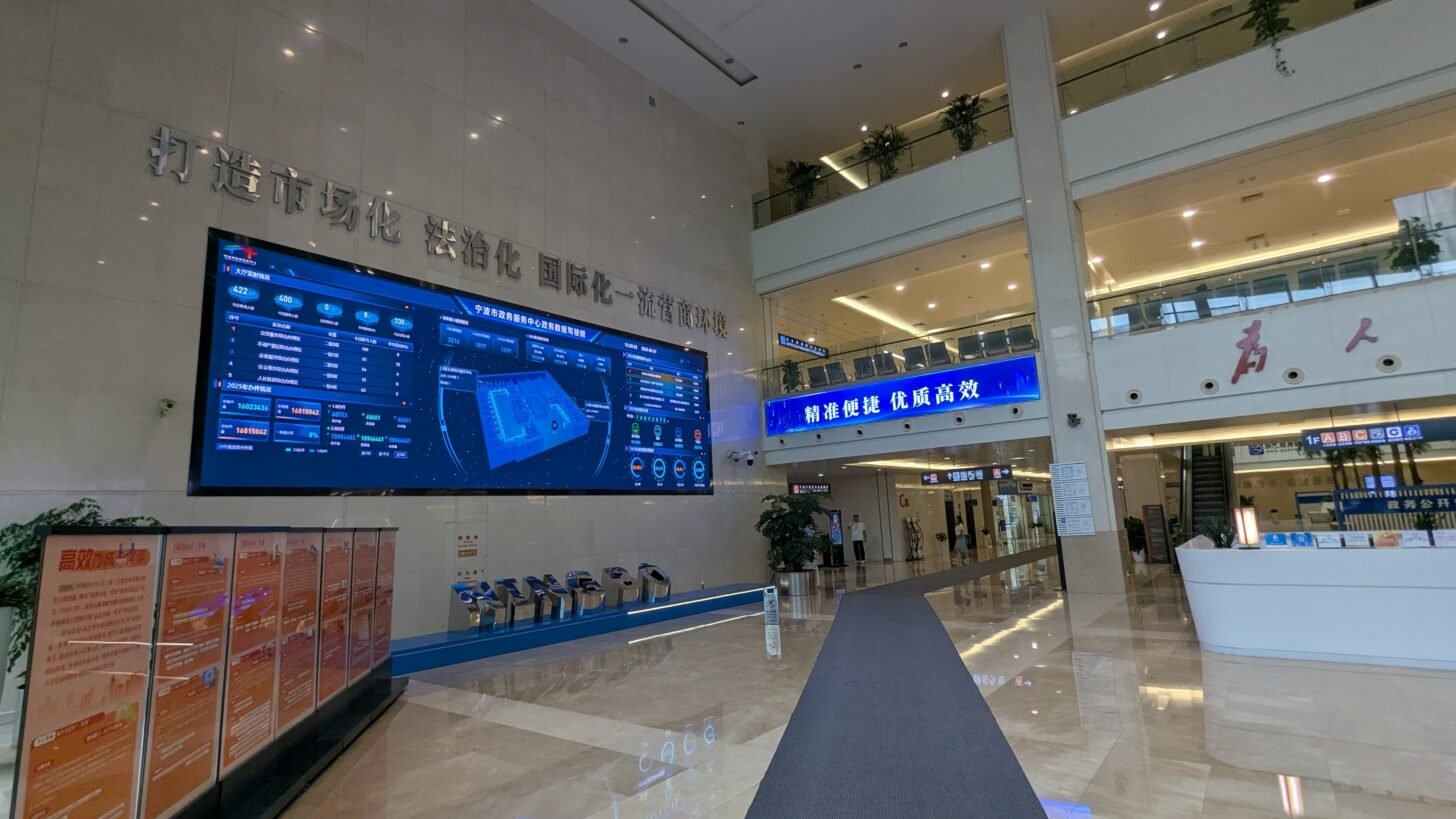
So first we had to do a health check, and I have never had this many tests done. They did a blood test, a urine sample, an x-ray, an ECG, and an ultrasound. And I had never had an ultrasound in my life before. I asked lots of people like, why do they do an ultrasound? Is it to check if we’re pregnant? Like, I don’t think I’m pregnant, but you never know.
Um, so that was very strange. And in some ways it was good because it’s like, okay, maybe if I do have some illness or disease, I’ll find out this way and that would be useful. But it’s also very strange because… So in the UK we talk about bedside manner, right? Which is how friendly doctors and nurses are, how kind of warm they are to patients. And it’s considered to be very important in the UK to have good bedside manner because it helps patients recover. It helps them feel relaxed.
Here, at least for the health check, there wasn’t really any bedside manner. It was just kind of lie down, do this, put your arms up, take your shirt off. Poke, poke, poke, prod, prod, prod, scan, scan, scan. So that was um, interesting. It was certainly a different experience and I haven’t heard anything back about the health check, so I can assume that I’m all good and healthy and unfortunately not pregnant. I guess I’ll have to keep trying.
After that, we went and got our SIM cards. So a phone card, a phone number, a Chinese phone number. It’s really important to have a Chinese SIM card and phone number because you use it to access many services in China. Something different about it is that you can choose your phone number here. They give you a lot of options. I think I just chose a random one or one of the first ones, ’cause I was like, I don’t know! It’s a phone number! I’ve never had to choose one of these before, but I’ve had to use it so many times to log onto services that I’ve memorised it at this point. So that’s the important thing.
And then finally we went to the bank to get our bank account set up, and here was when I experienced one of the first kind of annoying hurdles, one of the first serious challenges in getting set up in China.
So, as you know, there is the Great Firewall of China. A lot of Western websites and internet services are blocked in China. I have a Google phone, which means that it uses the Google Play Store to download apps. The Bank of China app has two versions. It has an international version and then a Chinese version. But I couldn’t download the Chinese version from Google Play, so I had to download a Chinese app store and then download the Bank of China Chinese app through that. And I had to figure this all out by myself ‘cause I was trying to log into the international version and it just was not working. And there have been a lot of issues like that so far. Nothing insurmountable, nothing impossible, but it does take a lot of patience, for sure.
And then after that, of course, I had to find somewhere to live. So I found an agent and I went to many apartment viewings over several days. There were lots of ups and downs. I found a place I liked, but then someone else took it. I found a place I liked, but then it was too expensive. I made a mistake transferring money internationally because, again, it’s quite complicated transferring money from a Western bank account to a Chinese one, which meant I had to wait for a payment to be rejected to get my money back, which took 48 hours, and then I had to go to an ATM, take out the money from my British bank account in cash and then deposit it into my Chinese bank account in cash. And there’s a limit on how much you can withdraw per day.
So as you can imagine, it was quite complicated. Especially because most Chinese landlords want four months’ rent upfront. You pay rent in chunks of three months, and then you also pay your deposit, which is one month’s rent. And then we had to pay the fee to the housing agents, to the real estate agents, which was equivalent to one month’s rent. So we essentially had to pay five months’ rent upfront. So, uh, yeah, complicated, stressful, but I found somewhere to live. In the end. Finally. Which is where I’m recording this episode from! Sorry if it’s a bit echoey. I don’t have a lot of furniture yet.
But look, even with all of the difficulties finding this place compared to anything I could get in London, it is amazing. I’m paying almost half what I was paying in London to share a small flat with someone else. I have the whole flat to myself. It’s a three bedroom, which means I can have my bedroom, a guest bedroom, and an office. It has an enclosed balcony, which is great for doing laundry. It has lots of modern furnishings. I think all of the bathroom and kitchen are new. I think I’m the first person to live here. It has air conditioning throughout. It’s in a very pretty housing complex, very safe, lots of greenery in the complex.
The only downside of where I live is it’s a bit further out from the city centre than I probably wanted. I was quite stressed about just finding somewhere that I didn’t think so much about the area. One advantage is I do have very nice views. I can see the mountains in the distance, and it’s about a 25 minute walk from my job, the school I work at, which is a perfect distance ‘cause it gets me a bit of exercise, but it’s not too far. But yeah, it’s kind of a quiet area. There’s a lot of construction going on around here. There’s not too many shops around here, but given the pace of change in China, it might look completely different in a year’s time. Who knows?
So it’s not perfect, but I have an office, I have space to do yoga. It’s gonna be everything I need. And actually by being further out, I save a bit of money and I can put that money towards recording equipment, holidays, food and taxis into the city centre.
Because that’s the thing: the transport here is crazy cheap. In fact, kind of everything is cheap here. Like, the cost of getting food delivered, the cost of food itself, taxis, public transport, it’s all so affordable. And I know that obviously I’m earning a higher salary than many of the locals. A lot of people are, you know, working very hard to make a living here, but I would say there seems to be, at least within the city of Ningbo, there seems to be less of a wealth divide than in London. I’ve not seen any homeless people here, whereas in London it’s unfortunately a very common occurrence.
But yeah, I can get a taxi from my workplace home. If I get it at a non-peak time it can be as cheap as 0.4 kuai. Kuai is just another word for yuan, the Chinese currency, which is equivalent to about four pence in British money, which is like… nothing. Like, you couldn’t get anything for that amount of money in London. And then at peak times, a taxi is maybe like seven kuai, which is about 70p, which again is like the price of a chocolate bar. In fact, chocolate bars are more expensive than that now in London. So yeah, it’s very, very cheap to get around. So even if I am further out, I can so easily get in and out. I have multiple options. I have the metro, buses, I could get a bike, or I can get a taxi. That’s not a big issue.
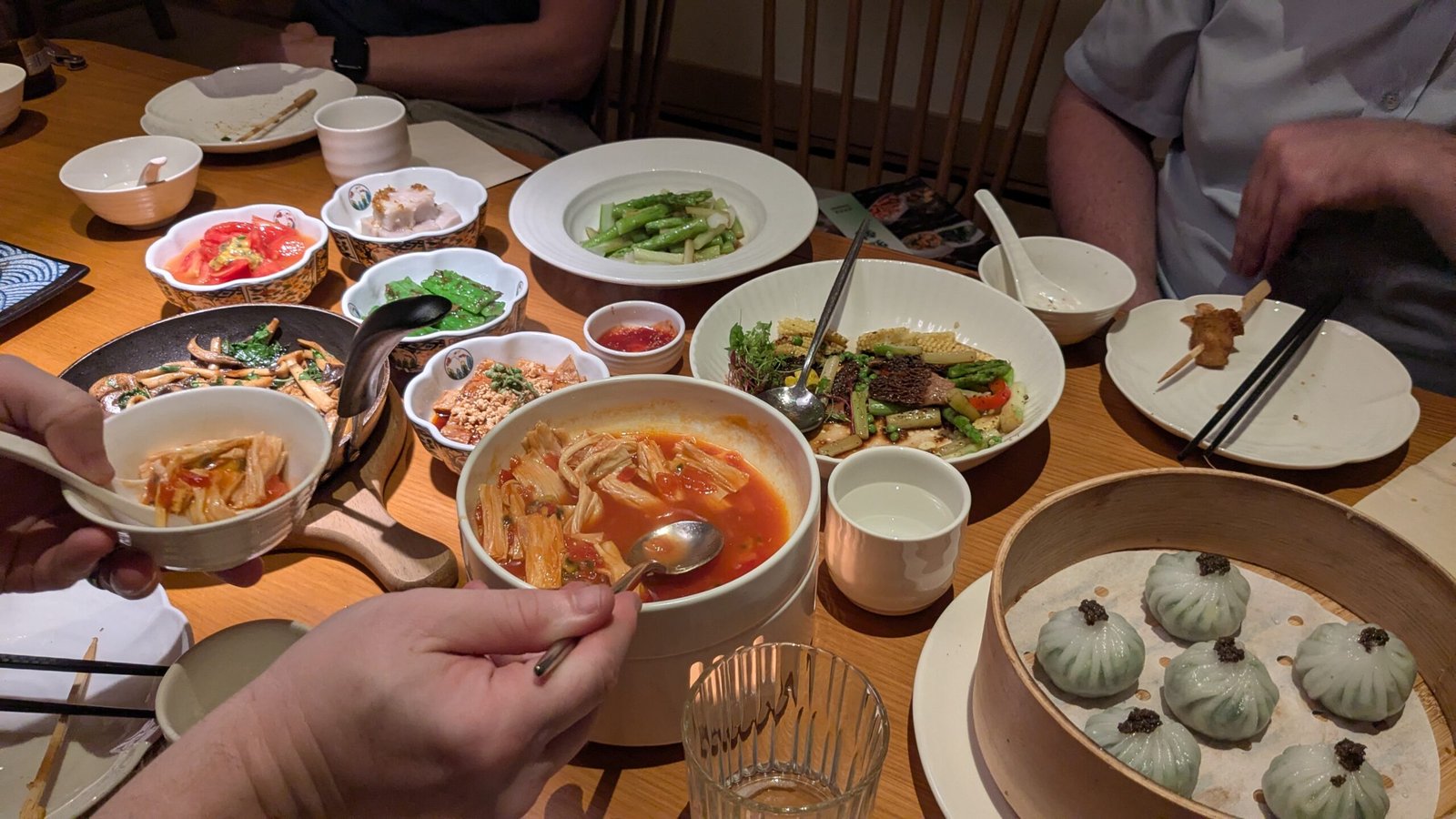
Now let’s talk about food, because China is very well known for its food. It has a huge diverse cuisine, and food was one of the things I was most excited about moving to China. Now, when I first arrived, they put us up in a hotel for 10 days while we found somewhere to live, and the hotel breakfast was gorgeous. It was a balance of Chinese breakfast and Western breakfast, although it definitely leaned heavily in favor of Chinese breakfast. It was much more Chinese-style breakfast.
So I was able to have congee. Congee is like rice porridge with pickled vegetables; dumplings, fried vegetables, uh, omelette pancake kind of things. They did have, um, sausages and bacon, but the sausages and bacon here are a bit weird. Uh, they had lovely, like, sweet buns with adzuki bean paste inside. They had hot fresh noodles, which I didn’t really get. They had nice sweet yoghurt. Unfortunately, it’s quite hard to get non-sweet yoghurt here. The dairy products is one area where it’s still kind of lacking for me. And yeah, suffice it to say, I was well fed at breakfast.
My first few days I tried to be kind of adventurous with food. There was a restaurant next to the hotel that had this really cute frog mascot and I was like, oh, that looks fun. So I looked at the signs outside and I saw something that looked like fried eggs and tomatoes, which I know is a Chinese dish. So I was like, oh, great, I’ll go get that. And I went inside, I ordered, and when it arrived I realised this is definitely not fried eggs and tomatoes. In fact, it was spicy bullfrog soup.
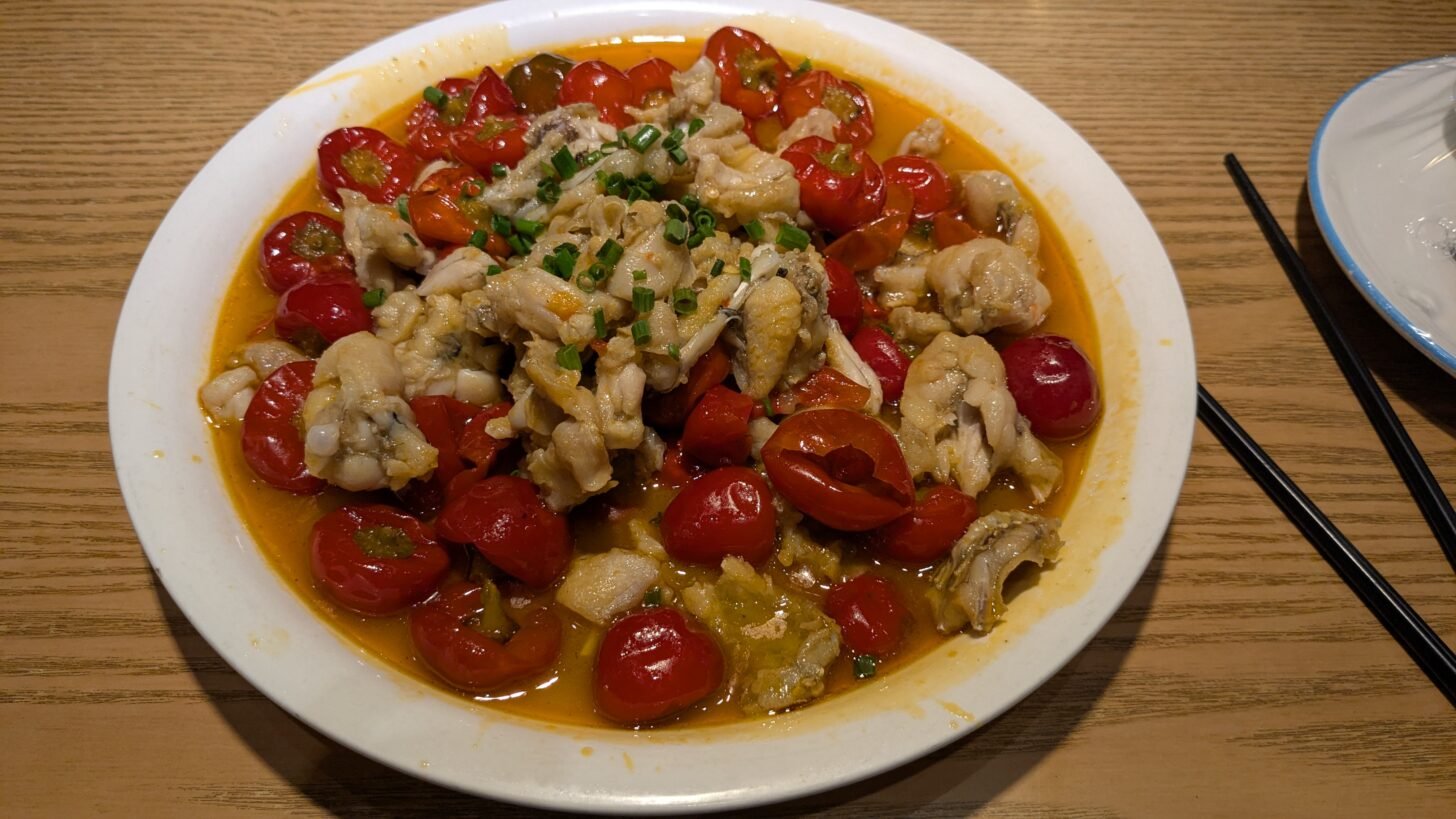
Now, if you don’t know, bullfrogs are a type of frog, those amphibians that go [ribbit ribbit] and their necks grow. We don’t eat frogs in the UK. They do eat frogs’ legs in France, and spicy bullfrog soup is a popular dish in Sichuan in the west of China. So it kind of became obvious to me afterwards, oh, the reason the restaurant had a cute frog mascot was because they sell frogs.
But I have to say it was very yummy. It was quite spicy and it didn’t necessarily agree with my stomach. Because of the jet lag and the spiciness, I did wake up at two in the morning with a lot of stomach pain, but I have to say it was worth it for a new culinary experience, and bullfrog is really tasty. It kind of tastes like chicken. I know people say that about a lot of things, but uh, yeah, it was good. Turns out it has a lot more bones than I expected. A lot bonier than I thought, but I can definitely recommend spicy bullfrog soup.
Another cuisine I’ve tried is the local Ningbo cuisine. Because Ningbo is a coastal city, it’s a port city, it is of course big on seafood. So some of my new Chinese friends, I’ve made a few friends, some of my new Chinese friends took me out to some local Ningbo restaurants and we had such delicious dishes as hairy crab, fish and tofu, uh, prawns, shrimps. A lot of seafood and all really delicious. Now, unlike Sichuan food, which is very spicy, Ningbo food is very fresh, and it tends to be more kind of like sour, pickled cold flavours. So fortunately that’s a kind of cuisine which is a bit lighter on my stomach.
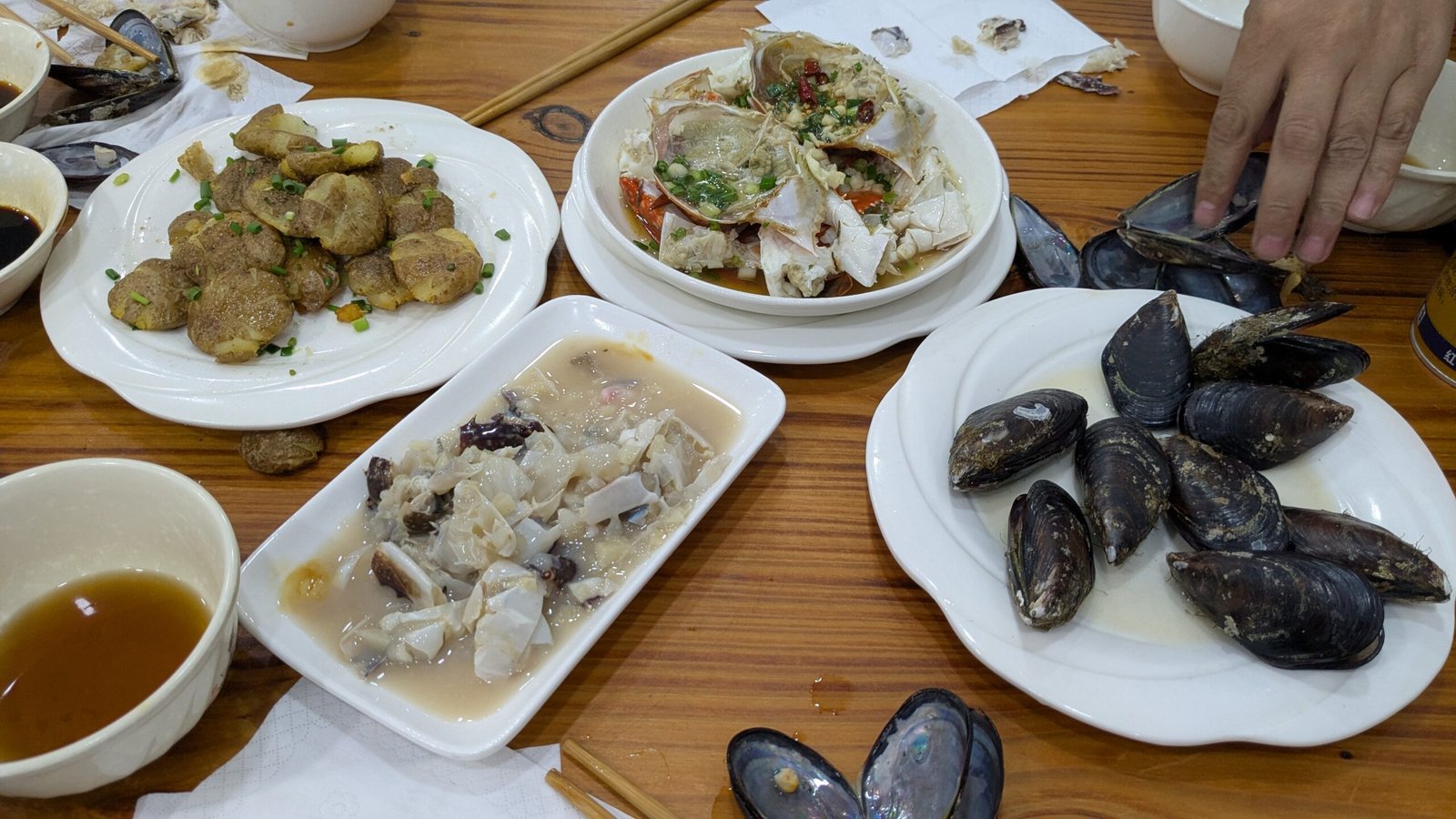
I also tried some red bayberry alcohol. Red bayberry is a kind of fruit that I don’t think we have in the UK? I’ve certainly never heard of it in Europe, but I’ve tried dried red bayberry and I’ve tried bayberry liqueur, and it is quite yummy.
I’ve also tried some of the Western food they have here. I mentioned that sausages and bacon are a bit hit-or-miss. I also tried pizza, which is not so great. Most of the bread here is a bit sweet and I don’t know, there’s just something about the pizza I’ve had here. It’s a bit too fluffy. The toppings aren’t quite right. It’s not tomatoey enough. Also, sandwiches often look really yummy here, but then you taste them and they just don’t have enough flavour. So there’s definitely some adjustments I’m going to have to make.
I’m still kind of struggling to find my breakfast food. Back in the UK I ate the same breakfast pretty much every day. I would have a bowl of muesli with chia seeds, peanut butter yoghurt and banana, and it’s quite expensive here to get muesli and yoghurt. So I haven’t tried having that yet. I’ve kind of been trying other things.
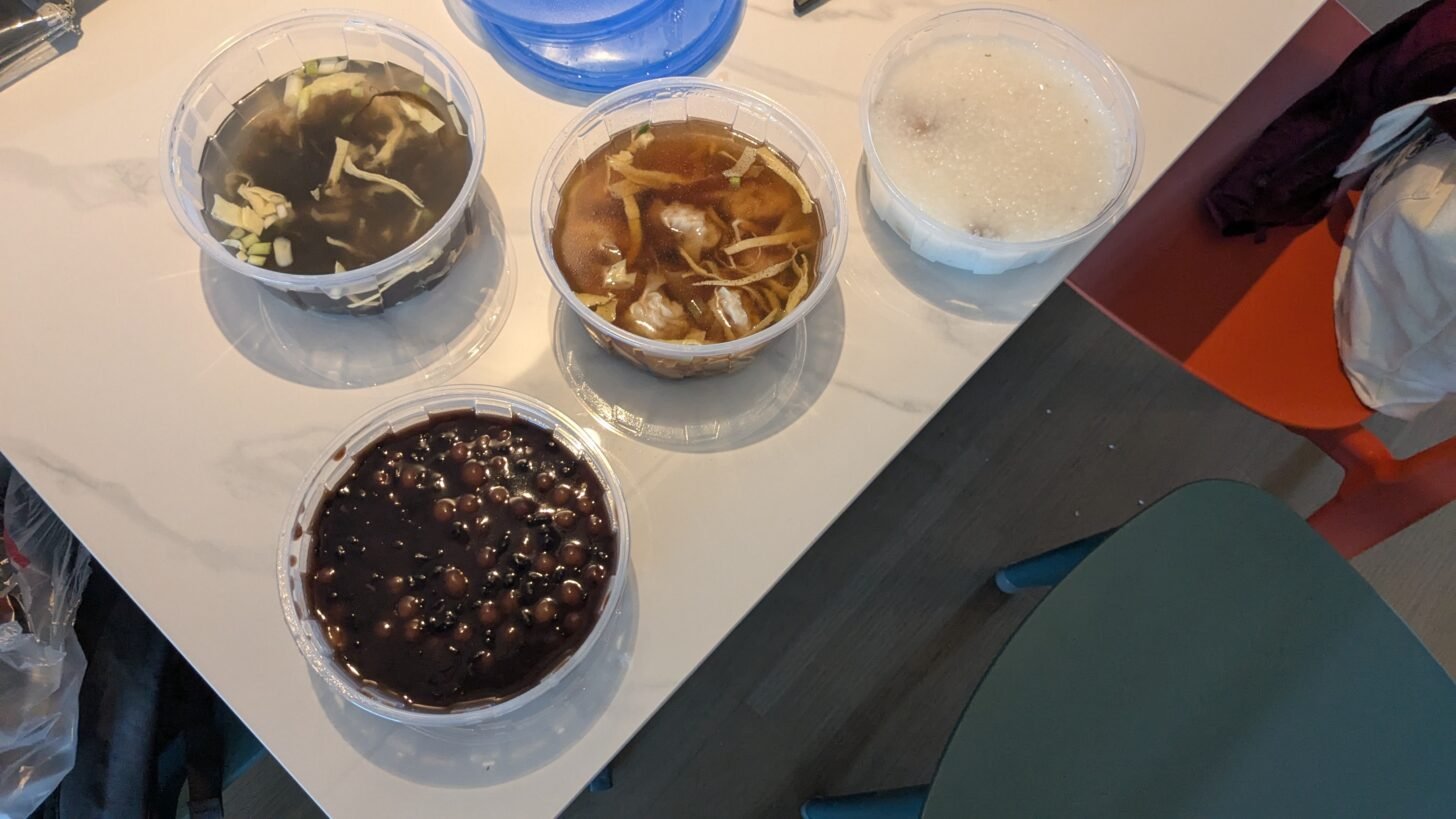
Actually, I ordered breakfast delivery today, which is something I would absolutely never do in the UK, but here it’s very affordable and I think it’s more common. And I got some breakfast foods delivered. I had bone broth congee, so rice porridge with um, I guess pork bones in it, and it was so yummy. The flavour of the bone broth really paired well with the porridge. I also had some dumplings and soup that were really nice, this kind of seaweed soup thing that was okay, but I didn’t love, and then I also got some red adzuki bean soup, which was delicious. I mean, it’s kind of like a dessert, but, uh, this was all way too much for one person. Like one of these dishes would’ve been enough for me, and I had four. So I put them to the side, and I guess I’ll have them after recording this podcast for my lunch. Yum, yum, yum.
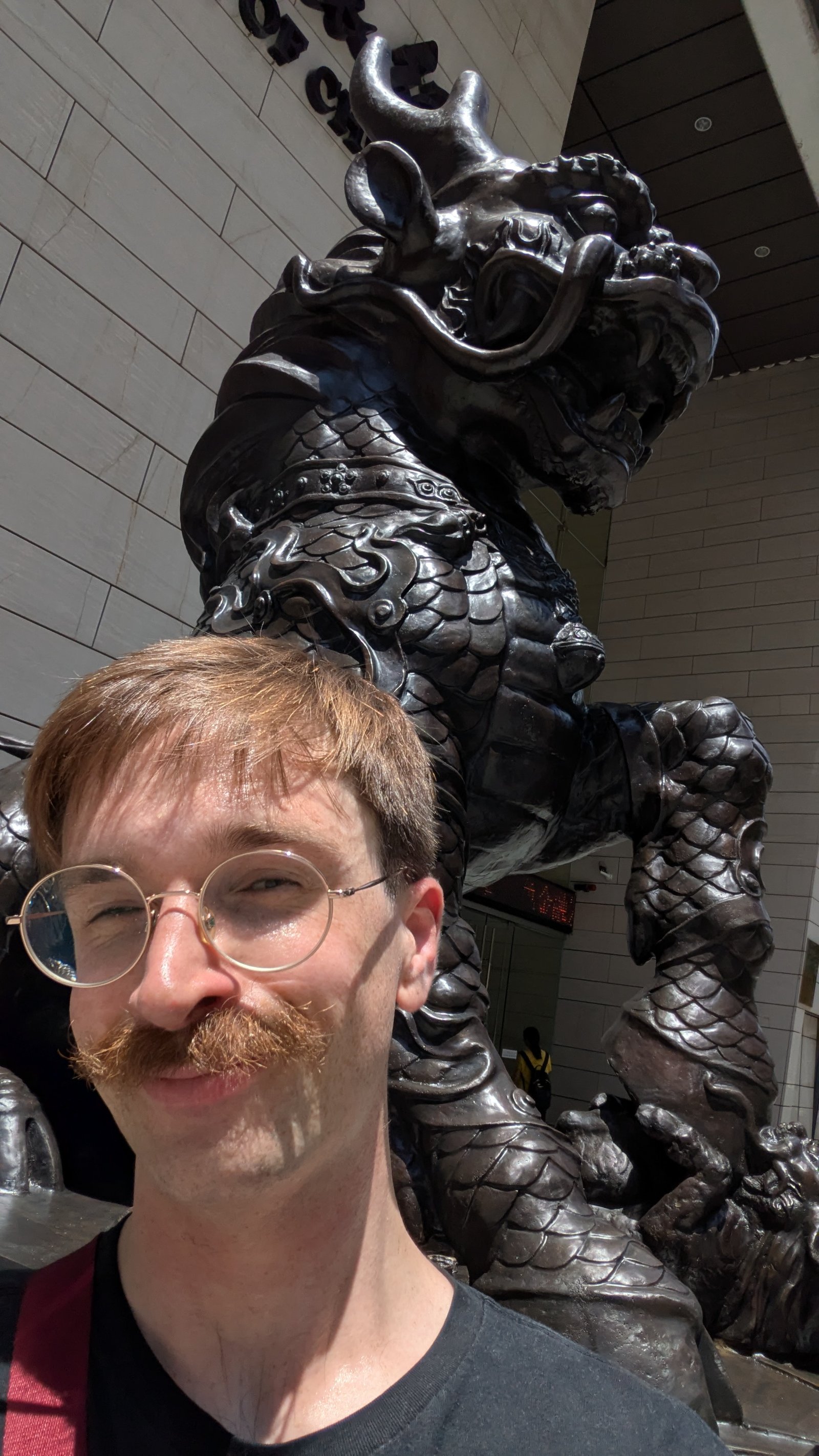
Another thing that I knew was gonna be difficult here and has indeed been difficult is the weather. Ningbo is a subtropical, humid climate. So at this time of year, it’s 35 to 40 degrees and usually around 80 to 90% humidity. So only stupid people go out in the middle of the day here. So as you can guess, I’ve been going out a lot in the middle of the day here.
There’s actually a phrase that comes from an old song, ‘mad dogs and Englishmen’, as in only mad dogs and Englishmen go out in the midday sun. And indeed, I’ve been surprising a lot of people by walking to work in the morning when most people get a taxi or ride a moped or whatever. But I’m British. I like the sun. I know it’s hot. I know I’m gonna sweat. I don’t care. And actually, I’m slowly sweating less. Each day I walk into work, it takes longer for me to hit the point when the sweat is dripping into my eyes. When I first started, I was like halfway to school and there was sweat in my eyes. Now I can get to the school ground before I have sweat in my eyes, so that’s a win.
I’ve also heard that in the winter here it gets really cold because it’s a kind of like humid cold that cuts into your bones. I really hope that’s not the case because London winters are bad enough, but I guess I’ll just have to adapt to that.
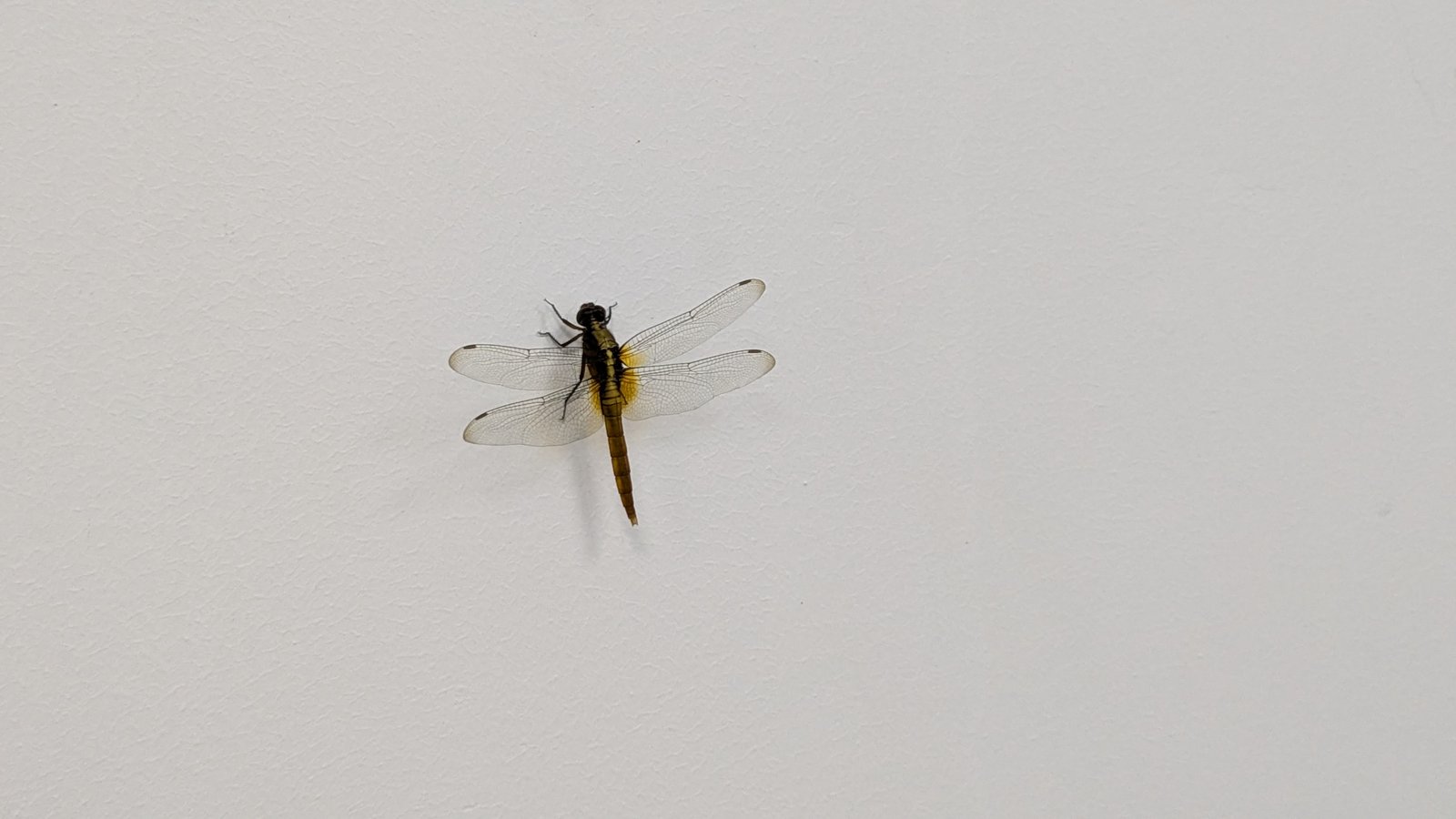
One thing I do love about the climate here is all of the little insects. As you walk around, you often hear crickets and cicadas. The cicadas are so loud that I genuinely thought it was some kind of electronic noise, like a warning sound or something, but it really is just a cicada. Also, they make a very different noise from the cicadas in Japan, so that kind of caught me off guard.
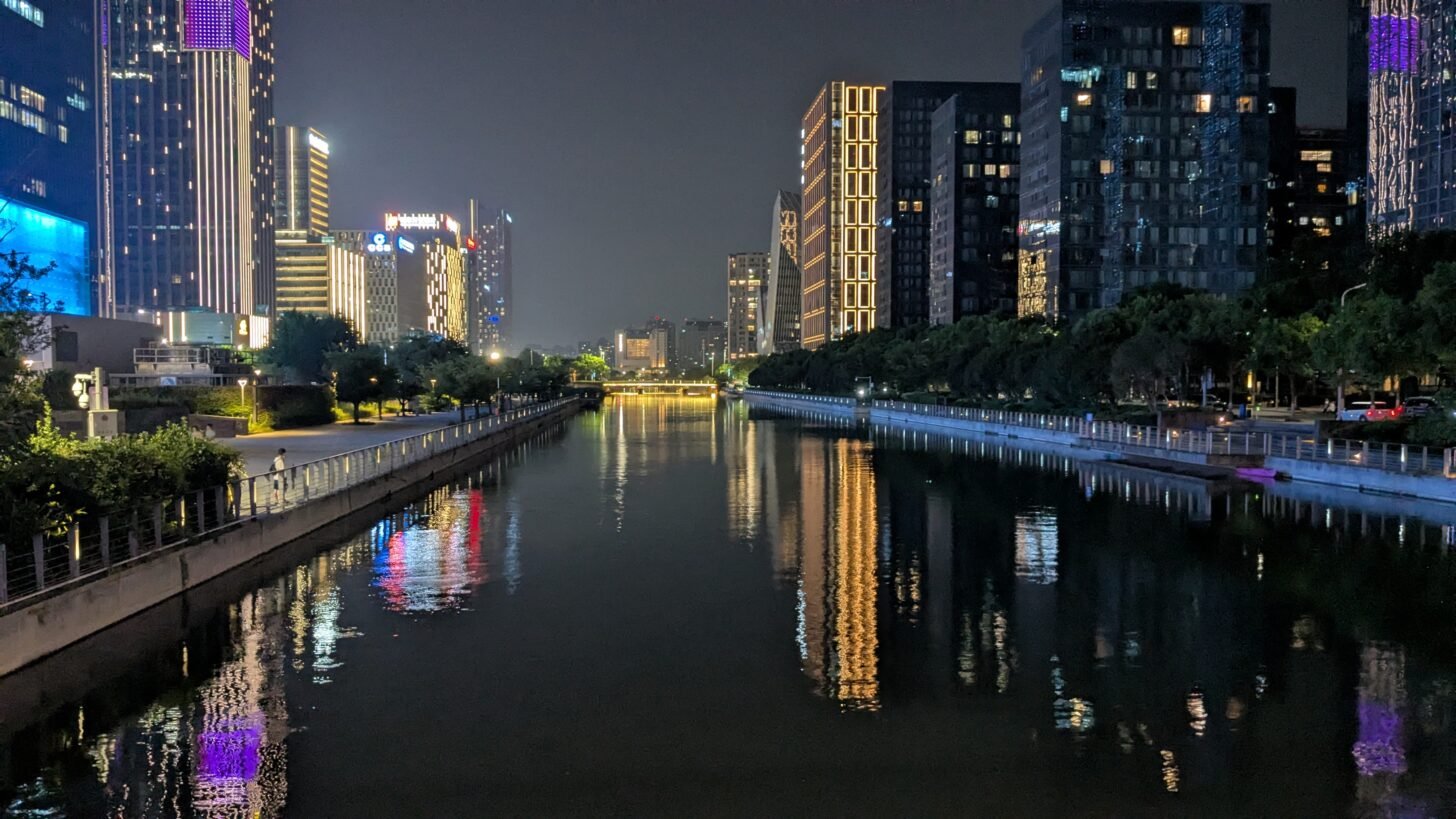
Generally, although Ningbo is a very built-up modern city: it’s got 9 million people, it’s got lots of big five lane roads, it’s got a big metro system, it’s got many, many skyscrapers; it has a lot of greenery. The urban planning in Ningbo is very good. Pretty much every road has trees and bushes planted along it. One time I was walking home at night and I saw a truck passing by and there was an old man standing on the back hosing all of the plants down with water. So I guess that’s how they keep it all growing.
But yeah, it feels pretty green, I would say the roads still dominate a bit too much for my liking. A lot of the parks here are quite new, so the trees haven’t grown in properly yet, but it’s generally an okay balance. I do miss the parks in London because London has some gorgeous old, old trees that have grown and are really big. Here, a lot of the parks and stuff feel a bit too manicured, a bit too new, but I actually still have not been to the old part of the city. I’m hoping to go today actually. So I’m sure that will be quite a different experience and there’ll be a bit more history and maybe more like natural greenery there.
I would say the one thing that I didn’t hear so much about before I came here that has been quite interesting is the security here. People talk a lot about, China is a very safe country, and it’s mainly because the security here is just insane. Now, I’d heard that there is CCTV pretty much everywhere. CCTV is short for closed-circuit television, so basically security cameras, and indeed, there are security cameras everywhere, but also at every metro station if you want to get onto the platform to get on the train, you have to go through a scanner. So you have to put your bags through a scanner and then have a guard check your body. So it’s kind of like going through airport security, so you can’t bring any sharp objects onto the train, for example. And that was quite a shock for me coming from London where there is no such security whatsoever.
Also, most people live in these big apartment complexes, and every time I go to visit a friend, I have to kind of negotiate with the security guards. Sometimes you have to give them your like name and phone number. It’s a bit complicated. Pretty much none of the apartments have physical keys. They use a number code, so you put a password in to unlock your front door, and for my building, in order to get into the complex and get up the lift, they have a facial recognition system. So a camera looks at you, recognises your face, and then takes you up to the right floor for your flat.
Now, this is where things got a bit complicated because when I went in to record the video for the facial recognition, the camera simply would not recognise my face. I don’t know if it’s because I look foreign or I have a moustache or I’m too pale, but it took a long time to set it up.
But then they told me I had to come back in another day because the security for the basement parking levels is different, and I did actually get locked in the basement once because the security camera did not recognise me. So I went back to record, and this time it literally just would not recognise me at all.
One of them said in Chinese, oh, it’s because you are so pale! We’re also jealous of you. Because being pale, being very white, is considered beautiful here. And I was like, oh, I don’t know, I don’t think I’m that pale. But yeah, so in the end they said, if I need to use the basement lifts, I should just call security and they’ll know it’s me and they’ll let me through. So they said they were really embarrassed, but to be honest, I was much more embarrassed.
And that experience kind of sums up the general atmosphere I have so far in China. On a personal level, I feel very welcomed. Everyone here is very friendly. Ningbo is a fairly cosmopolitan city, so you don’t get a lot of stares. People aren’t randomly coming up and talking to you, but if you speak Chinese, people are friendly. A lot of people have complimented my Chinese. When I tell them it’s my first time in China, they’re quite surprised, so it feels good.
But in terms of the bureaucratic and technological systems, you feel quite excluded. Another example is last week I went to KFC. I wanted to buy food, but you can’t just order food at the counter, you have to use the app. So I tried using the KFC app, it didn’t work. So I tried using Meituan, which is the app that you use to order takeaway and delivery. I spent half an hour trying to figure out how to order from KFC, and when I finally put the order through, it said, your account has been flagged for suspicious activity and you can’t make this payment. So it wouldn’t let me pay because apparently I was acting suspiciously. So I was really angry and I just went to McDonald’s instead, where I could use one of their screens to order and didn’t have to do it on my phone.
But yeah, those kind of experiences are very frustrating because it feels like the system is set up to exclude you and that they didn’t even consider that there might be foreigners here. And the thing is, Ningbo has multiple bilingual and international schools. So there are a lot of foreigners who live and work here. You know, I’m not the only one. Having said that, I don’t know what it’s like to immigrate to the UK. I know there are many bureaucratic and cultural barriers as well, so I’m sure it’s very hard the other way round.
So what about my job? I’ve technically started, although the first week of work was just induction, training and team building exercises. So far, everyone is super nice. It’s a really nice school. It’s very modern. It has great facilities. By Chinese standards it’s pretty small, it has about 2000 students, but by my standards, it’s by far the biggest place I’ve worked, and I do slightly feel like a fish out of water.
When you feel like a fish out of water, you feel a bit uncomfortable in a certain environment like everyone else fits in, but you don’t. You’re like a fish that has been taken out of the water.
I feel a bit like a fish out of water because everyone else has worked in other schools before. Many people have worked elsewhere in China before, but for me, it’s all completely new. I’ve worked in language schools, mostly teaching adults. So this is all quite a big change.
However, the team building was actually super fun. We played some silly games. We did a scavenger hunt through the city. So a scavenger hunt is where you have challenges. You have to find certain things in different places. So we had to go and take pictures of different things in the city, but we just got clues about where to go. And that was actually really fun, despite the oppressive heat. It was, it was really cool going around Ningbo and taking all these pictures. I feel like scavenger hunts are one of those things that the more you take them seriously, the more effort you put in, the more fun they are.
They’ve also given us loads of teaching supplies, like folders, notebooks, pens, scissors, rulers, erasers, and just the amount of whiteboard pens alone was enough to send me into ecstasy because, maybe this won’t resonate with the non-teachers, maybe this won’t make sense if you’re not a teacher, but I’ve worked at so many schools where you had to fight for supplies or you had to bring in your own supplies and keep them hidden away. So to get all of these free whiteboard pens and other stationary. Oh, it’s just lovely. Very, very nice.
So anyway, on the 1st of September, all the students will arrive and we’ll start teaching. Obviously this episode comes out after that, so I’ll already be teaching by the time you listen to this, which is fun. I’m really excited. I’m going to be teaching some of the younger students in the middle school, and I’ll be teaching with graded readers. So we’re gonna be using storybooks to teach English, which, as you know, is kind of my thing, so it’s a perfect fit.
Also, the other teachers I’ve talked to who have worked in other schools, other cities in China, have said that Ningbo is a super lovely place to work, and this is a really good job. It’s my first time teaching abroad. It’s my first time living in China, but I’ve picked a great city and it seems like a great job. So I feel really lucky and happy to be here.
So the thought I want to conclude on for this episode is: emigrating, moving abroad, I think is possibly the hardest thing anyone can do. I knew it was going to be difficult, but these past 12 days have felt like months of stress and new experiences. I don’t even feel like I’ve fully arrived, if that makes sense. And there are still challenges waiting for me.
I can’t even imagine how hard it must be to be a refugee. I’ve taught many people in the UK who, for example, are refugees from Syria or Ukraine or Iran, and I cannot imagine how difficult that situation is.
I’m not saying my experience is anything like that, but it has been quite hard for me because most of my colleagues here have moved with a partner or they have lived in China before. I think I only have one new colleague who’s also single and new to China like me.
So it’s been a real rollercoaster of emotions. This has been a few weeks of extreme highs and lows. There have been moments where I felt like I didn’t belong. I shouldn’t be here. I made a mistake. There have been moments where I felt like, oh my God, this was such an amazing thing to do. I’m so amazing. This was a great choice. I’m so happy. I’m so excited.
And I know there’s gonna be more of that. It’s already settling a bit. It’s starting to even out, but it’s gonna be a journey. It’s gonna be a real adventure, and I can already feel the effect on my creativity. I feel very inspired. I think this is going to be great for my writing. I think it’s going to be great for my development as a person.
What’s very funny is I’m already thinking of two years from now when my contract ends like, ooh, should I renew? Should I stay in China? Which is really silly because I haven’t really even started the job yet, but my brain starts to jump ahead. But I don’t know. Before I came here, I was thinking I’ll probably just do two years and then go back to the UK. But now that I’m here, I’m talking to people who have lived in China for much longer. I have one colleague who’s lived here for 16 years. I’m starting to feel like, hmm, maybe this could be my life. Maybe this is the direction I go in. I don’t know. It’s weird.
I’ve actually managed to stay in touch quite well with people from the UK. We’ve managed the time zones, we’ve made some phone calls. I’ve been texting people. So in some ways it’s a lot less isolating than it could be. In the past, before modern communication technologies, it would’ve been way harder.
So thank you all for joining me on this journey. Many of you have sent me lovely encouraging messages and I really want to thank you. I’m really excited to see where the podcast goes in the next two years and where I go! There’s so much to explore in this huge, huge country and in the continent of Asia.
So thanks again for listening to Easy Stories in English, and if you’d like to support me: tell your friends about the show. Maybe you have friends living in China. Maybe you’re from China. I’m sure you can think of at least one person who would find the podcast useful. Remember, sharing is caring. Thanks for listening and see you soon!


Leave a Reply