Welcome to Easy Stories in English, the podcast that will take your English from Okay to Good and from Good to Great! I am Ariel Goodbody, your host for this show. Today’s episode is a conversation about… I don’t know yet! Ah, because I’m improvising. Hmm.

I was journaling this morning and I wrote down the line, Every Friday I go to bed with the best intentions of waking up early and recording an episode of the podcast, and every Saturday, I wake up shattered, exhausted, and then I sleep in, and then I don’t feel like recording an episode of the podcast, but here I am anyway, on a Saturday, recording an episode of the podcast.
But – another but – I’m doing it improvisationally and that is a way of making it easier for myself. As I have alluded to in the last few episodes, I have been pretty tired, pretty stressed and just generally low on energy in the last few months, or rather, all of my energy has been going into my day job. I teach at the school here in Ningbo, China, and obviously working full-time in a different country takes a lot of energy. Who could have guessed?
So I’ve not had quite as much mental space for Easy Stories in English as before, but these adjustment periods are long. I’m slowly getting more settled, building my routines, and I’m confident that I will be able to dedicate more of my love, energy, and attention to all of you in the months to come. In the new year! Because, in fact, it is very almost 2026. We are racing towards Christmas and the end of the year, and it’s hard for me to believe that, mainly because here in China, Christmas is barely present.
I have seen two Christmas trees in total, and I have been in one place where they played Christmas music. It was the fancy Japanese mall in the centre of town where I went last night for a very delicious meal, quite an expensive meal by Chinese standards, but a very delicious meal nonetheless. And in this mall, they were playing Christmas music that ranged the whole gamut from classy covers, classy instrumental covers of traditional Christmas tunes to really schmaltzy, cheesy, saccharine, you know, overly sweet Christmas carols and things like that. Just the kind of Christmas music that makes me go, ugh, like I’ve just bitten into a lemon.
But the most notable tune I heard all night was Last Christmas, I gave you my heart, and the very next day you gave it away. Now there’s a police car. Well, maybe you can’t hear the police car, but there was a police car playing its siren outside. Ah, the sound of police and ambulance sirens. How that makes me nostalgic for bonny old London. No, the reason Last Christmas by Wham is such a notable tune is that, in the UK it is absolutely inescapable at Christmas. No matter where you go in the UK, you will hear last Christmas by Wham. Usually in October, to be honest, they start playing it really early.
I guess in America, it’s probably the same thing with All I Want for Christmas by [insult to Mariah] – oh my God, queen, I’m sorry, I can’t say your name today – by Mariah Carey.
Now, there’s even a game people play called Whammageddon, which is a play on words with the word armageddon, which means the end of the world, which is a game where you see how long you can make it into the Christmas season without hearing Last Christmas by Wham. And if you hear the song, then you lose. But if you know other people who are playing, you can make them lose by sending them the song or playing the song to them. I have never participated in Whammageddon, but I will say if I was participating and I was in China and the other people playing were in the UK, I would almost certainly win.
And while I’m on the topic of this restaurant last night, it’s worth mentioning that my lifestyle has really changed in China. I’ve talked about how relatively affordable food, transport, clothes, pretty much everything is here, at least on a Westerner’s salary. But it was really apparent last night because I ate some very unusual food. Food that I have never even seen on a menu in the UK and if I were to see it on a menu, I would probably not be in the right tax bracket to be sitting in that restaurant, yeah? I would be too poor to be eating that food. But here in China, anything is possible.
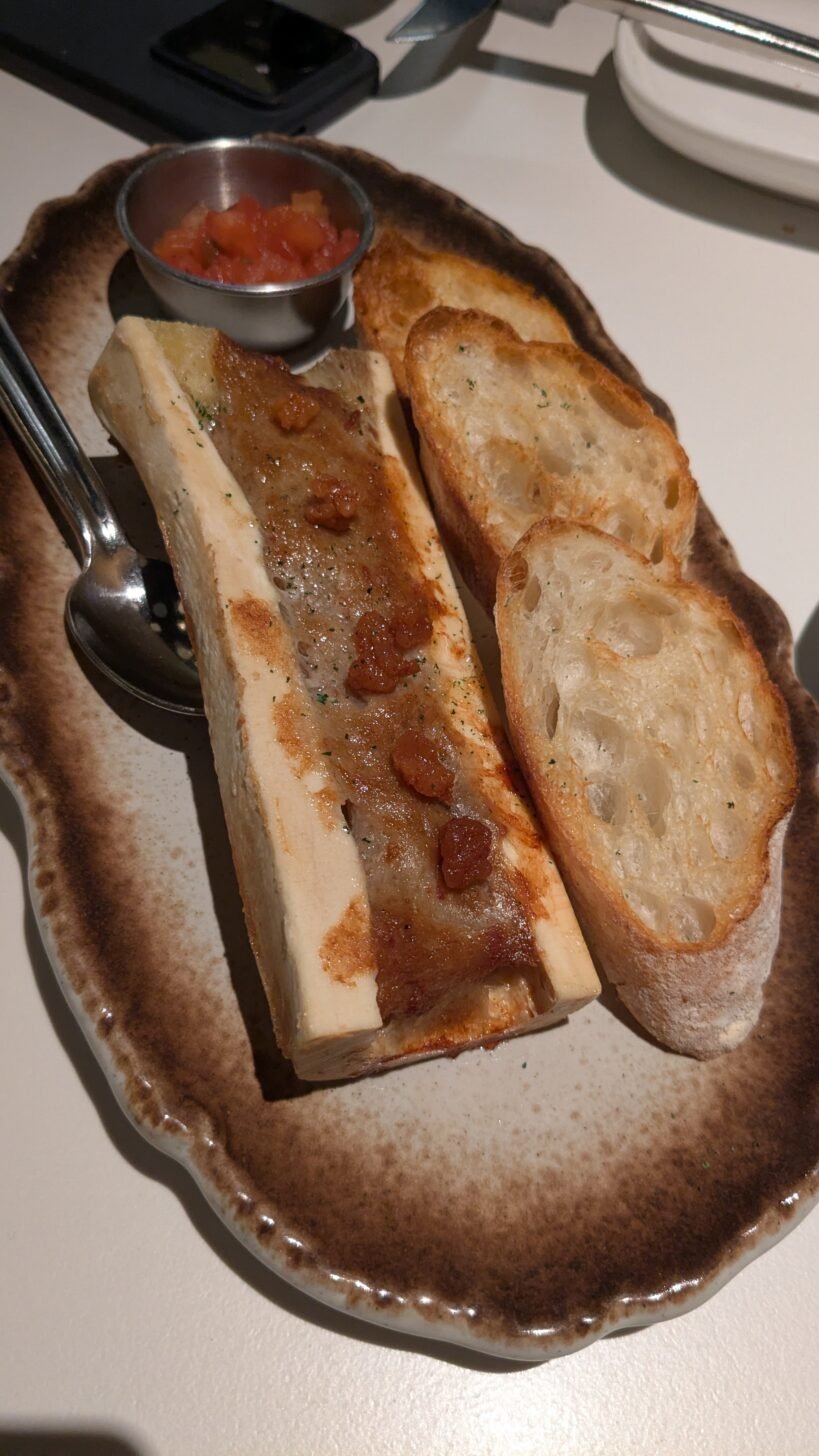
I had bone marrow. Now, marrow is the inside part of a bone. Obviously the outside of a bone is very hard, but there’s a little tube inside that’s full of this fatty meaty stuff called marrow. And actually I read an interesting theory. I believe it was in Yuval Noah Harari’s book Sapiens, A History of Mankind. But the theory is that humans’ original ecological niche, so originally the way we survived was, we waited for other animals to kill other animals and eat the bodies, and then we would go in like rats and take all the bones, break them open and eat the marrow inside, a bit like…

Now this isn’t a universal thing. I haven’t seen them in China, but a bit like those little plastic tubes of drinkable yoghurt you had when you were a child. In the UK the most popular one, I think, is… Yoobs? Are they called Yoobs? They’re like little plastic tubes of yoghurt and you rip off the top and you suck out the inside. In China, they don’t have those, but they have many pots of very liquid yoghurt that you put a straw in and drink.
Um, so I like to imagine the original humans, uh, actually invented this, but instead of drinking little tubes of yoghurt, they were breaking, um, antelopes’ bones in the Serengeti and sucking the marrow out. Did I suck the marrow out of an antelope’s bone last night in the restaurant? No, it arrived cooked. Um, but it was a bit surreal because I didn’t realise until it arrived that I would have like a massive chunk of bone on my plate, that was cooked, with the marrow inside, and some lovely sauces and dressings
And… it was good. It was, it was delicious. It was really tender, very juicy, fatty. It was with some really nice bread that was so soft and crunchy at the same time, but I felt almost a bit, uh, barbaric, or animalistic, eating, you know, scooping marrow out of a literal bone and, you know, I could tap the bone with my spoon and it went [crack crack crack]. It was, um, surreal.
I also had mushrooms fried with garlic and cuttlefish sausage. I’m not even going to try and explain what cuttlefish is because to be perfectly honest, I don’t really remember what cuttlefish looks like, but it’s a kind of fish that one does not eat very often, and certainly it was the first time I have eaten it in sausage form, but I can heartily recommend cuttlefish sausage.

What else have I been having recently that makes me feel very classy? Ah, my dress sense is taking on a transformation because you can get good quality clothes – perhaps not super high quality, but certainly a cut above normal fast fashion. You can get good quality clothes online in China very cheap. So recently I bought a big smart coat for the winter. It’s made of wool. It has really big shoulders, that cuts a really nice silhouette, and wearing it over my suit to work, I look very debonair. I look very classy, very Sherlock Holmes, very 1920s noir detective.
So I decided, let’s perfect the look. I got a nice big scarf, I got some leather gloves, and I even got a hat, which, I don’t know the name of the kind of hat. It’s a wool hat, a classic men’s hat. Not a fedora. Maybe closer to a trilby, if you know what those look like. Anyway, I will put pictures of my style change up on the transcript at Easy Stories in English dot com slash I don’t know yet because I haven’t decided what the name of this episode will be.
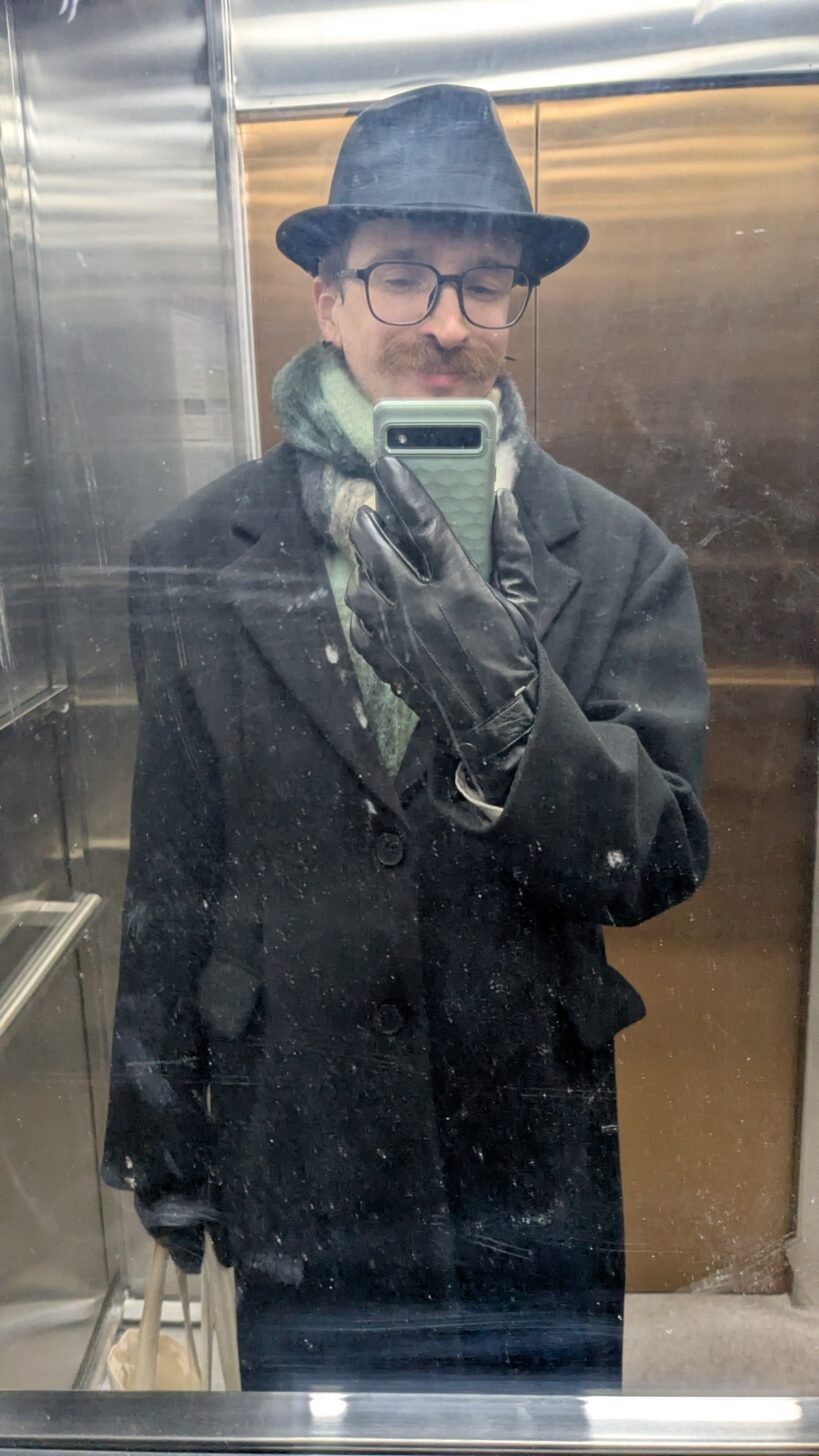
But yes, this style change has been facilitated both by the low cost of said clothes, but also by the environment I’m in. Because this look is kind of traditionally British in a way, right? I’m dressing like a kind of old world British gentleman, and if I was to wear those clothes in London, I think people would think I was a bit of a poser. Like a hipster, like I’m trying too hard, or I’m trying to look like some kind of fancy banker type. Because you do get these rich banker types in London who do dress very smartly, and I don’t want to give off that impression.
So it’s something that I feel much more comfortable wearing here in China. Generally in China, there’s also this attitude of minding your own business in public. So if you see people wearing crazy clothes, you just kind of let them do their thing.
In other news, I have planned a trip to Japan. It is the 6th of December as I record this, and from the 20th to the 27th, I shall be jet-setting around Japan. I’m going to be flying into Nagoya and then I’m going to spend two nights in Takayama, which is a beautiful historic town from which I can do a day trip into Shirakawa-go, which is a beautifully preserved historical Japanese village.
Now, you may remember an episode of the podcast called, um, what was it called? Uh, one moment.
A Holiday Gone Wrong. The story was called A Holiday Gone Wrong, and I’m not surprised that I couldn’t remember the name of it because I released it in 2021, in July of 2021, over four years ago, which is insane because in my head I released that episode last year.
Like, this is what’s very strange about this podcast is, I will swear that stories I recorded just the other day, actually I wrote years ago and vice versa. I think a story is really recent when I actually recorded it like four years ago. So anyway, um, I guess many of you maybe haven’t listened to A Holiday Gone Wrong, so you definitely should because it’s one of my favourite stories I’ve written, actually.
So basically, if you haven’t heard it or you need your memory jogged, there is a Japanese video game series slash anime that is about, um, teenage girls going crazy and murdering each other, and time travel. And the setting they used was this historical Japanese village, which they preserved perfectly in the anime, and it’s long been a tourist spot, but this anime brought in a lot more tourists.

So as someone who really loves this show – it’s one of my favourite animes ever – I’ve always wanted to go to this village. And it looks like it could be very beautiful. If it snows, it’s going to be absolutely gorgeous. But either way, it’s going to be really pretty. So I’m very, very excited to be going there.
Hopefully, like in my story, I won’t, uh, have any unfortunate incidents. In the story I wrote, the person who visits the village almost dies. Um, so it’s a bit strange because I wrote this story about someone who loves the anime going to the village and then almost dying, and I’m like, have I just created my own destiny? Have I just manufactured the conditions for me to die horribly while on holiday? I sure hope not, but in the story, he went in the summer and I’m going in the winter, so I think I’ll be fine.
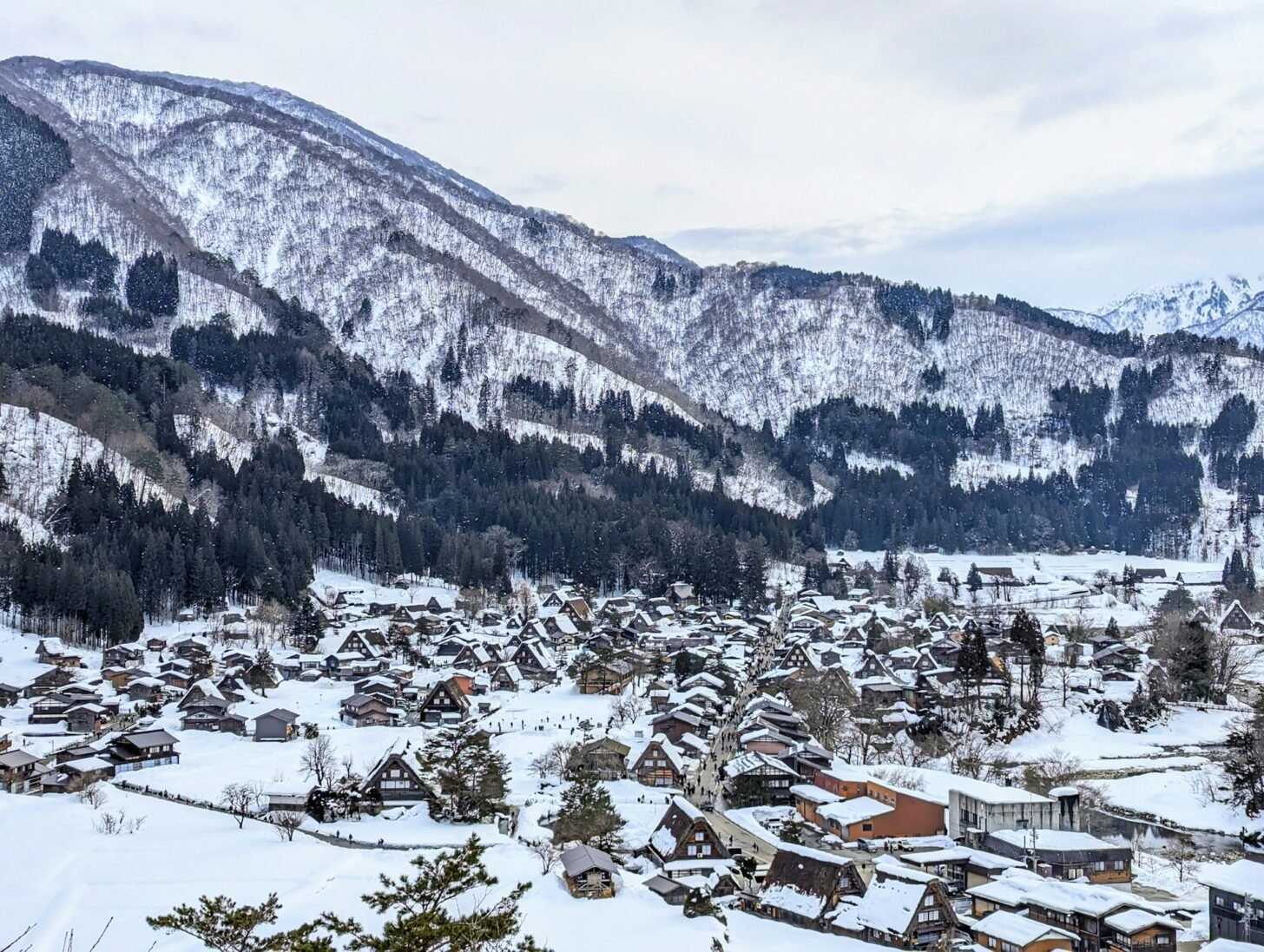
So, yes, I’m flying into Nagoya, I’m going to Takayama and Shirakawa-go for two days. Then I’m going down to Osaka and spending two nights there. I’ve been to Osaka, like, on a day trip like once, and I don’t remember that much about it. So I think it’ll be nice to go again and honestly get a bit of nightlife, I think. I just really feel this itch to go clubbing and party and dance! So yeah.
And then for the last three days, I’m going to Fukuoka to stay with my friend, actually my childhood friend back from Bath in the UK. He has been working in Japan for the last few years. It’s very funny actually, because someone I worked with at one of my previous jobs in London, a Japanese girl who was the receptionist, also worked with him back in Fukuoka the year before, and we found this out completely randomly, so there’s like random connections. It’s a small world, et cetera.
But yeah, I’m very excited to be staying with my friend again and I’m excited to be visiting Fukuoka, which is a region of Japan I have never been to, and it will be slightly warmer than the other places I’m going to, but overall it’s going to be pretty cold, I think, for my holiday.
One thing that’s really funny about, uh, Japan and talking to people in China about Japan is, all the place names and people names in Japan have completely different pronunciations in Chinese. And if you don’t know much about Chinese and Japanese, I’m going to try and explain this, but it’s a bit complicated.
So Japanese, they write using Chinese characters. They also have some other alphabets essentially, but they use a lot of Chinese characters to write, but sometimes they pronounce them using the pronunciation of a Japanese word, and then sometimes they use the Chinese pronunciation for loan words.
So you will have a character that could be pronounced like ‘oo’, or it could be pronounced ‘dai’. So ‘oo’ is the Japanese reading and ‘dai’ is the Chinese reading. So in Osaka, the ‘oo’ is written with this character that means big. So Osaka literally means big hill.
But in Chinese you just have generally one pronunciation and one syllable per character. So when Chinese people talk about Japanese places or famous Japanese people, they pronounce their names just using the Chinese pronunciation. But the problem is that, first of all, that pronunciation is often different from the Chinese pronunciation in Japan because Japanese borrowed these words at different points in history from different dialects, right? So that character that’s pronounced ‘dai’ in Japan is pronounced ‘da’ in modern Mandarin Chinese.
But then additionally, if a word in Japanese is written with Chinese characters but pronounced using Japanese words, Chinese people will still just use the Chinese pronunciation. So the long and the short of it is, Osaka in Chinese is called ‘daban’, which obviously sounds nothing like Osaka.
Or, for example, you have the famous Japanese author, Murakami Haruki, which is a Japanese name, but is written using Chinese characters. So Murakami Haruki is pronounced in China as Cunshang Chunshu, which, as you can imagine, if an average Japanese person hears Cunshang Chunshu, they will have no idea that that refers to Murakami Haruki.
But also when I’ve been teaching a class with people from different countries, and let’s say there’s a few Chinese students. If I mention any Japanese names, they generally don’t know who I’m talking about. Even if it’s someone very famous, like Haruki Murakami. Even if sometimes I mention a place named like Kyoto, they have to think a bit because they’re used to it being called Jingdu, which is the Chinese name.
So, yeah, it’s kind of annoying because if I want to talk about, say, my travels in Japan in Chinese, I have to learn all of these new words for what the places are called, and it just gets kind of confusing and frustrating.
Theoretically you could do it the other way round. So like when you speak Japanese, you could pronounce Chinese place names according to the Sino-Japanese pronunciation. Um, this is something I’ve literally never heard anyone do, but it’s like a fun thought experiment, right? So Shanghai is the characters 上海, which means ‘on the sea’, because it’s a port city.
And in Japanese they say シャンハイ, which is basically just an adaptation, a direct loaning of the pronunciation. But if you really wanted to be funny, you could pronounce it ‘shoukai’ or ‘joukai’, which would be pronouncing it using the Chinese pronunciations of those characters in Japanese, because these are, again, historical pronunciations that have been borrowed.
Um, I’ve never heard Japanese people do this. I’m not sure they would understand. When I first decided I was moving to Ningbo, I talked to a Japanese friend about it and I was like, oh, have you heard of Ningbo? And she hadn’t. And I was like, oh, well, I guess in Japanese it would be ニンボー, but you could pronounce it ‘neiha’, which would be like, again, using the Japanese pronunciation of these characters.
But again, that didn’t help, you know, she still didn’t know the place. So anyway, sorry, if you’re not interested in linguistics, this may have all just been gobbledygook. It may have been completely incomprehensible to you, but I find it quite interesting.
I guess the closest equivalent we have in English is place names like Florence, when in Italian it’s Firenze, or the fact that in Spanish London is Londres, which is obviously different from the English, so it’s not like we don’t have this phenomenon in Western languages, but it’s certainly much less common and I think it’s a real barrier for international trade and communication when like, when you mention famous Japanese people to a Chinese person, they don’t know who you’re talking about.
I think it’s actually, I don’t know, maybe ‘a serious issue’ makes it sound dramatic, but I think it does slightly limit a lot of conversations in that aspect, because when I’m teaching English at lower levels, you know, you generally try to use a lot of references that are universal, right? Like people who all the class will know, products, places that everyone will be familiar with, so you can have more of a conversation. But that’s much harder when there’s a few Chinese students because suddenly none of these references are familiar or they use a different name for these things.
Anyway, I think I have rambled a fair amount. I’ve got other things to do today. Mostly relaxing, to be honest. But I just wanna finish by saying I had this realisation this morning, because, as I’ve alluded to, I’ve been struggling a bit with my energy.
Like, after a long week of work, it’s a lot to then record, edit, post a podcast. But I realised the parts of the process I enjoy the least are pretty much everything to do with YouTube. So, I started doing a podcast because back in 2019, a podcast meant audio. No video. And producing audio is so much easier than producing video. I don’t think it’s dramatic to say it takes five times less time, if not more, to produce an audio product. Recording and editing video adds so much more complication to the process.
But, fortunately or unfortunately, it’s just become normal and expected now that podcasts will have a video and be accessible on platforms like YouTube as well. And along with that, there’s been higher expectations of like different cover art for each episode and having splashy YouTube thumbnails that attract people in.
And because YouTube really pushes the analytics. Basically if you make videos on YouTube, they give you a lot of information about how well they do, and they really kind of bully you into trying to optimise your videos, make the best thumbnails, create videos on trending topics, whereas podcast platforms don’t do this in the same way.
So since I started posting episodes on YouTube, I’ve felt an increasing pressure to optimise that part of the podcast. I’ve put more effort into how it looks, how it’s edited, into the thumbnails, and that adds a bunch of extra time. It’s like now I have to edit video and make a thumbnail and edit in like visuals while I’m editing the episode. And if you’ve never recorded or edited a video, this might sound quite trivial, but it does actually slow the process down a lot and I just don’t enjoy it very much. I love recording: this part, I love. I like editing audio. I don’t love it. It’s still work, but I find it more, I guess, manageable than editing video and you can cut between things more easily.
But basically what I realised this morning is, well, I kind of knew this before, but the section of my audience that watches on YouTube is a very small proportion of people. Most people are listening on podcast apps, so it’s a bit silly to spend so much effort on trying to court listeners or viewers on YouTube, on trying to make YouTube, you know, the place to view the podcast when it’s still only maybe like 2000 people who view each episode, which, you know, is a good amount of people, but it’s much, much less than the viewership, sorry, the listenership I have on podcast apps.
This is the other problem, is when you are making a podcast, you assume people cannot see you. So you talk in a way where you’re not going to reference visual things. But then once you start making a video podcast, you might talk about the clothes you’re wearing, but then you’re alienating the people who are listening but not watching.
I just think it’s unnecessary. I think modern society is overly obsessed with the visual. It’s like short form video, adverts, everything is visual, in your face everywhere. I’m getting a bit sick of it, to be honest. You know, recently I’ve been coming home from work and just putting on classical music and that’s lovely and I don’t always need to be watching a damn YouTube video while I eat dinner. It’s much better if I don’t do that, to be honest. So.
Sorry, rambling and ranting, but basically, sorry, I’m getting to the point! I promise! I promise! I’m getting there! The thing I realised was, I can do whatever I want. I’ve been making this podcast for almost seven years. I have a dedicated audience. Thank you. And I have a full-time job that pays my bills and also leaves me money left over. So I have absolutely no reason to be stressing out this much about YouTube. To be honest, I can put in no effort if I want to, right?. And I’m not saying I’m gonna put in zero effort. I am still recording a video for this episode. But all of these tedious, annoying things like thumbnails, editing and visuals and stuff, I’m sorry. I’m gonna put in less effort because it’s not worth it for me.
And on a broader note, I think I’m just going to experiment more with the podcast and try and have more fun. It’s difficult because obviously it started off as a story podcast, so I don’t want to make every single episode conversational, even though my conversational episodes are kind of like a different form of storytelling, right?
But! It’s much easier for me to sit down and record an episode like this where I don’t have a script and I just do what I want. Right? That is so much easier. It’s less stressful, it’s less daunting, and I know that many of you still really enjoy this. I get very positive feedback on the conversational episodes.
It’s something that actually I started doing as separate episodes because I got so many people saying, I love the parts where you just talk about your life. I want to hear more about this. If I don’t post an episode for a few weeks, I get comments like, Ariel, where are you? Ariel, come back! Ariel, tell us about your Japanese exam! So, the people want to know! And the people are you, dear listeners.
So, so yeah, I can do what I want. I’m not saying I’m going to stop writing and telling stories on the podcast, but I’m not going to hold myself to a specific format. I’m not going to hold myself to a really tight schedule, and I’m not going to put effort into all of this visual stuff, like thumbnails and all of this metadata stuff that I find really tedious and just puts me off from making the episodes in the first place.
I have an ambivalent relationship with AI. As you know, I have used AI to generate many images for cover art in the past, and in some ways, this is amazing that I can do that. I think it allows me to have nice cover art while not having to pay for an artist. And obviously I feel a bit guilty about that because we should be paying artists. The thing is, in the past I couldn’t afford to pay artists. Now, I guess I theoretically could afford to pay cover artists for each episode, but, no offence, I don’t really make enough from each individual episode for it to be worth it, I think?
Ooh, I feel bad saying that. Like, do you know what I mean? It’s like a really difficult proposition because I care about art, I want to pay artists, but also the visual cover art has never been like the core part of the podcast for me. And if I was running this as more of like a serious full-time business then I think it would make more sense to invest in that.
I don’t know, this is something I’ve always struggled with. There’s a really difficult balance when you have any kind of side hustle or independent business or creative project, between having enough money to live on comfortably and to nourish and sustain you and investing the money into your artwork, knowing you may not necessarily get a return on that investment, and sometimes you’re investing the money just for the love of making good art. That’s a very difficult balance.
Okay. That was a bit more of a ramble than I intended, but hopefully you found it interesting. Uh, hopefully you also were able to understand this episode. I think I spoke pretty slowly and clearly, but I did use a little, I did use a lot of, um, different vocabulary.
Uh, you know, I’m experimenting. I know I started this podcast with the intention of like specifically limiting levels. Like if you’re a beginner, just listen to the beginner episodes. Uh, but my feelings on this have changed slightly, because I think sometimes it’s really easy as a language learner to just stick to levelled content, and then you never progress beyond a certain level because you are afraid to try the things you don’t understand.
So I’m kind of experimenting with sprinkling in different levels and layers of difficulty and language, and I just love playing with language. I love chewing on the words. I love using different turns of phrases and anyway, hopefully you’ll find it entertaining even if you don’t understand everything because that’s a big part of life and that’s a big part of learning a language, and believe you me, living in China, I know that. I spend a lot of time hearing things in Chinese that I don’t understand. Hmm.
Anyway, thank you for listening to Easy Stories in English. I would love to read a comment from you saying what you think about all of this visual audio stuff. Like let me know, are you a hardcore audio listener? You only listen to the audio version of the podcast, or do you love watching on YouTube? Do you listen in the car? Do you watch it at home while you’re eating dinner? Do you listen before going to bed?
I even had a few listeners years ago who told me they were going on this road trip around the world and they were driving around in a camper van and they would listen to Easy Stories in English every night before falling asleep under the stars, and I thought that was just so beautiful and romantic. So, um, see if you can leave a comment that’s as fun and exciting as that. Or just tell me how you listen to the podcast and what you think.
I hope you are having a lovely life. I hope you’ve had a good 2025. Oh my God, it’s almost over! Ah! Crazy. And I look forward to telling you all about my trip to Japan once I have returned.
Bye.


Leave a Reply